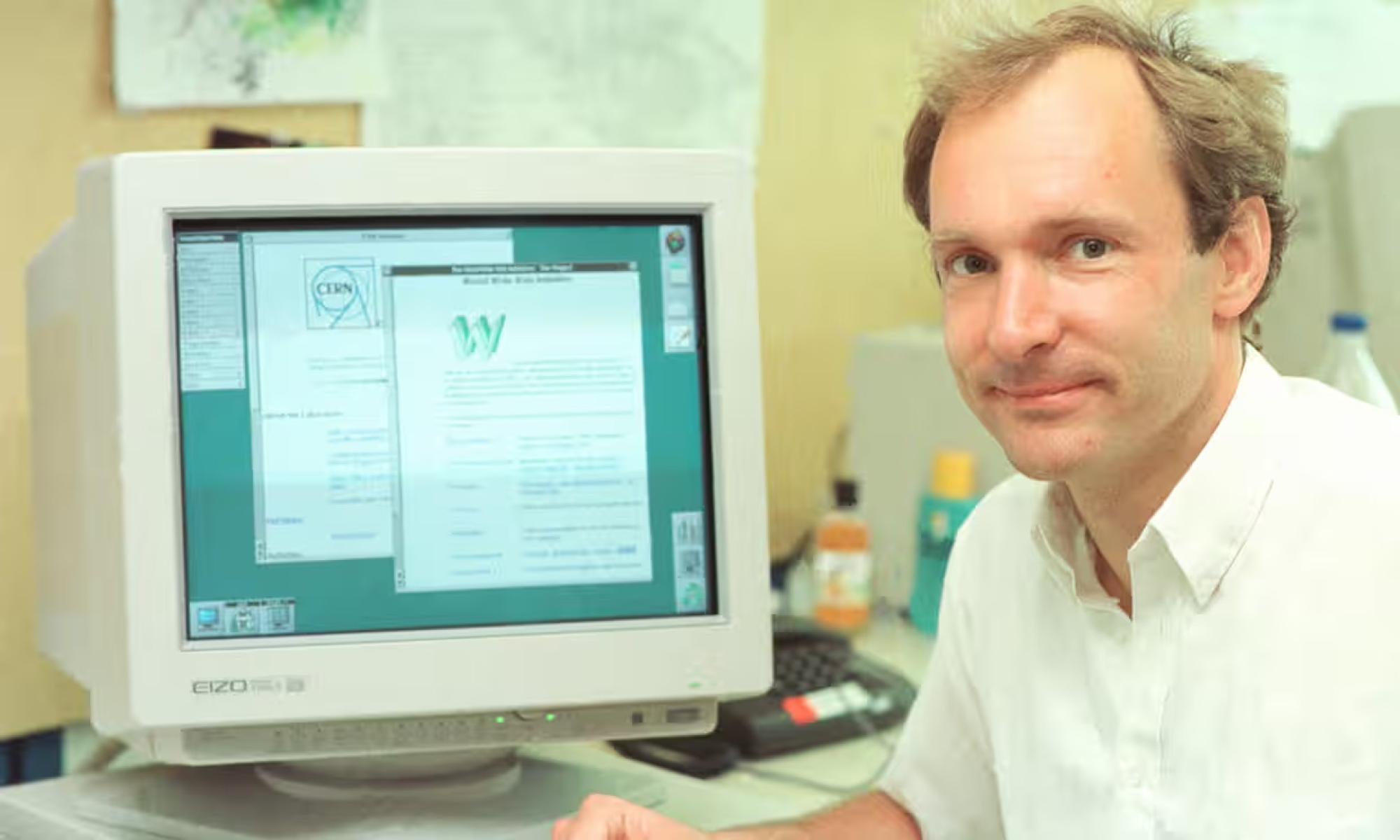
[Tim] Berners-Lee, a British computer scientist, [came] up with the idea for a "world wide web" as a way of locating and accessing documents that were scattered all over the internet. He was able to do this because the internet, which had been publicly available since January 1983, enabled it. The network had no central ownership or controller. The result was an extraordinary explosion of creativity, and the emergence of ... a kind of global commons. However, the next generation of innovators to benefit from this freedom Google, Facebook, Amazon, Microsoft, Apple et al " saw no reason to extend it to anyone else. The creative commons of the internet has been gradually and inexorably enclosed. Google and Apple's browsers have nearly 85% of the world market share. Microsoft and Apple's two desktop operating systems have almost 90%. Google runs about 90% of global search. More than half of all phones come from Apple and Samsung, while 99% of mobile operating systems are from Google or Apple. Apple and Google's email clients manage nearly 90% of global email. GoDaddy and Cloudflare serve about 50% of global domain name system requests. And so on. One of the consequences of this concentration, say Farrell and Berjon, is that the creative possibilities of permissionless innovation have become increasingly constrained. The internet has become an extractive and fragile monoculture. We can revitalise it, but only by "rewilding" it.
Latest
Latest News
Each news summary is created according to strict standards. Here's how we do it.
Each summary is created using a consistent editorial procedure. The target length is approximately 16 lines of 11-point Arial text in a 650-pixel-wide column. Up to 25% of a summary may be set in bold to emphasize the most important ideas. Summaries are composed of verbatim excerpts presented in the same sequence as they appear in the original news source, with very minor editorial additions. Where material has been omitted between excerpts, the omission is indicated with ellipses (...). Any words added by an editor for clarity or context appear in [brackets]. Our original news editor was Fred Burks. Tod Fletcher edited most summaries from 2007 through 2014, and Mark Bailey has served as news editor since 2014.