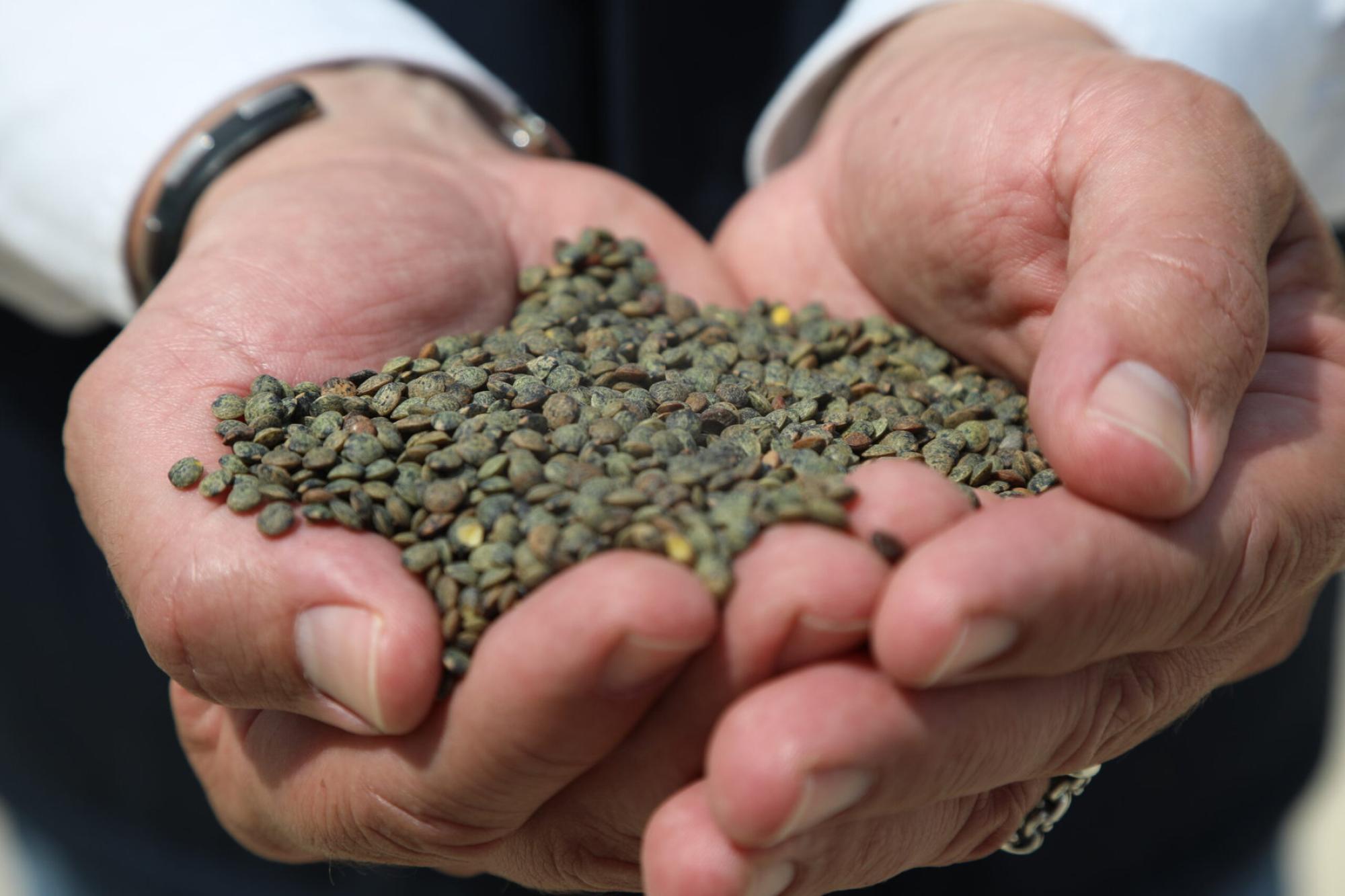
About 100 miles southeast of Paris ... a charming stone aqueduct cuts across the green fields. "That's the Aqueduct of the Vanne," says [farmer] Zoltan Kahn. The Vanne, which supplies a fifth of Paris's tap water, is fed by the water sources in these parts. The region is rich in biodiversity and has been a key drinking water catchment area for centuries. Since 2020, Eau de Paris, the city's public water service, has been supporting farmers near its watersheds ... to reduce the use of pesticides and fertilizers on their crops. In other words, to go organic. When Kahn was approached by Eau de Paris with support to go fully organic, he jumped at the opportunity. In exchange for switching to organic, he would receive a so-called "Payment for Environmental Services" for each hectare of his farmland. As part of the €48 million ($51.8 million) project, Eau de Paris and the Seine-Normandy Water Agency, a public institution fighting water pollution in the region, are supporting 115 farmers based in watersheds that supply the city to either reduce their use of chemicals or go fully organic (as 58 percent of the farmers have). Already €32 million of that funding has been granted, according to Anne-Sophie Leclere, deputy director general of Eau de Paris. "It's better for us to have cleaner, purer watersheds," says Leclere. "This will save Paris from having to pay much more to process the water once it arrives in the city."
Latest
Latest News
Each news summary is created according to strict standards. Here's how we do it.
Each summary is created using a consistent editorial procedure. The target length is approximately 16 lines of 11-point Arial text in a 650-pixel-wide column. Up to 25% of a summary may be set in bold to emphasize the most important ideas. Summaries are composed of verbatim excerpts presented in the same sequence as they appear in the original news source, with very minor editorial additions. Where material has been omitted between excerpts, the omission is indicated with ellipses (...). Any words added by an editor for clarity or context appear in [brackets]. Our original news editor was Fred Burks. Tod Fletcher edited most summaries from 2007 through 2014, and Mark Bailey has served as news editor since 2014.