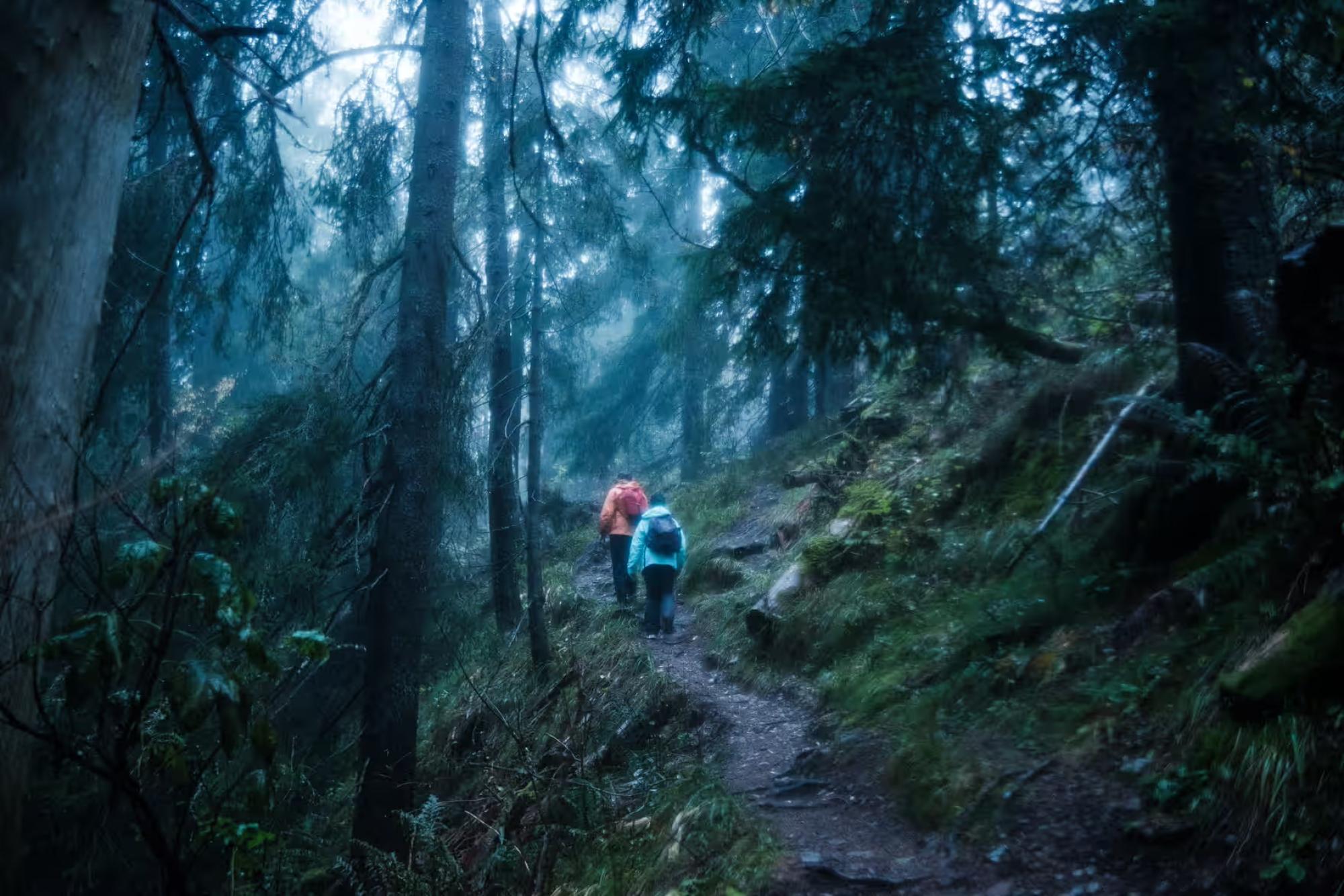
Friluftsliv [is] a way of being that is part of the Norwegian national identity. The term was coined by the playwright Henrik Ibsen in his 1859 poem On the Heights, although the concept is much older. Its literal translation is "free-air life", but Ibsen used it to convey a spiritual connection with nature. To modern Norwegians, it means participating in outdoor activities, but also has a deeper sense of de-stressing in nature and sharing in a common culture. An astonishingly high percentage of Norwegians report spending time outdoors. A survey in June by the market research company Kantar TNS found that 83% are interested in friluftsliv, 77% spend time in nature on a weekly basis and 25% do so most days. At many nurseries, toddlers spend 80% of their time outside; at school, there are special days throughout the year when children go out in nature and build campfires. **Studies show that being in green spaces helps reduce anxiety and improve cognition. This nature-induced wellbeing could be one reason why Norway ranks among the happiest countries in the world. It came seventh in the UN's World Happiness report in 2023.
Latest
Latest News
Each news summary is created according to strict standards. Here's how we do it.
Each summary is created using a consistent editorial procedure. The target length is approximately 16 lines of 11-point Arial text in a 650-pixel-wide column. Up to 25% of a summary may be set in bold to emphasize the most important ideas. Summaries are composed of verbatim excerpts presented in the same sequence as they appear in the original news source, with very minor editorial additions. Where material has been omitted between excerpts, the omission is indicated with ellipses (...). Any words added by an editor for clarity or context appear in [brackets]. Our original news editor was Fred Burks. Tod Fletcher edited most summaries from 2007 through 2014, and Mark Bailey has served as news editor since 2014.