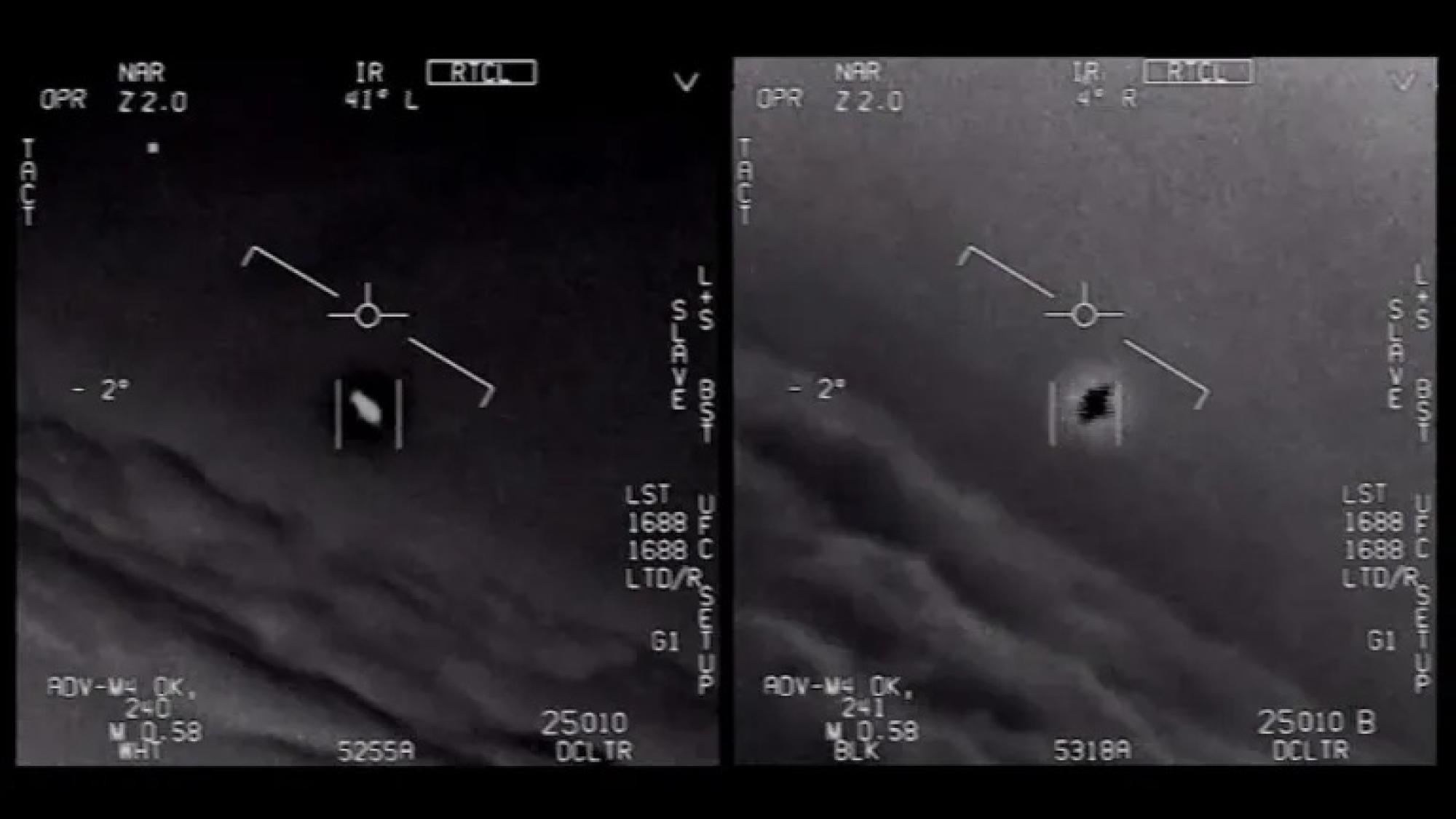
In March, astrophysicist Eric W. Davis, who spent years working as a consultant for the Pentagon UFO program and is now a defense contractor, gave a classified briefing to the Defense Department on what he called "off-world vehicles not made on this earth." In other words, spaceships. The bombshell quote came in the latest UFO report from the New York Times. In December 2017, the paper reported on the existence of the Advanced Aerospace Threat Identification Program, a Pentagon effort to investigate UFOs, that was supposedly shuttered in 2012. That article, hailed as a "historical inflection point in our attitudes regarding UFOs," implied the same message that the most recent one does: Basically, "flying saucers are real." This week's Times report says that while the program to study mysterious aerial vehicles was renamed and moved to a different part of the Pentagon, the effort remains active. And Luis Elizondo, the ex-director of the predecessor program, told the Times that the new program is moving toward an era of "transparency." Elizondo, the Times reports, is "among a small group of former government officials and scientists with security clearances who, without presenting physical proof, say they are convinced that objects of undetermined origin have crashed on earth with materials retrieved for study." Davis, who once produced a report urging the federal government to research time travel through wormholes, said he has studied the materials. What he found led him to a stark conclusion: "We couldn't make it ourselves."
Latest
Latest News
Each news summary is created according to strict standards. Here's how we do it.
Each summary is created using a consistent editorial procedure. The target length is approximately 16 lines of 11-point Arial text in a 650-pixel-wide column. Up to 25% of a summary may be set in bold to emphasize the most important ideas. Summaries are composed of verbatim excerpts presented in the same sequence as they appear in the original news source, with very minor editorial additions. Where material has been omitted between excerpts, the omission is indicated with ellipses (...). Any words added by an editor for clarity or context appear in [brackets]. Our original news editor was Fred Burks. Tod Fletcher edited most summaries from 2007 through 2014, and Mark Bailey has served as news editor since 2014.