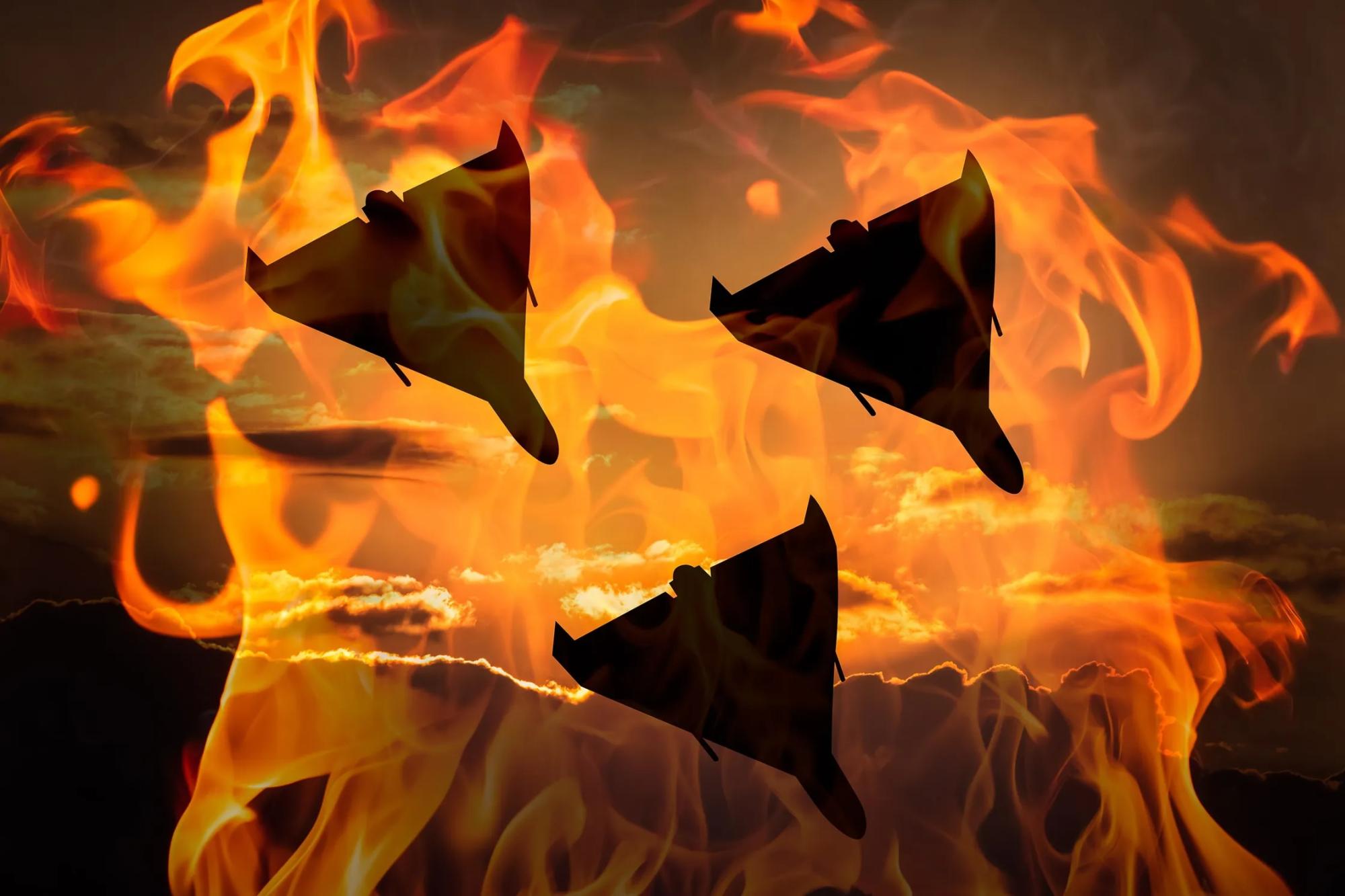
On the sidelines of the International Institute for Strategic Studies' annual Shangri-La Dialogue in June, US Indo-Pacific Command chief Navy Admiral Samuel Paparo colorfully described the US military's contingency plan for a Chinese invasion of Taiwan as flooding the narrow Taiwan Strait between the two countries with swarms of thousands upon thousands of drones, by land, sea, and air, to delay a Chinese attack enough for the US and its allies to muster additional military assets. "I want to turn the Taiwan Strait into an unmanned hellscape using a number of classified capabilities," Paparo said, "so that I can make their lives utterly miserable for a month, which buys me the time for the rest of everything." China has a lot of drones and can make a lot more drones quickly, creating a likely advantage during a protracted conflict. This stands in contrast to American and Taiwanese forces, who do not have large inventories of drones. The Pentagon's "hellscape" plan proposes that the US military make up for this growing gap by producing and deploying what amounts to a massive screen of autonomous drone swarms designed to confound enemy aircraft, provide guidance and targeting to allied missiles, knock out surface warships and landing craft, and generally create enough chaos to blunt (if not fully halt) a Chinese push across the Taiwan Strait. Planning a "hellscape" of hundreds of thousands of drones is one thing, but actually making it a reality is another.
Latest
Latest News
Each news summary is created according to strict standards. Here's how we do it.
Each summary is created using a consistent editorial procedure. The target length is approximately 16 lines of 11-point Arial text in a 650-pixel-wide column. Up to 25% of a summary may be set in bold to emphasize the most important ideas. Summaries are composed of verbatim excerpts presented in the same sequence as they appear in the original news source, with very minor editorial additions. Where material has been omitted between excerpts, the omission is indicated with ellipses (...). Any words added by an editor for clarity or context appear in [brackets]. Our original news editor was Fred Burks. Tod Fletcher edited most summaries from 2007 through 2014, and Mark Bailey has served as news editor since 2014.