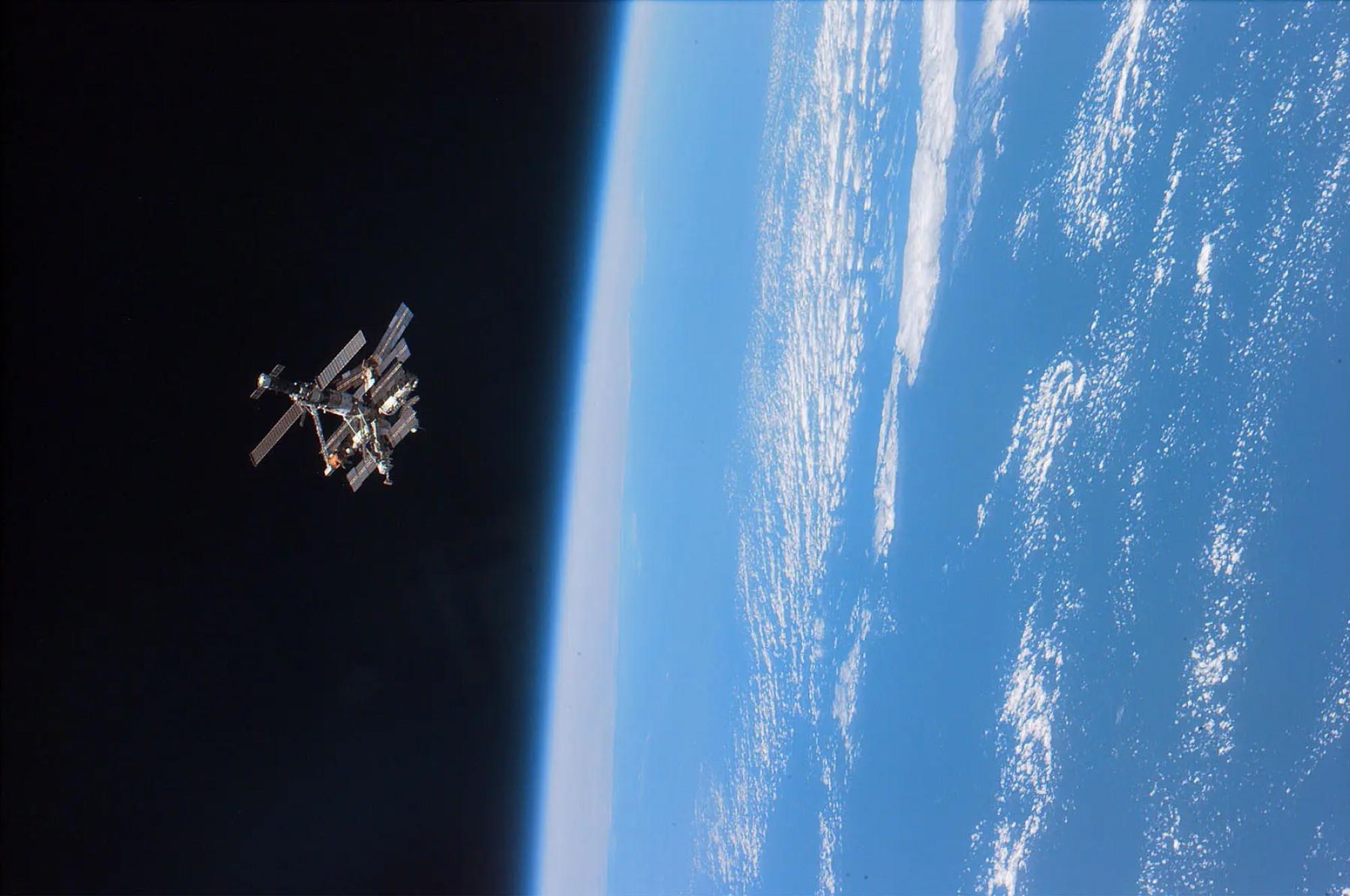
As the chief scientist of the SETI Institute in Mountain View, Calif. the world's leading center for the search for extraterrestrial intelligence " I am convinced that finding life beyond Earth is not a matter of if but a matter of when. As recently as May of this year, scientists discovered a new potentially habitable planet, Gliese 12 b, just 40 light years away. This Earth-sized exoplanet, identified using NASA's TESS satellite system, orbits a cool red dwarf star and shares intriguing similarities with Venus. Nearly 200 hundred types of prebiotic organic molecules have been detected over decades of astronomical observation in interstellar clouds near the center of our galaxy. They include the kinds of molecules that could play a role in forming amino acids " those building blocks of life. The sheer number of potential alien worlds adds to the probability that life could be abundant in the universe. Tens of billions of Earth-sized planets could be located in the habitable zone of sun-like stars in our galaxy alone. Because the probability distribution in nature predicts more puddles than large lakes ... the universe is likely teeming with planets harboring that simple life. Even if only one in a billion of those planets has developed life that's made it to higher levels of complexity and intelligence, nearly a dozen advanced civilizations could populate our entire galaxy. Even if it were only one per 100 galaxies, there could still be billions of them throughout the cosmos.
Latest
Latest News
Each news summary is created according to strict standards. Here's how we do it.
Each summary is created using a consistent editorial procedure. The target length is approximately 16 lines of 11-point Arial text in a 650-pixel-wide column. Up to 25% of a summary may be set in bold to emphasize the most important ideas. Summaries are composed of verbatim excerpts presented in the same sequence as they appear in the original news source, with very minor editorial additions. Where material has been omitted between excerpts, the omission is indicated with ellipses (...). Any words added by an editor for clarity or context appear in [brackets]. Our original news editor was Fred Burks. Tod Fletcher edited most summaries from 2007 through 2014, and Mark Bailey has served as news editor since 2014.