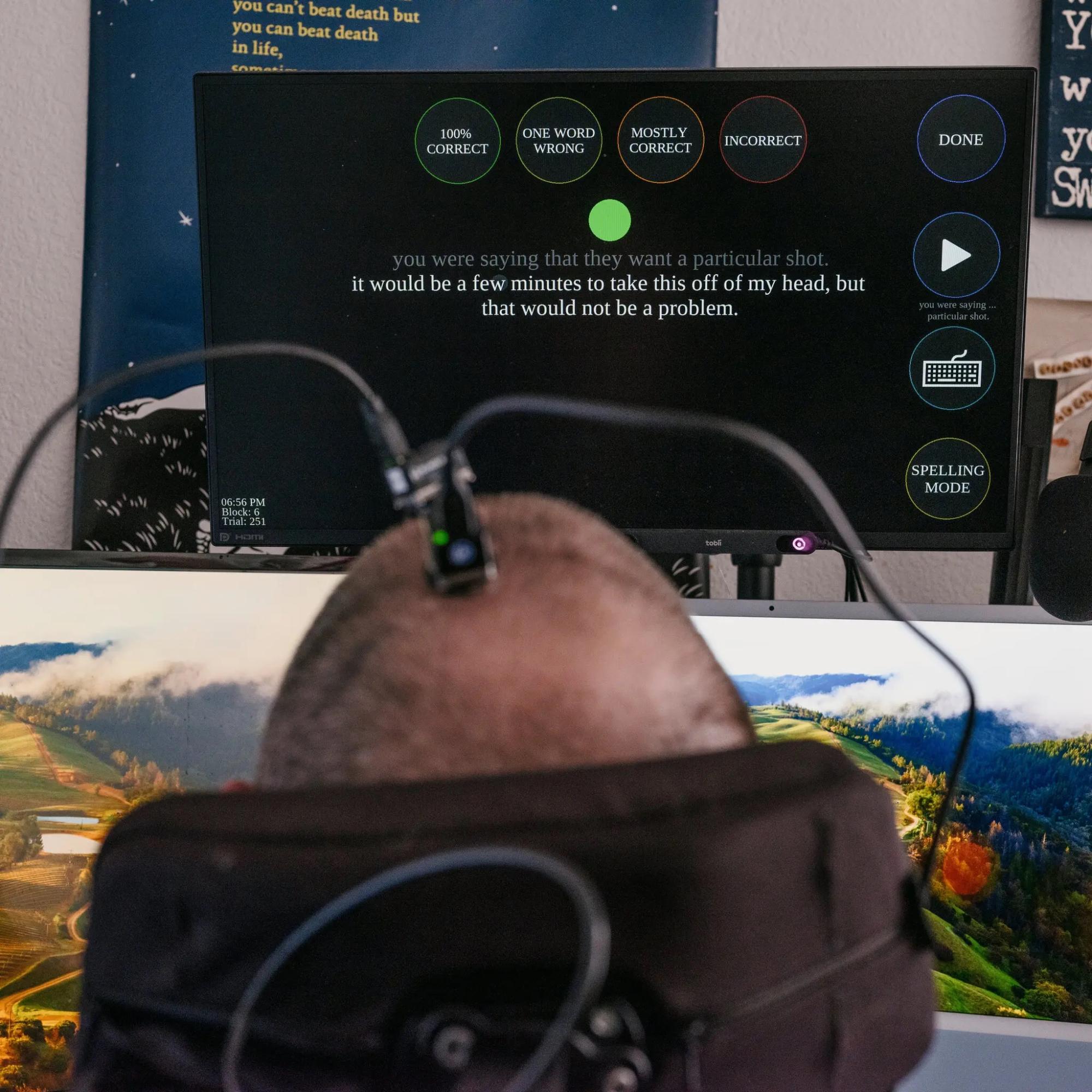
During the Cold War, the first implants showing that we could control animal minds sparked panic. The C.I.A. had its own clandestine experimental mind-control program. People warned of brain warfare. Those fears [are] back, along with a conversation about what it means to have freedom of thought at a time when technology is literally being implanted in our brains. Brain computer interface, or B.C.I. ... are very small devices that go right on the surface of your brain, where they can pick up neural activity. The data is transmitted via Bluetooth to a computer program, which decodes the information. In a sense, they're hooked up to an artificial intelligence. So the neural network inside your mind communicates with a neural network outside. And through that, we are able to reconstruct people's intentions. For people with degenerative diseases, or who are paralyzed, or who otherwise have lost important abilities, these implants have been totally revolutionary. These patients can move their hands, type and in some cases, speak again. Optogenetics, a technique for turning isolated neurons on and off, has been used to implant false memories in mice, raising the possibility that, in the distant future, something similar could be done in humans. Neuroprivacy is the idea that we should have to give consent to anyone who wants access to our innermost selves. But there's a question: Does neuroprivacy apply only to my unspoken thoughts? Or does it apply to the electrical activity in my brain?
Latest
Latest News
Each news summary is created according to strict standards. Here's how we do it.
Each summary is created using a consistent editorial procedure. The target length is approximately 16 lines of 11-point Arial text in a 650-pixel-wide column. Up to 25% of a summary may be set in bold to emphasize the most important ideas. Summaries are composed of verbatim excerpts presented in the same sequence as they appear in the original news source, with very minor editorial additions. Where material has been omitted between excerpts, the omission is indicated with ellipses (...). Any words added by an editor for clarity or context appear in [brackets]. Our original news editor was Fred Burks. Tod Fletcher edited most summaries from 2007 through 2014, and Mark Bailey has served as news editor since 2014.