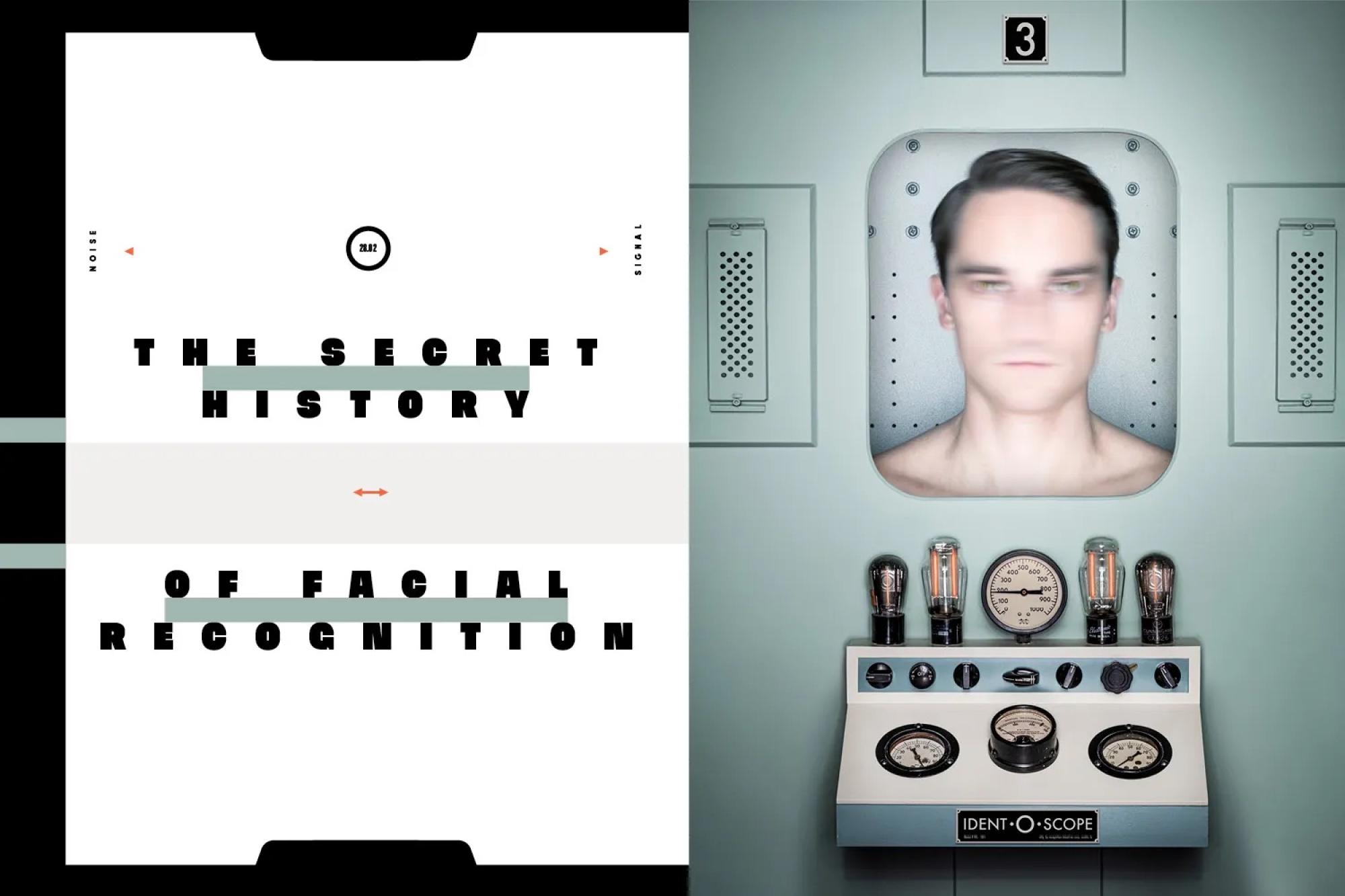
Facial recognition has become a security feature of choice for phones, laptops, passports, and payment apps. Yet it is also, increasingly, a tool of state oppression and corporate surveillance. Immigration and Customs Enforcement and the FBI have deployed the technology as a digital dragnet, searching for suspects among millions of faces in state driver's license databases, sometimes without first seeking a court order. In early 1963, [Woody Bledsoe] proposed to conduct "a study to determine the feasibility of a simplified facial recognition machine." A recently declassified history of the CIA's Office of Research and Development mentions just such a project in 1965; that same year, Woody sent a letter on facial recognition to John W. Kuipers, the division's chief of analysis. In 1967 ... Woody took on one last assignment that involved recognizing patterns in the human face. The purpose of the experiment was to help law enforcement agencies quickly sift through databases of mug shots and portraits, looking for matches. As before, funding for the project appears to have come from the US government. A 1967 document declassified by the CIA in 2005 mentions an "external contract" for a facial-recognition system that would reduce search time by a hundredfold. Woody's work set an ethical tone for research on facial recognition that has been enduring and problematic. The potential abuses of facial-recognition technology were apparent almost from its birth.
Latest
Latest News
Each news summary is created according to strict standards. Here's how we do it.
Each summary is created using a consistent editorial procedure. The target length is approximately 16 lines of 11-point Arial text in a 650-pixel-wide column. Up to 25% of a summary may be set in bold to emphasize the most important ideas. Summaries are composed of verbatim excerpts presented in the same sequence as they appear in the original news source, with very minor editorial additions. Where material has been omitted between excerpts, the omission is indicated with ellipses (...). Any words added by an editor for clarity or context appear in [brackets]. Our original news editor was Fred Burks. Tod Fletcher edited most summaries from 2007 through 2014, and Mark Bailey has served as news editor since 2014.