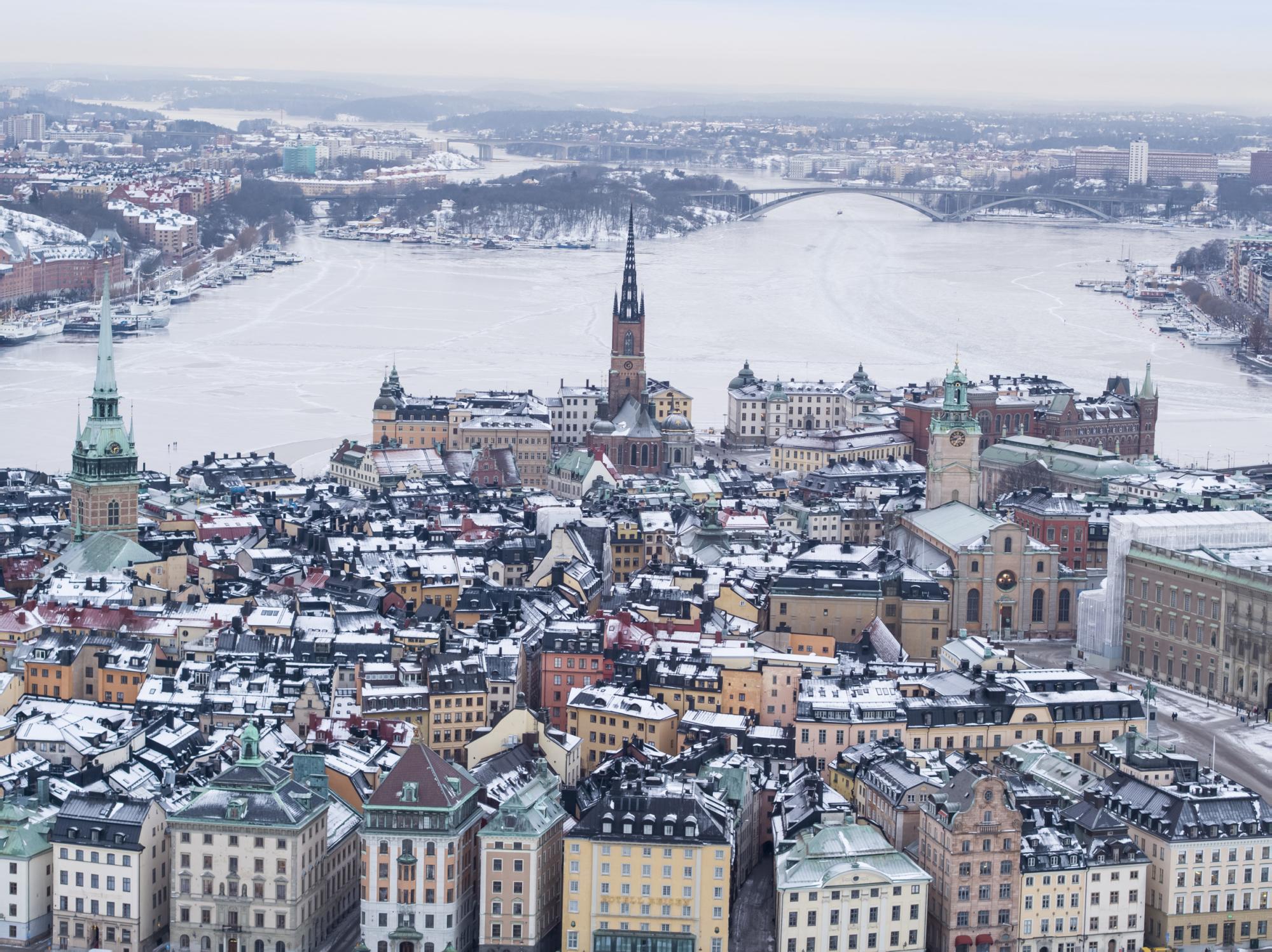
In a cavernous room filled with garbage, a giant mechanical claw reaches down and grabs five tons of trash. As a technician in a control room maneuvers the spiderlike crane, the claw drops its moldering harvest down a 10-story shaft into a boiler that is hotter than 1,500 degrees Fahrenheit. The process continues 24 hours a day to help fuel this power plant run by Tekniska Verken, a municipal government company in Linköping, a city 125 miles south of Stockholm. It is one of Sweden's 34 "waste-to-energy" power plants. Instead of burning coal or gas, this power plant burns trash. Sweden is known for strikingly reducing the trash sent to its landfills. Less than 1 percent of household waste in this Scandinavian country finds it way to landfills, according to Avfall Sverige, the Swedish Waste Management and Recycling association. Trash accounts for a small portion of Sweden's overall power supply; hydro and nuclear energy generate about 83 percent of Sweden's electricity, and wind generates another 7 percent. But garbage supplies much of the heat during cold months for the country's nearly 10 million residents. Energy from trash equals the heating demand of 1.25 million apartments and electricity for 680,000 homes, according to Avfall Sverige. Along with heat and electricity, Tekniska Verken produces methane biogas from 100,000 tons of food and organic waste each year. This biogas runs more than 200 city buses in the county, as well as fleets of garbage collection trucks, and some taxis and private cars.
Latest
Latest News
Each news summary is created according to strict standards. Here's how we do it.
Each summary is created using a consistent editorial procedure. The target length is approximately 16 lines of 11-point Arial text in a 650-pixel-wide column. Up to 25% of a summary may be set in bold to emphasize the most important ideas. Summaries are composed of verbatim excerpts presented in the same sequence as they appear in the original news source, with very minor editorial additions. Where material has been omitted between excerpts, the omission is indicated with ellipses (...). Any words added by an editor for clarity or context appear in [brackets]. Our original news editor was Fred Burks. Tod Fletcher edited most summaries from 2007 through 2014, and Mark Bailey has served as news editor since 2014.