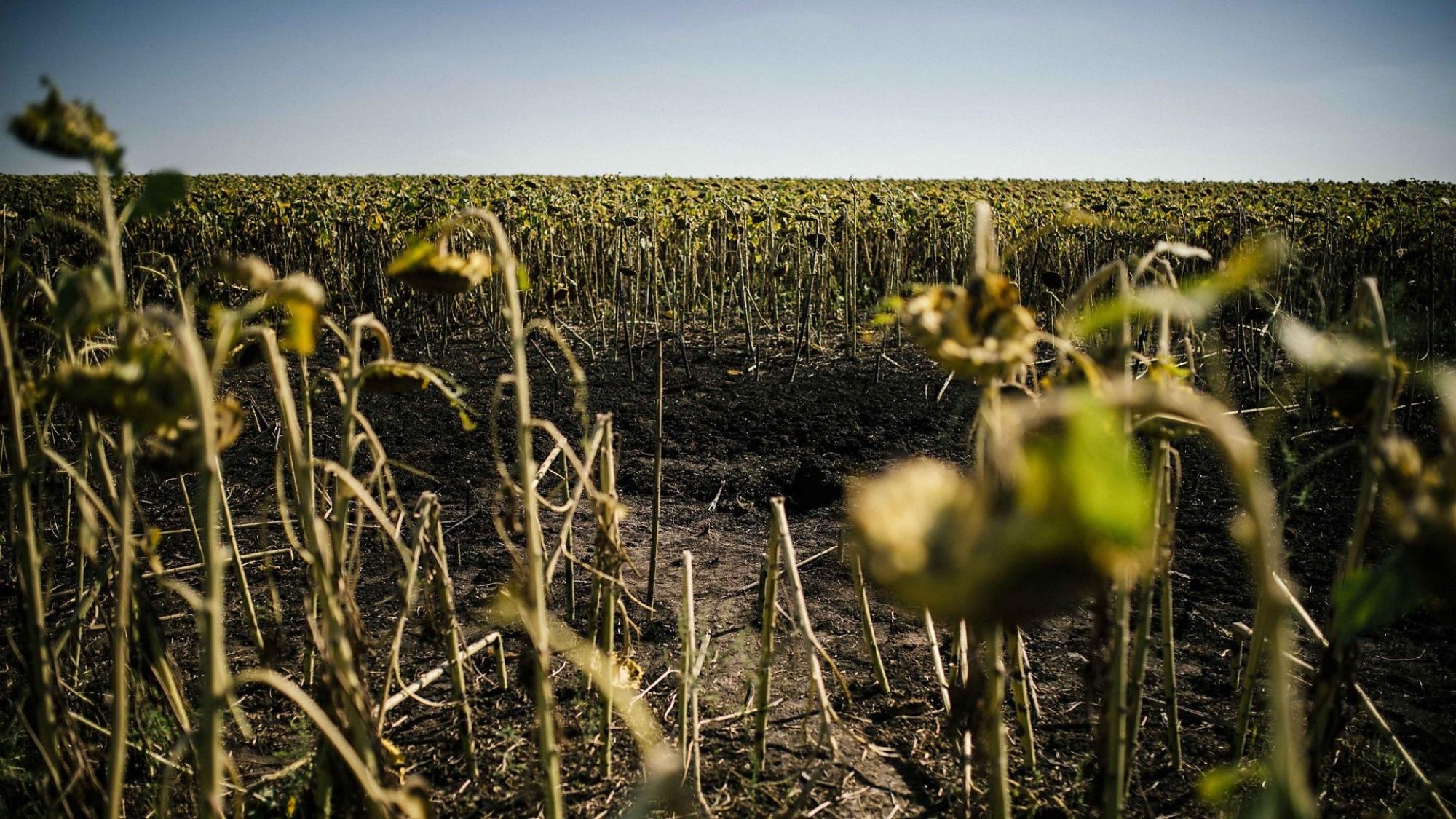
On 6 June, satellite images captured hundreds of craters made by artillery shells and a 40m-wide (131 ft) hole left by a bomb in fields around the village of Dovhenke, in eastern Ukraine. It is just one site left scarred by Russia's invasion of its neighbour. And as the war continues to wreak a devastating humanitarian toll on the people caught up in the fighting, the conflict is leaving a far less obvious, toxic legacy on the land itself. Amongst the pockmarked landscape and burned-out buildings of Dovhenke, heavy metals, fuel and chemical residues from ammunition and missiles have seeped into the soil. Although the full extent of soil contamination in Ukraine is not yet known, there are concerns that the conflict will cause long-lasting damage to the country's agricultural productivity. Ukraine is one of the world's most important producers and exporters of cereals and oilseeds, including corn, wheat, barley and sunflower oil. The widespread pollution caused by the conflict also threatens local wildlife and the health of communities, who are at risk of eating contaminated crops. The latest figures collated in January by the UNEP estimate that 618 industrial or critical infrastructure sites have been damaged or destroyed in the year since the war began. A special taskforce coordinated by the Ecological Inspectorate of Ukraine, is investigating environmental crimes such as attacks on water facilities, chemical factories and nuclear power plants. UNEP warns that this impact assessment could be "a colossal task."
Latest
Latest News
Each news summary is created according to strict standards. Here's how we do it.
Each summary is created using a consistent editorial procedure. The target length is approximately 16 lines of 11-point Arial text in a 650-pixel-wide column. Up to 25% of a summary may be set in bold to emphasize the most important ideas. Summaries are composed of verbatim excerpts presented in the same sequence as they appear in the original news source, with very minor editorial additions. Where material has been omitted between excerpts, the omission is indicated with ellipses (...). Any words added by an editor for clarity or context appear in [brackets]. Our original news editor was Fred Burks. Tod Fletcher edited most summaries from 2007 through 2014, and Mark Bailey has served as news editor since 2014.