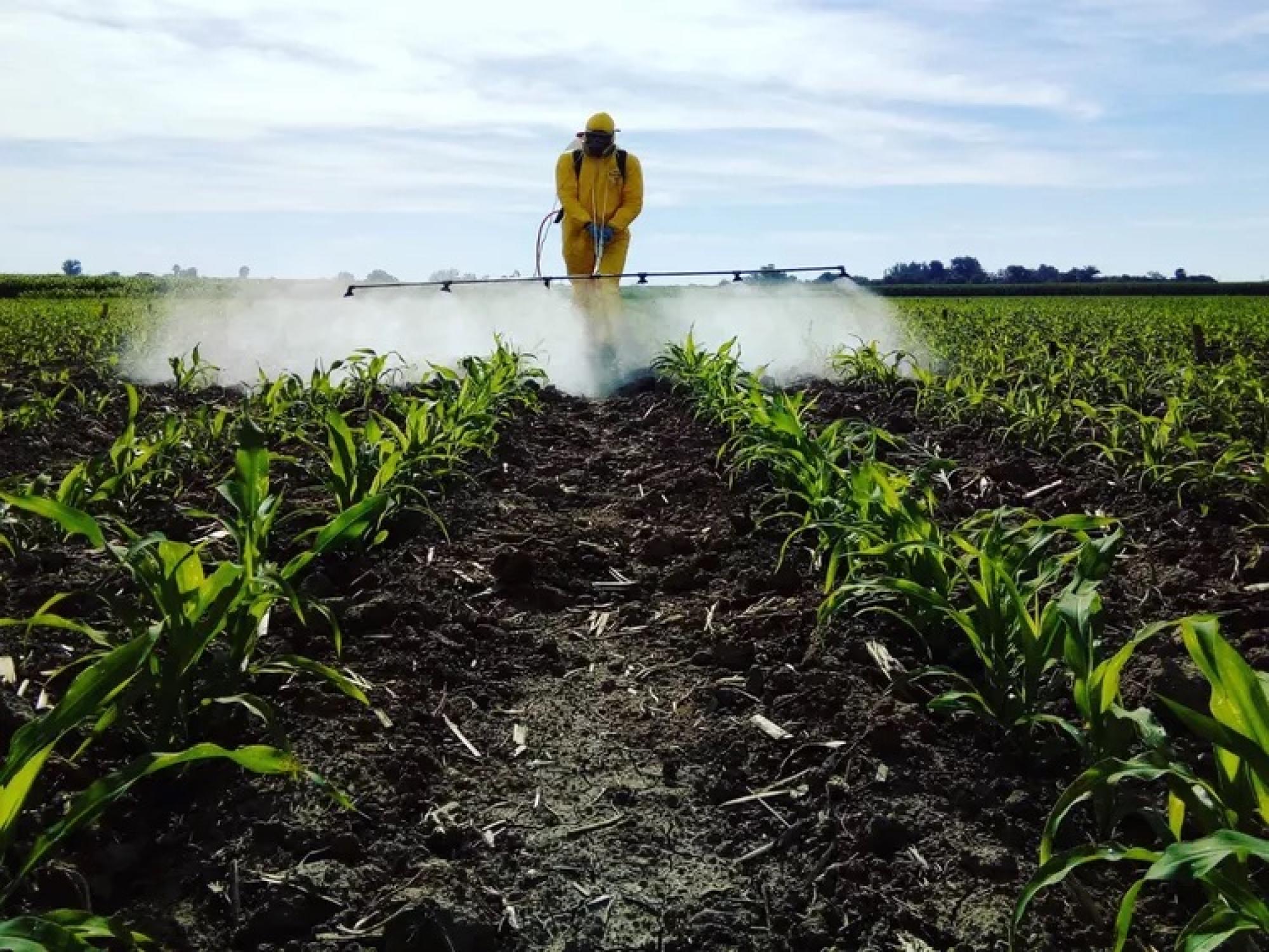
President Joe Biden announced that his administration planned to scrutinize a Trump-era decision to allow the continued use of chlorpyrifos, a pesticide that can damage children's brains. The Environmental Protection Agency went on to ban the use of the chemical on food. Yet when officials from around the world gathered in Rome last fall to consider whether to move forward with a proposed global ban on the pesticide, chlorpyrifos had a surprising defender: a senior official from the EPA. Karissa Kovner, a senior EPA policy adviser, is a key leader of the U.S. delegation at a United Nations body known as the Stockholm Convention, which governs some of the worst chemicals on the planet. Kovner made it clear that the U.S. was not ready to support taking the next step through the convention to provide similar protections for the rest of the world. The U.S. is known for throwing a wrench into the international convention's efforts to restrict pollutants. They're usually seen as a country that raises objections to the regulation of chemicals," said [attorney] David Azoulay. Chlorpyrifos is so harmful that the American government not only banned its use on food but also barred the import of fruits and vegetables grown with it. Persistent organic pollutants ... lodge in fat cells, allowing them to spread from contaminated animals to anything that eats them. Humans sit at the top of this polluted food pyramid, and we can pass the chemicals to our babies through the umbilical cord before birth and through breast milk afterward.
Latest
Latest News
Each news summary is created according to strict standards. Here's how we do it.
Each summary is created using a consistent editorial procedure. The target length is approximately 16 lines of 11-point Arial text in a 650-pixel-wide column. Up to 25% of a summary may be set in bold to emphasize the most important ideas. Summaries are composed of verbatim excerpts presented in the same sequence as they appear in the original news source, with very minor editorial additions. Where material has been omitted between excerpts, the omission is indicated with ellipses (...). Any words added by an editor for clarity or context appear in [brackets]. Our original news editor was Fred Burks. Tod Fletcher edited most summaries from 2007 through 2014, and Mark Bailey has served as news editor since 2014.