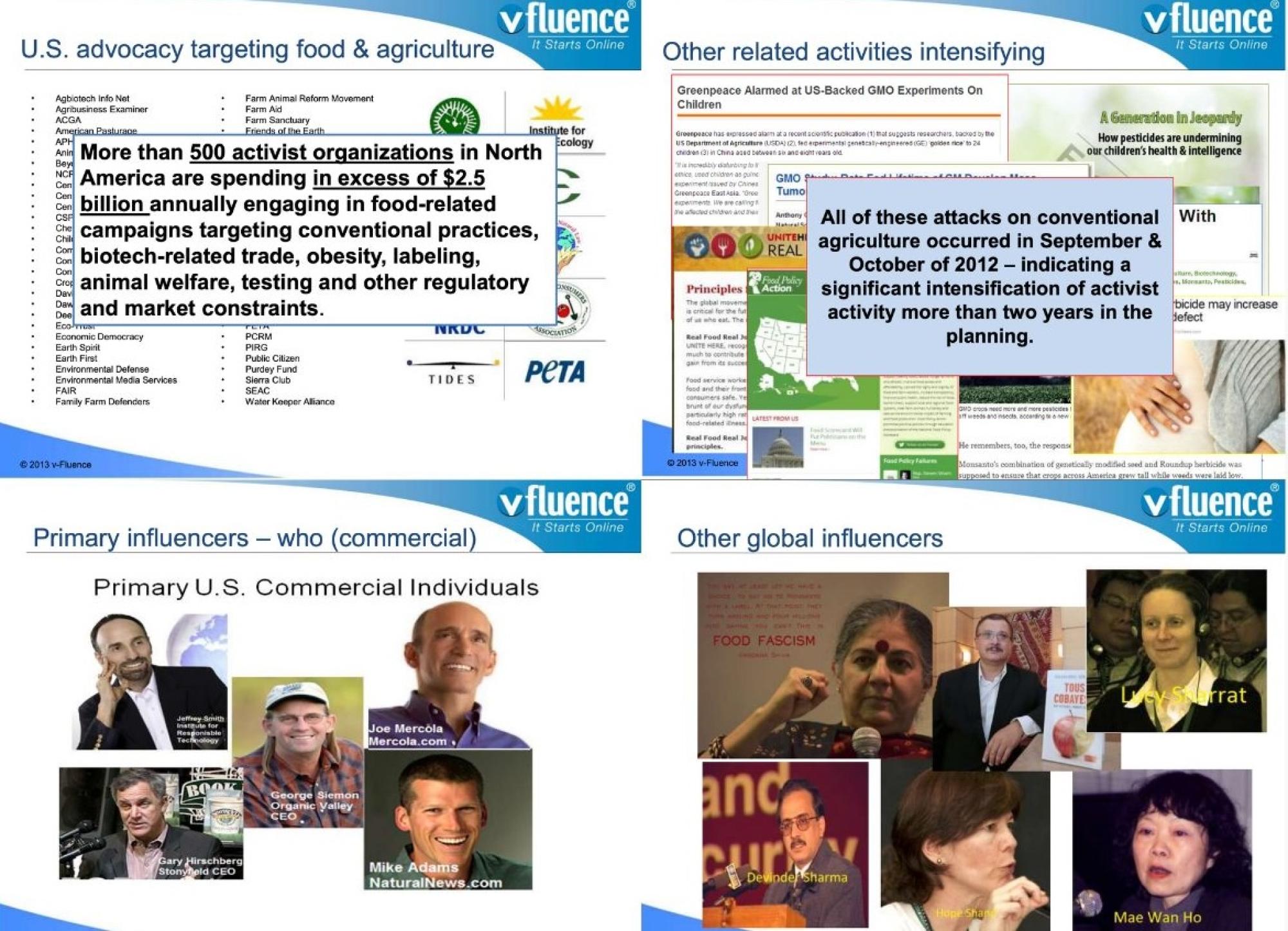

Industry advocates have established a "private social network" to counter resistance to pesticides and genetically modified (GM) crops in Africa, Europe and other parts of the world, while also denigrating organic and other alternative farming methods. In 2017, two United Nations experts called for a treaty to strictly regulate dangerous pesticides, which they said were a "global human rights concern", citing scientific research showing pesticides can cause cancers, Parkinson's disease, Alzheimer's and other health problems. Derogatory profiles of the two UN experts, Hilal Elver and Baskut Tuncak, are hosted on an online private portal for pesticide company employees and a range of influential allies. [These] efforts were spearheaded by a "reputation management" firm ... called v-Fluence. The company then launched a platform called Bonus Eventus, named after the Roman god of agriculture whose name translates to "good outcome". Bonus Eventus is invite-only and counts more than 1,000 members. They include executives from the world's largest agrochemical companies and their lobbyists, as well as academics, government officials and high-profile policymakers. The individuals profiled in the portal include more than 500 environmental advocates, scientists, politicians and others seen as opponents of pesticides and GM crops. Many profiles include personal details such as the names of family members, phone numbers, home addresses and even house values. The profiling is part of an effort " that was financed, in part, by US taxpayer dollars " to downplay pesticide dangers, discredit opponents and undermine international policymaking. More than 30 current government officials are on the membership list, most of whom are from the US Department of Agriculture.
Latest
Latest News
Each news summary is created according to strict standards. Here's how we do it.
Each summary is created using a consistent editorial procedure. The target length is approximately 16 lines of 11-point Arial text in a 650-pixel-wide column. Up to 25% of a summary may be set in bold to emphasize the most important ideas. Summaries are composed of verbatim excerpts presented in the same sequence as they appear in the original news source, with very minor editorial additions. Where material has been omitted between excerpts, the omission is indicated with ellipses (...). Any words added by an editor for clarity or context appear in [brackets]. Our original news editor was Fred Burks. Tod Fletcher edited most summaries from 2007 through 2014, and Mark Bailey has served as news editor since 2014.