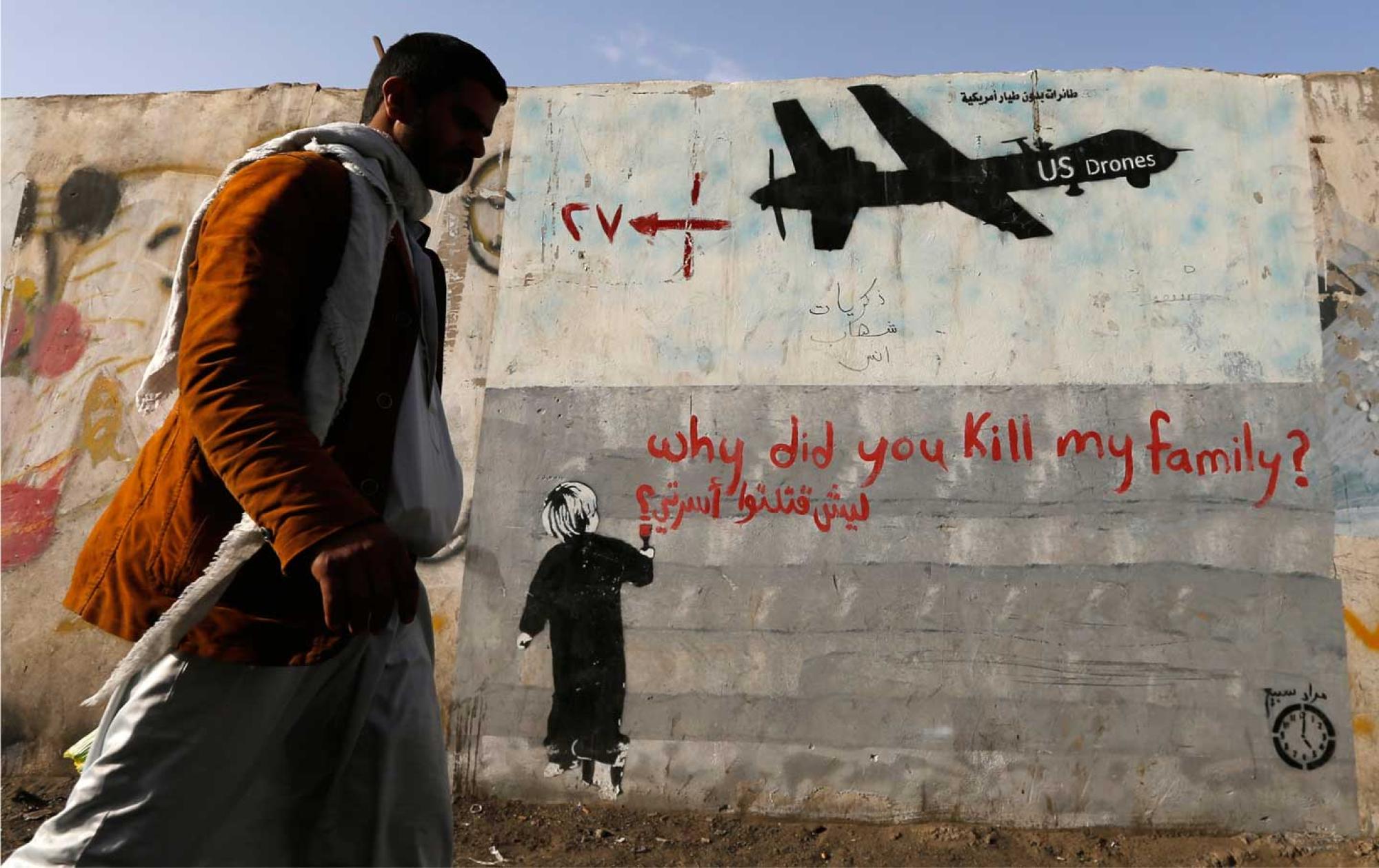
A bomb hit the house. [Rua Moataz] Khadr and her two daughters were able to free themselves from the rubble that had fallen on them, but her 4-year-old son, Ibrahim Ahmed Yahya, was crushed to death. He was among the 9,000 to 11,000 civilians killed during the yearlong battle for Mosul. Khadr, like most bombing victims in Iraq, has no idea which nation was responsible for the airstrike that killed her son. Was it an American aircraft, British, Dutch? "Even if I found out, what would I do?" she told The Intercept. In its final days in Afghanistan, the U.S. conducted a drone strike that killed 10 civilians in Kabul " seven of them children. Their deaths bring up a thorny question surrounding the frequent U.S. killing of civilians in the 9/11 wars: What would justice look like for the families of civilians who have been wrongfully killed? The media attention generated by the Kabul strike has prompted a rare admission of guilt from the Pentagon and may ultimately lead to monetary compensation for the survivors. But byzantine laws in the U.S. make it all but impossible for foreigners to file for compensation if a relative was killed in combat. The only hope for most survivors is a "sympathy" payment from the U.S. military that does not acknowledge responsibility for causing the deaths. But unsurprisingly, those payments are rare: None were issued in 2020. Meanwhile, U.S. allies involved in bombing campaigns usually hide behind the shield of joint operations to avoid taking responsibility for civilian deaths.
Latest
Latest News
Each news summary is created according to strict standards. Here's how we do it.
Each summary is created using a consistent editorial procedure. The target length is approximately 16 lines of 11-point Arial text in a 650-pixel-wide column. Up to 25% of a summary may be set in bold to emphasize the most important ideas. Summaries are composed of verbatim excerpts presented in the same sequence as they appear in the original news source, with very minor editorial additions. Where material has been omitted between excerpts, the omission is indicated with ellipses (...). Any words added by an editor for clarity or context appear in [brackets]. Our original news editor was Fred Burks. Tod Fletcher edited most summaries from 2007 through 2014, and Mark Bailey has served as news editor since 2014.