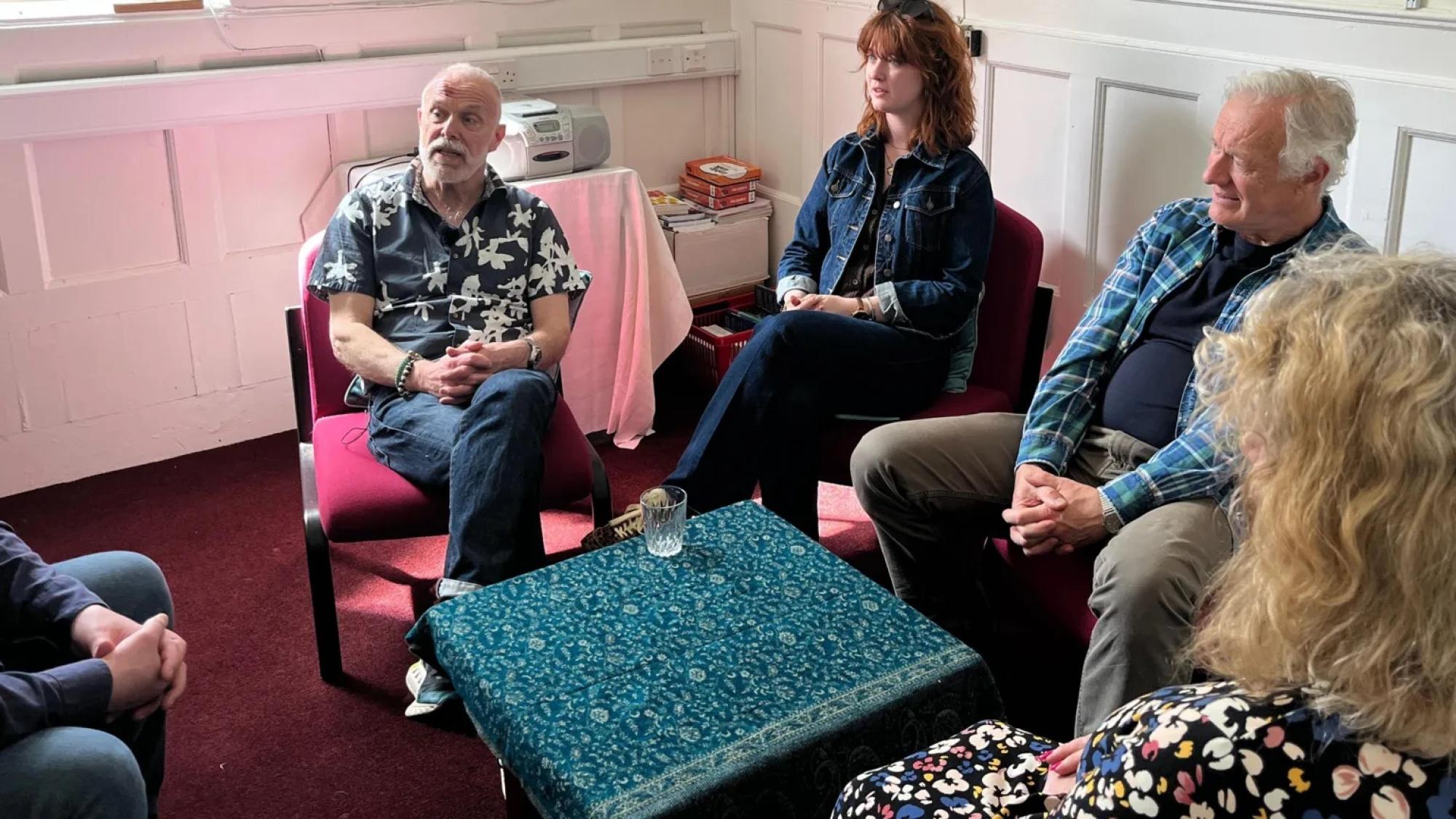
Circles South West uses a network of volunteers to monitor, support and hold sex offenders to account after they have been released from prison. For every man that is in a circle of support and accountability, they are being supported, monitored and held to account; and, if they don't receive that, it's possible they could go on to re-offend," said Circles South West co-ordinator Jamie Stephenson. A circle involves four volunteers who meet with a convicted sex offender once a week at the same time and location for a period of 12 to 18 months. The charity works with a range of people from those who commit sexual harm online or other non-contact sexual offences, to those who have committed acts of sexual murder. The process is voluntary and the core member, as the offender is called by the charity, is referred by the police or the probation service. Stephenson said: "Protecting victims is our strapline, and the way Circles does that is by targeting the risk factors, which are things like social isolation, loneliness, substance misuse, lack of constructive use of time, sexual preoccupation and using pornography. "There is empirical evidence that circles makes a difference by reducing the risk that someone could potentially re-offend and, if someone re-offends, then a new victim is created and we are all about no more victims." Since Circles South West formed in 2010, its network of volunteers has worked with about 400 convicted sex offenders in circles of support.
Latest
Latest News
Each news summary is created according to strict standards. Here's how we do it.
Each summary is created using a consistent editorial procedure. The target length is approximately 16 lines of 11-point Arial text in a 650-pixel-wide column. Up to 25% of a summary may be set in bold to emphasize the most important ideas. Summaries are composed of verbatim excerpts presented in the same sequence as they appear in the original news source, with very minor editorial additions. Where material has been omitted between excerpts, the omission is indicated with ellipses (...). Any words added by an editor for clarity or context appear in [brackets]. Our original news editor was Fred Burks. Tod Fletcher edited most summaries from 2007 through 2014, and Mark Bailey has served as news editor since 2014.