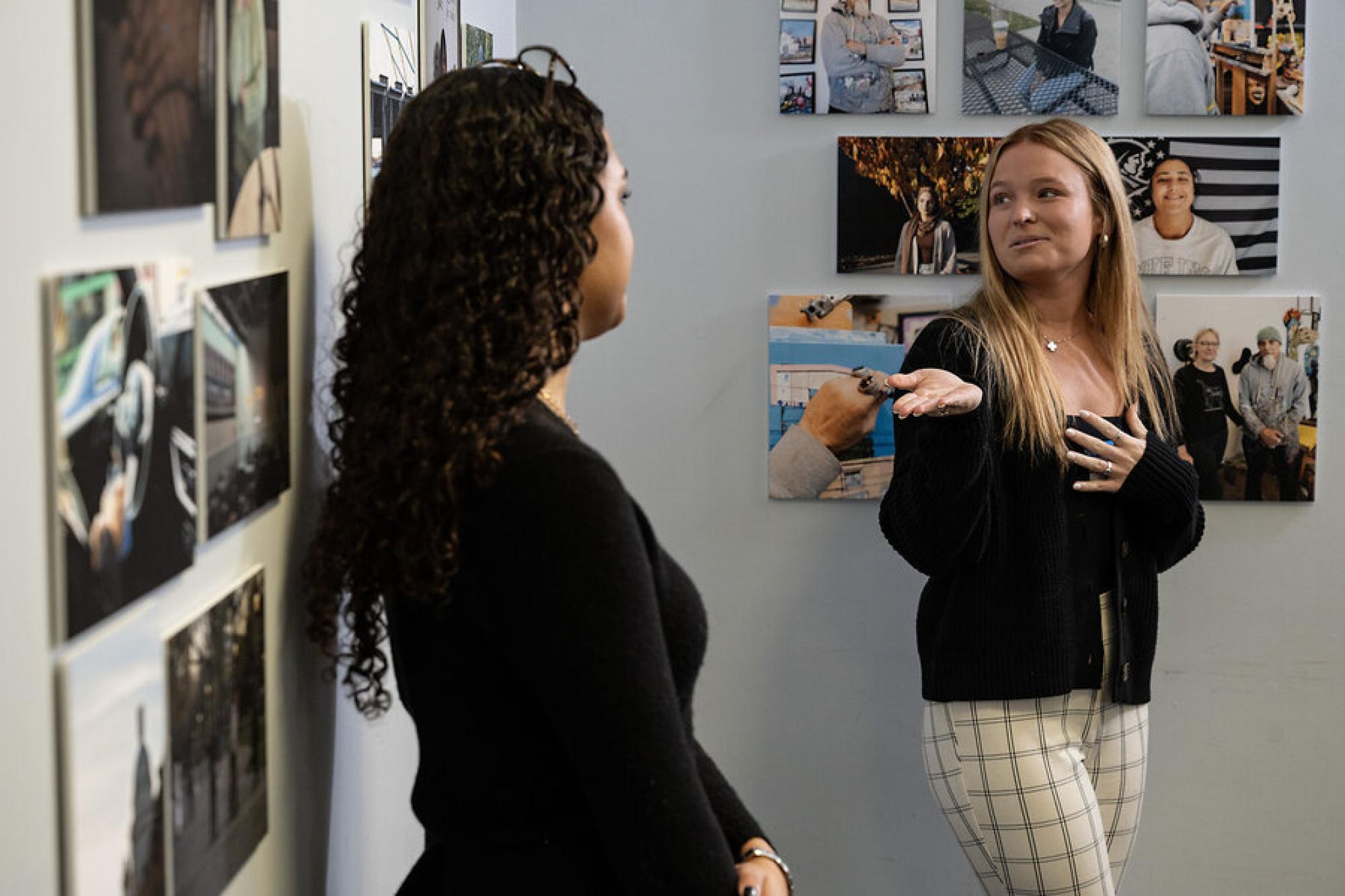
Since the Israel-Hamas war, relationships between some students have been nowhere near brotherly, let alone collegial. Some students just aren't accustomed to contrary or controversial ideas and believe that even hearing them is harmful. What hasn't made headline news is the spike in civil discourse initiatives at campuses. Here's one gauge. At the Institute for Citizens & Scholars, a coalition of College Presidents for Civic Preparedness went from a handful of participants prior to Oct. 7, 2023, to well over 100 afterward. The likes of Harvard, Yale, the Massachusetts Institute of Technology, and the University of Michigan in Ann Arbor have launched civil discourse initiatives since the deadly Hamas attack that sparked the Israeli invasion of Gaza. One success story is the Dialogue, Inclusion, and Democracy (DID) Lab at Providence College in Rhode Island, run by Dr. Bevely and Professor Nick Longo. "With Mutual Respect" events feature two people on opposing sides of an issue. Panelists don't so much debate as endeavor to foster mutual understanding. In December 2020, Vanderbilt [University's] women's basketball team elected to protest for racial justice by staying inside the locker room during the national anthem. Vanderbilt ... facilitated structured dialogue between the basketball players and military veterans on the Nashville, Tennessee, campus. Some athletes shared experiences of racism and discrimination. Young men and women, some of whom had combat experience, explained why they felt so strongly about serving their country. The culture of civil discourse needs to be rooted in a relationship of trust. "If as a student, I'm challenging something, or I say something controversial, I'm going to have to trust you that you're not excluding me," says [Chancellor] Dr. Diermeier.
Latest
Latest News
Each news summary is created according to strict standards. Here's how we do it.
Each summary is created using a consistent editorial procedure. The target length is approximately 16 lines of 11-point Arial text in a 650-pixel-wide column. Up to 25% of a summary may be set in bold to emphasize the most important ideas. Summaries are composed of verbatim excerpts presented in the same sequence as they appear in the original news source, with very minor editorial additions. Where material has been omitted between excerpts, the omission is indicated with ellipses (...). Any words added by an editor for clarity or context appear in [brackets]. Our original news editor was Fred Burks. Tod Fletcher edited most summaries from 2007 through 2014, and Mark Bailey has served as news editor since 2014.