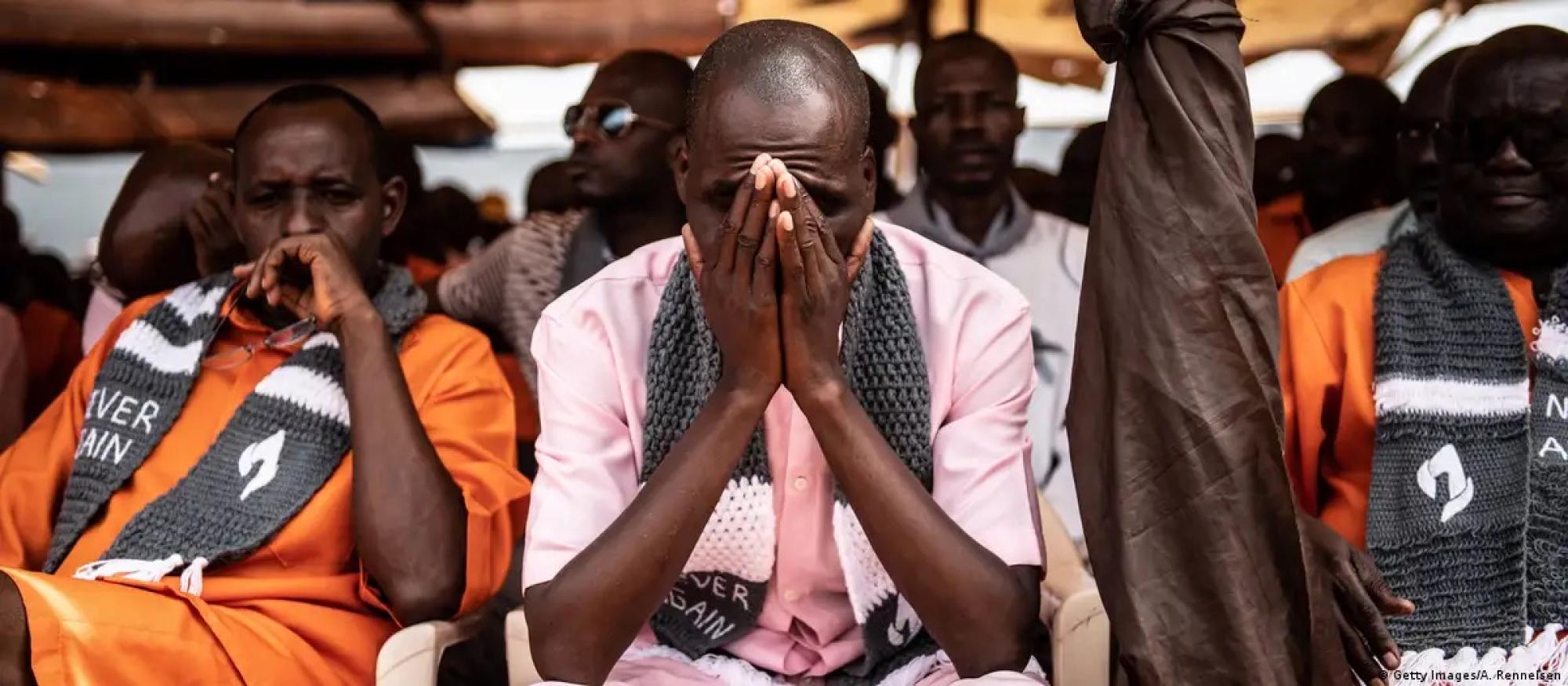
It happened 25 years ago - up to 800,000 people in Rwanda killed - mostly from the minority Tutsi community, all of that over the course of just a hundred days. Today the hundreds of thousands of people who carried out those killings live among their victims. Journalist and author Philip Gourevitch has witnessed the unique way Rwandans have defined and navigated forgiveness after the massacre. There was a lot of agency in the local level. And the experience of the genocide was extremely localized. People were killed by neighbors. It was intimate. They knew each other. And to simply ignore that wouldn't work. In order to navigate the aftermath of the genocide, the Rwandan government set up this nationwide reconciliation process. So they set up a system of community courts - without lawyers - to sort of repurpose a system that really had only been used for small claims mitigation in traditional Rwanda, called gacaca, and have open, communal - what we might call a town hall - format for trials. And then the idea was to hold people accountable and have a system of punishment. And this system banked very heavily on encouraging confession and rewarding it. But the confessions were supposed to be also verified by the community. The motto of the gacaca courts was, truth heals. Forgiveness doesn't require trust. Forgiveness simply means letting go of the idea of getting even, forgoing the idea of revenge. Right? Now, even that's a big ask. But it means accepting coexistence. There's never been as comprehensive a reckoning with such communal violence or mass atrocity. It was an ongoing, multi-year confrontation with the past in the communities.
Latest
Latest News
Each news summary is created according to strict standards. Here's how we do it.
Each summary is created using a consistent editorial procedure. The target length is approximately 16 lines of 11-point Arial text in a 650-pixel-wide column. Up to 25% of a summary may be set in bold to emphasize the most important ideas. Summaries are composed of verbatim excerpts presented in the same sequence as they appear in the original news source, with very minor editorial additions. Where material has been omitted between excerpts, the omission is indicated with ellipses (...). Any words added by an editor for clarity or context appear in [brackets]. Our original news editor was Fred Burks. Tod Fletcher edited most summaries from 2007 through 2014, and Mark Bailey has served as news editor since 2014.