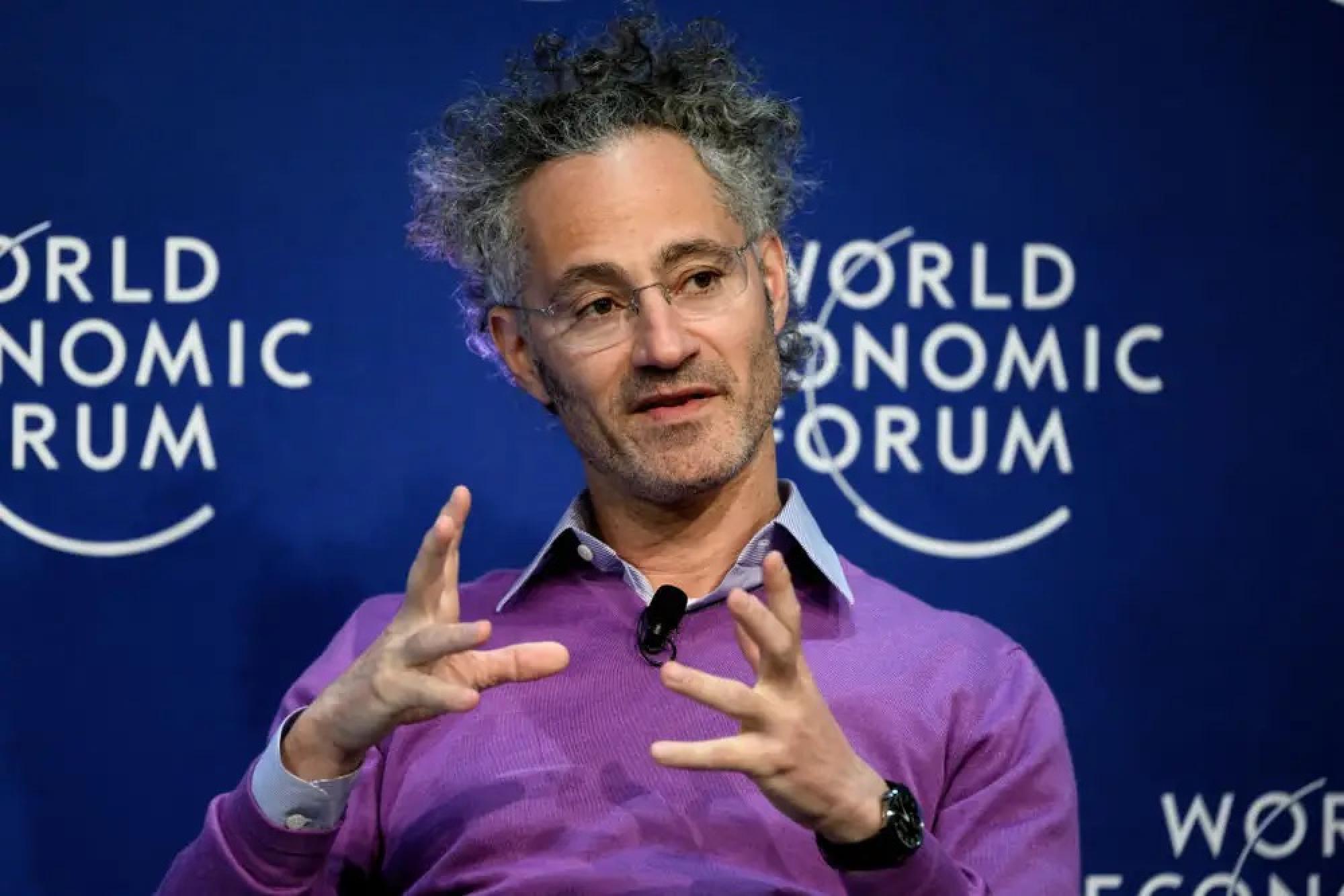
In an exchange this week on "All-In Podcast," Alex Karp was on the defensive. The Palantir CEO used the appearance to downplay and deny the notion that his company would engage in rights-violating in surveillance work. "We are the single worst technology to use to abuse civil liberties, which is by the way the reason why we could never get the NSA or the FBI to actually buy our product," Karp said. What he didn't mention was the fact that a tranche of classified documents revealed by [whistleblower and former NSA contractor] Edward Snowden and The Intercept in 2017 showed how Palantir software helped the National Security Agency and its allies spy on the entire planet. Palantir software was used in conjunction with a signals intelligence tool codenamed XKEYSCORE, one of the most explosive revelations from the NSA whistleblower's 2013 disclosures. XKEYSCORE provided the NSA and its foreign partners with a means of easily searching through immense troves of data and metadata covertly siphoned across the entire global internet, from emails and Facebook messages to webcam footage and web browsing. A 2008 NSA presentation describes how XKEYSCORE could be used to detect "Someone whose language is out of place for the region they are in," "Someone who is using encryption," or "Someone searching the web for suspicious stuff." In May, the New York Times reported Palantir would play a central role in a White House plan to boost data sharing between federal agencies, "raising questions over whether he might compile a master list of personal information on Americans that could give him untold surveillance power."
Latest
Latest News
Each news summary is created according to strict standards. Here's how we do it.
Each summary is created using a consistent editorial procedure. The target length is approximately 16 lines of 11-point Arial text in a 650-pixel-wide column. Up to 25% of a summary may be set in bold to emphasize the most important ideas. Summaries are composed of verbatim excerpts presented in the same sequence as they appear in the original news source, with very minor editorial additions. Where material has been omitted between excerpts, the omission is indicated with ellipses (...). Any words added by an editor for clarity or context appear in [brackets]. Our original news editor was Fred Burks. Tod Fletcher edited most summaries from 2007 through 2014, and Mark Bailey has served as news editor since 2014.