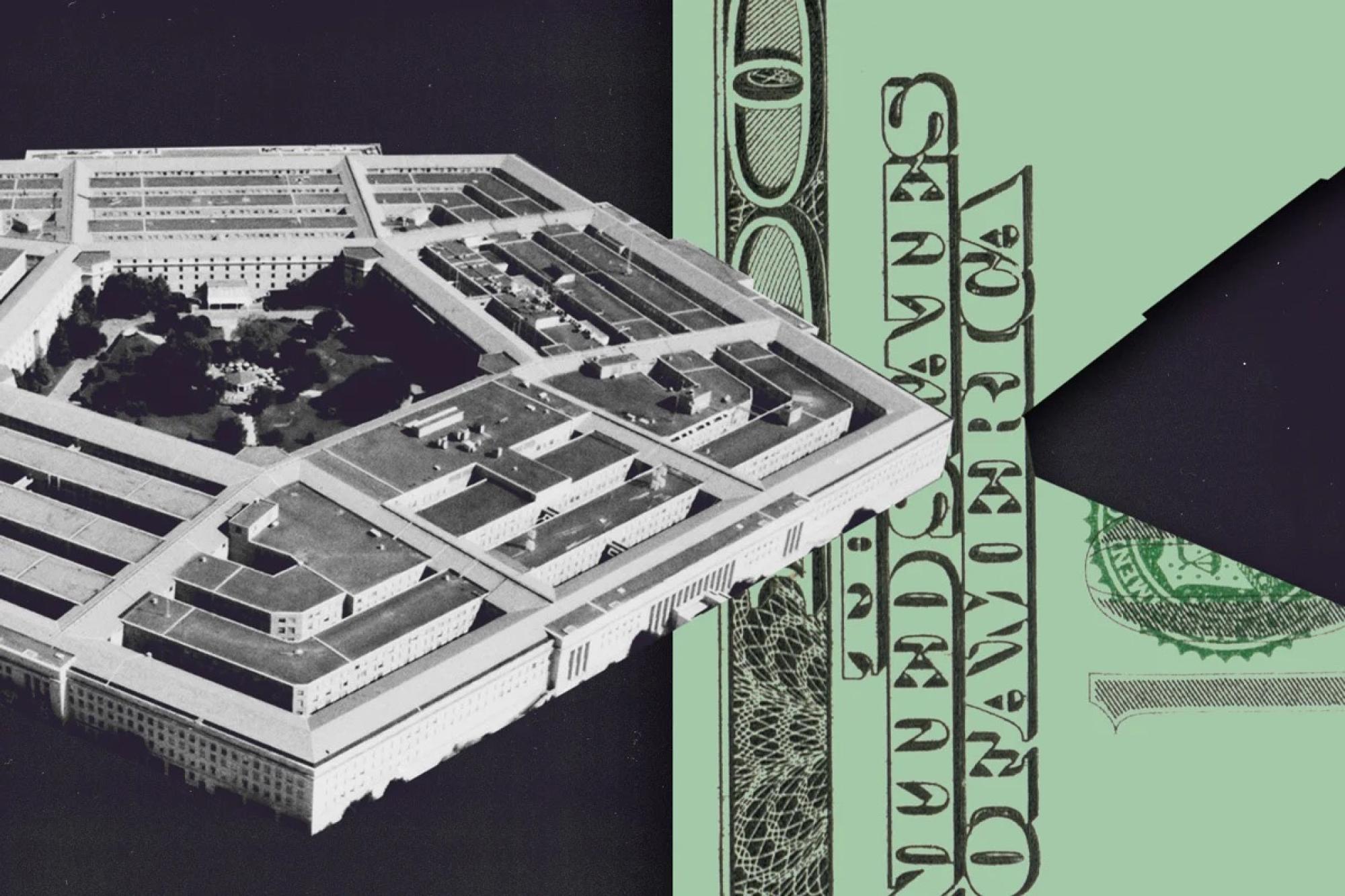
In 2011, the Army decided to get its soldiers new pistols. The Pentagon won't complete delivery until 2027 at the earliest. The story of the Pentagon's new pistols would be funny if it didn't point to a serious problem at the heart of America's military. The Department of Defense has built a gilded fortress of people and processes that is slow, wasteful and married to the past. Of all the obstacles to fielding the military that America needs, the Pentagon's bureaucracy may be the hardest to overcome. The byzantine system for buying and testing weapons isolates the military from the innovative parts of the American economy. Congress underwrites the dysfunction with appropriations that are designed to deliver wins for its members rather than for America's national security. As the House and Senate work toward the country's first trillion-dollar defense budget, over $52 billion is for things members of Congress added, unbidden, to the Pentagon's wish list, according to the independent budget watchdog Taxpayers for Common Sense. No one can keep track of where all the money goes. The Defense Department is the only major federal agency never to get a clean bill of health from outside accountants, and has failed its last seven audits in as many years. When the bean counters can follow the money, they often find it has been wasted. The system feeds on itself. Pentagon officials and congressional staff members have long migrated to the arms industry.
Latest
Latest News
Each news summary is created according to strict standards. Here's how we do it.
Each summary is created using a consistent editorial procedure. The target length is approximately 16 lines of 11-point Arial text in a 650-pixel-wide column. Up to 25% of a summary may be set in bold to emphasize the most important ideas. Summaries are composed of verbatim excerpts presented in the same sequence as they appear in the original news source, with very minor editorial additions. Where material has been omitted between excerpts, the omission is indicated with ellipses (...). Any words added by an editor for clarity or context appear in [brackets]. Our original news editor was Fred Burks. Tod Fletcher edited most summaries from 2007 through 2014, and Mark Bailey has served as news editor since 2014.