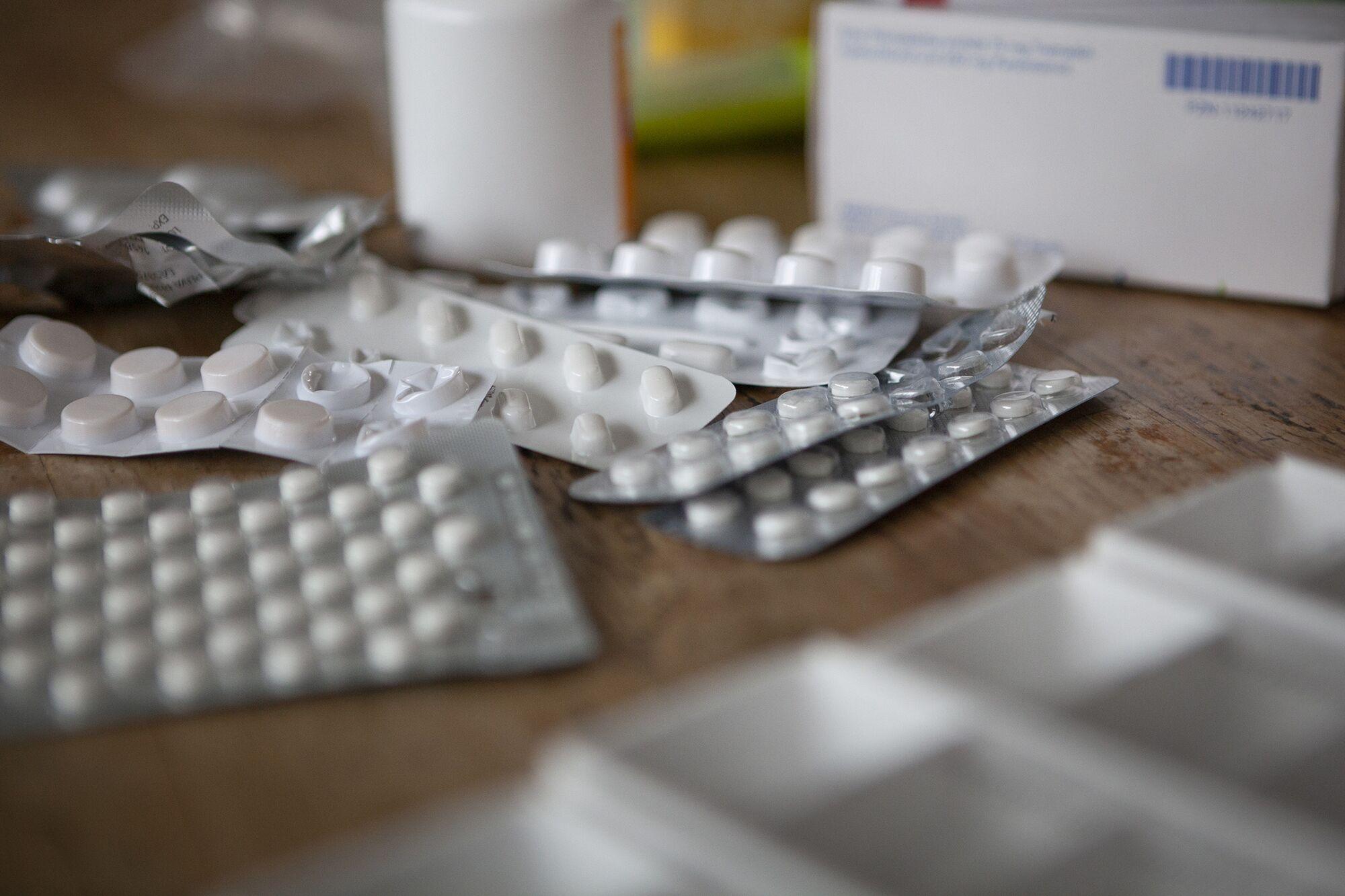
One ALS drug made $400 million in sales for its maker. It doesn't work. A cancer treatment brought in $500 million. That one turned out to have no effect on survival. A blood cancer medication made nearly $850 million before being withdrawn for two of its uses. That drug had been linked to patient deaths years prior. All of them were allowed to be sold to Americans because of the US Food and Drug Administration's drive to get new drugs to patients quickly sometimes even before they're done testing. Drug companies are profiting, though. Since 2014, they've made at least $3.6 billion in global sales of medications that have either later been shown to be ineffective or had most or all of their uses withdrawn in the US. There are a number of ways a drug company can get its treatment to patients faster: There's the "priority review" pathway, then "fast track," "accelerated approval" and "breakthrough therapy." The majority of new drugs in the US are approved through one or more of these sped-up pathways. Last year two thirds of all new drugs reached the market this way. One of the problems is that sometimes drugmakers resist pulling a drug off the market, even after it's obvious it doesn't work. Makena, a drug to reduce the risk of premature birth, received a sped-up approval in 2011. Eight years later, a large trial found it didn't work. Yet it took another four years for the FDA to force it off the market. Makena ... generated over $1.6 billion in sales.
Latest
Latest News
Each news summary is created according to strict standards. Here's how we do it.
Each summary is created using a consistent editorial procedure. The target length is approximately 16 lines of 11-point Arial text in a 650-pixel-wide column. Up to 25% of a summary may be set in bold to emphasize the most important ideas. Summaries are composed of verbatim excerpts presented in the same sequence as they appear in the original news source, with very minor editorial additions. Where material has been omitted between excerpts, the omission is indicated with ellipses (...). Any words added by an editor for clarity or context appear in [brackets]. Our original news editor was Fred Burks. Tod Fletcher edited most summaries from 2007 through 2014, and Mark Bailey has served as news editor since 2014.