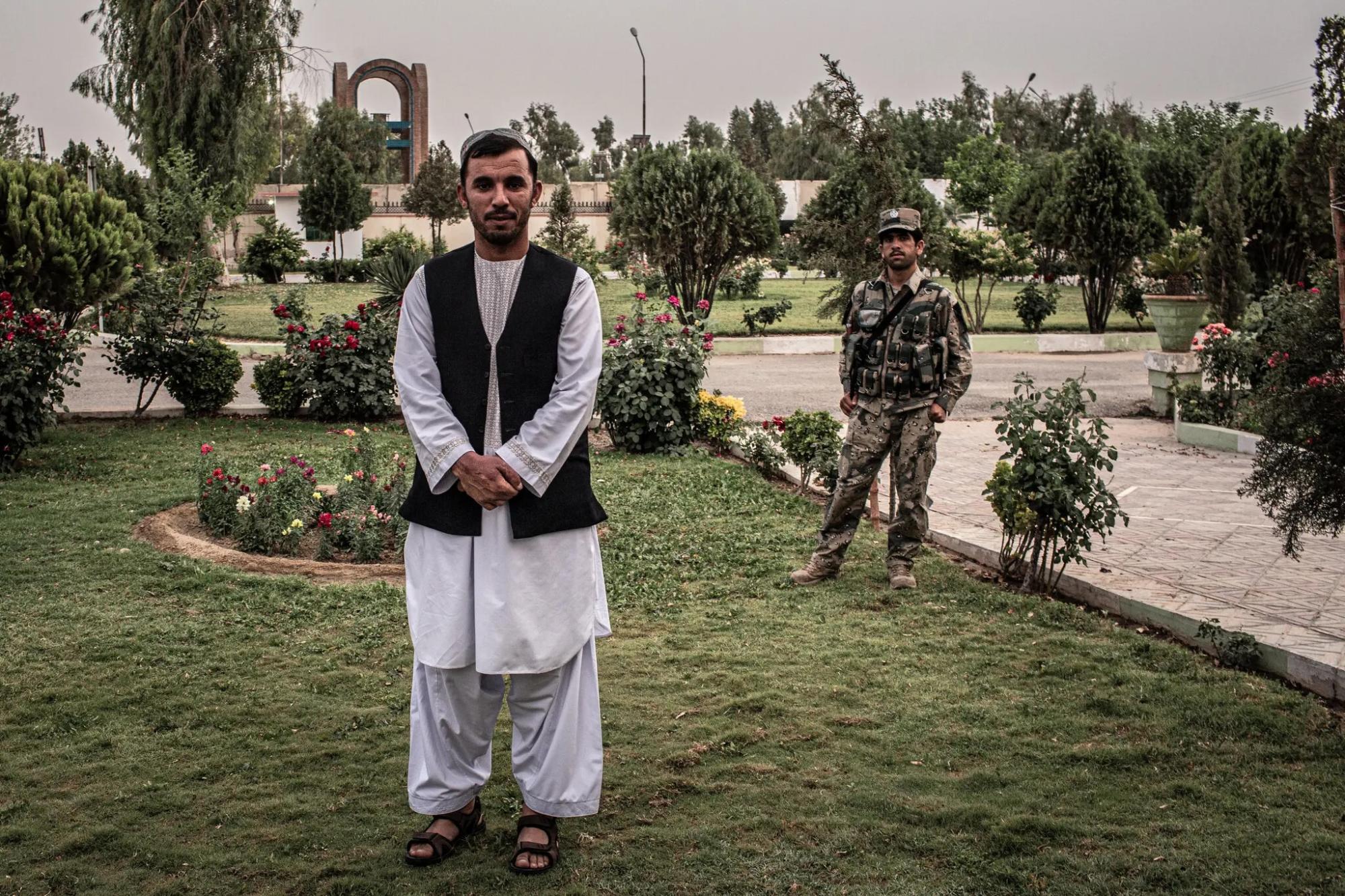
Abdul Raziq [was] one of America's most important partners in the war against the Taliban. American generals cycling through Afghanistan made regular pilgrimages to visit him, praising ... the loyalty he commanded from his men, who were trained, armed and paid by the United States and its allies. The Americans were by his side until the very end. When he was gunned down by an undercover Taliban assassin in 2018, he was walking next to the top American commander in Afghanistan, Gen. Austin S. Miller, who celebrated him as a "great friend" and "patriot." But to countless Afghan civilians under his reign, Raziq was something else entirely: America's monster. His battlefield prowess was built on years of torture, extrajudicial killings and the largest-known campaign of forced disappearances during America's 20-year war in Afghanistan. He transformed the police into a fearsome combat force without constraints, and his officers abducted hundreds, if not thousands, of people to be killed or tortured in secret jails. Most were never seen again. The culture of lawlessness and impunity he created flew in the face of endless promises by American presidents, generals and ambassadors to uphold human rights and build a better Afghanistan. Raziq's tactics ... stirred such enmity in parts of the population that the Taliban turned his cruelty into a recruiting tool, broadcasting it to attract new fighters. Many Afghans came to revile the American-backed government and everything it represented.
Latest
Latest News
Each news summary is created according to strict standards. Here's how we do it.
Each summary is created using a consistent editorial procedure. The target length is approximately 16 lines of 11-point Arial text in a 650-pixel-wide column. Up to 25% of a summary may be set in bold to emphasize the most important ideas. Summaries are composed of verbatim excerpts presented in the same sequence as they appear in the original news source, with very minor editorial additions. Where material has been omitted between excerpts, the omission is indicated with ellipses (...). Any words added by an editor for clarity or context appear in [brackets]. Our original news editor was Fred Burks. Tod Fletcher edited most summaries from 2007 through 2014, and Mark Bailey has served as news editor since 2014.