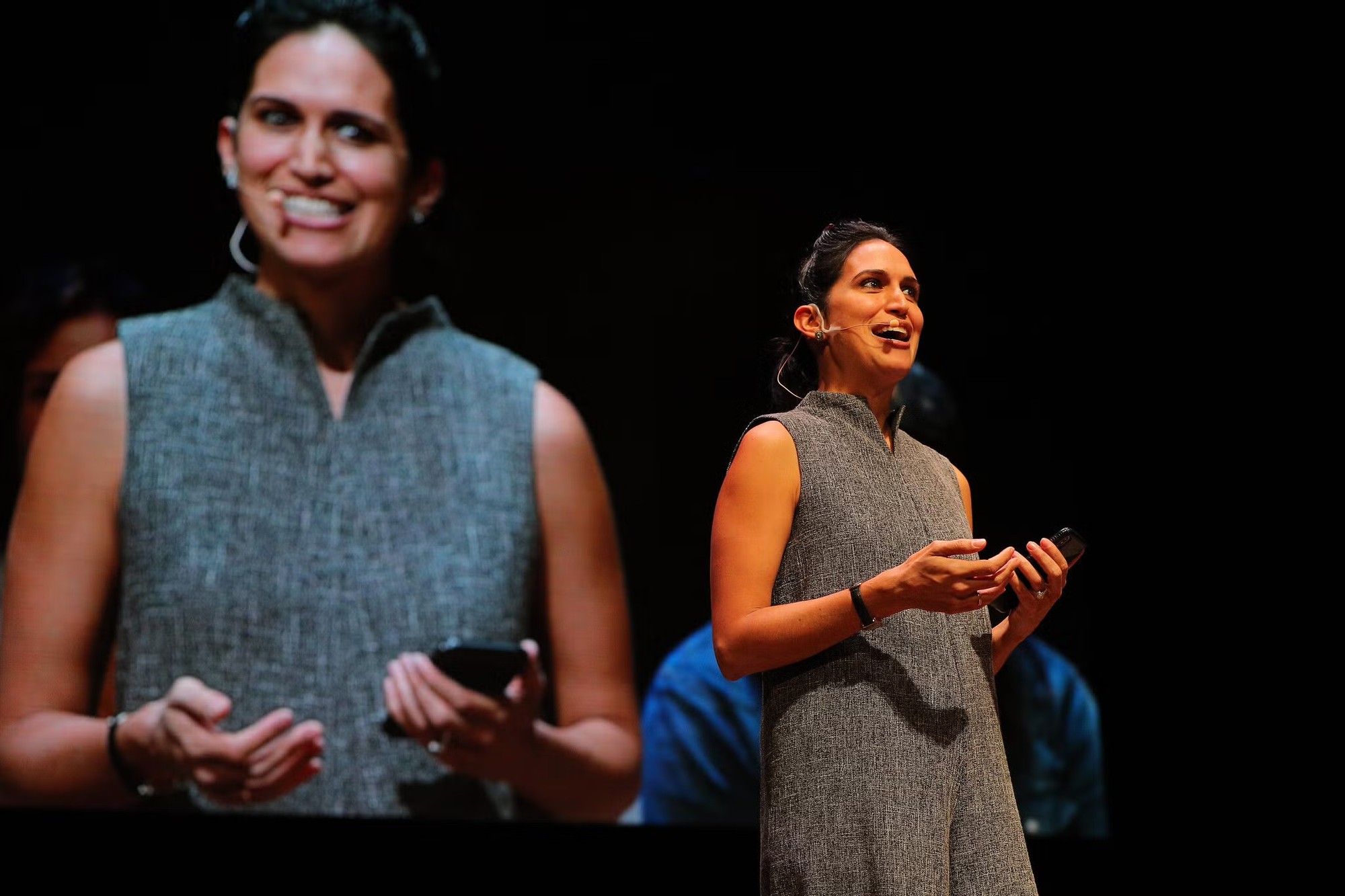
There’s more than enough conflict to go around. But in her new book, “The Art of Fighting,” the conflict resolution facilitator Priya Parker argues that we could use more of it, and need to be a lot better at it. The book is a natural companion piece to Parker’s previous work, “The Art of Gathering,” in which she provided tools and examples for how communal activities can create closer and more cohesive bonds within social groups. When conflict arises, organizations and friend groups basically oscillate between unhealthy peace — conflict aversion, avoidance, pretending everything’s fine — and unhealthy conflict, which is escalation or domination or abuse. I wrote “The Art of Fighting” to say: Look, this is a deeply, deeply important part of all group life, of all of our relationships, and we’re not taught how to do it well. It’s not immoral, it’s not toxic. Conflict is the way we figure out who we are and how we negotiate to be part of common life together. I studied traditional and Indigenous communities and how they dealt with internal conflict, and almost all of them had specific times and places to regularly sort through conflict. Part of what we are lacking in modern life are rituals to hold things that are hard. It allows us as humans, as friends, to have a place where we know we can take this stuff. In part because we assume that conflict is dysfunctional, we don’t even know that there are ways that we can actually embed this into daily life.
Latest
Latest News
Each news summary is created according to strict standards. Here's how we do it.
Each summary is created using a consistent editorial procedure. The target length is approximately 16 lines of 11-point Arial text in a 650-pixel-wide column. Up to 25% of a summary may be set in bold to emphasize the most important ideas. Summaries are composed of verbatim excerpts presented in the same sequence as they appear in the original news source, with very minor editorial additions. Where material has been omitted between excerpts, the omission is indicated with ellipses (...). Any words added by an editor for clarity or context appear in [brackets]. Our original news editor was Fred Burks. Tod Fletcher edited most summaries from 2007 through 2014, and Mark Bailey has served as news editor since 2014.