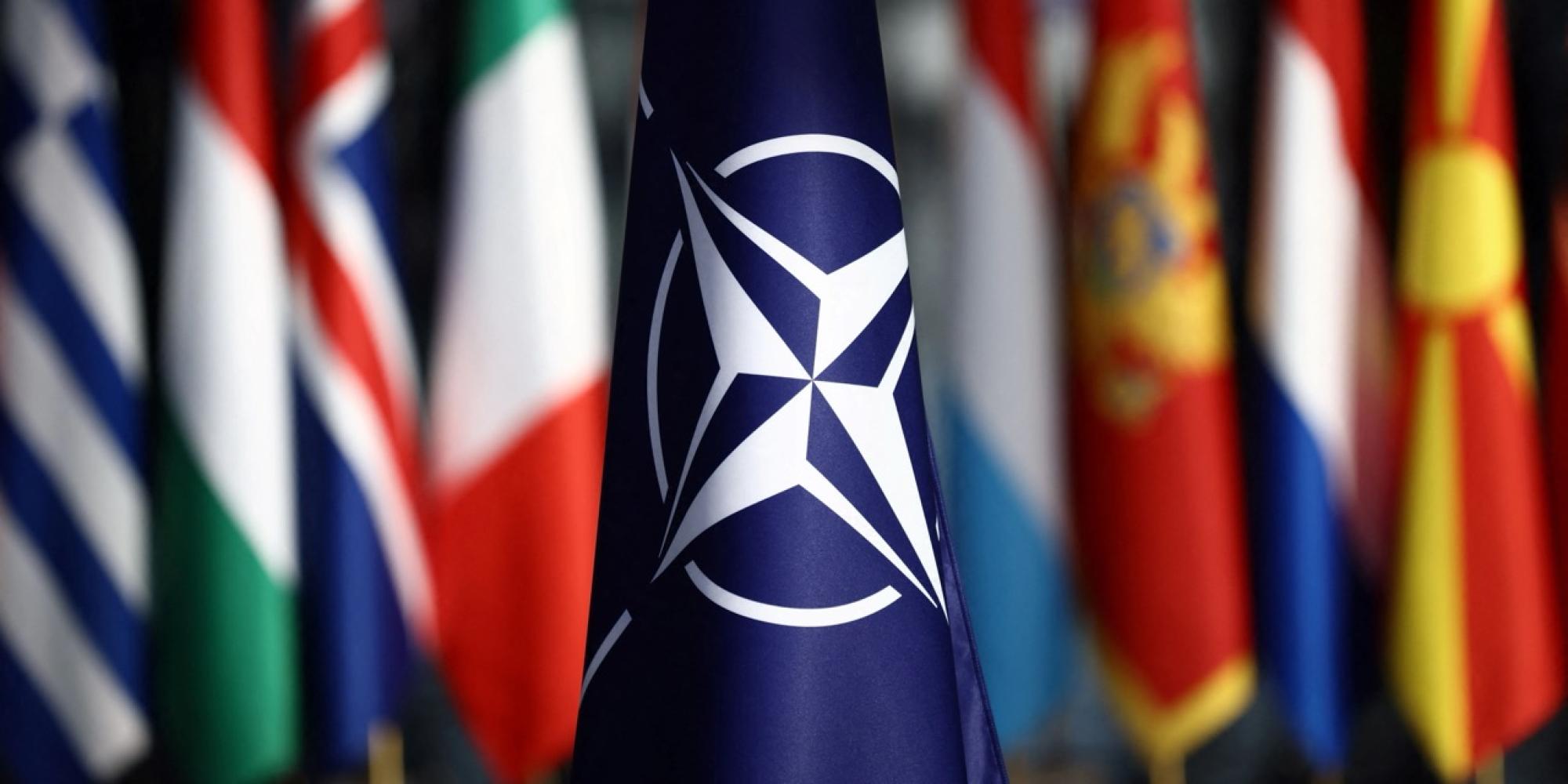
The U.S. Army Cyber Command told defense contractors it planned to surveil global social media use to defend the NATO brand," according to a 2022 webinar recording reviewed by The Intercept. "NATO is one of our key brands that we are pushing, as far as our national security alliance," [Lt. Col. David Beskow] explained. The mass social media surveillance appears to be just one component of a broader initiative to use private-sector data mining to advance the Army's information warfare efforts. Beskow expressed an interest in purchasing access to nonpublic commercial web data, corporate ownership records, supply chain data, and more. While the U.S. national security establishment frequently warns against other countries' "weaponization" of social media and the broader internet, recent reporting has shown the Pentagon engages in some of the very same conduct. Researchers from Graphika and the Stanford Internet Observatory uncovered a network of pro-U.S. Twitter and Facebook accounts covertly operated by U.S. Central Command, an embarrassing revelation that led to a "sweeping audit of how it conducts clandestine information warfare." Despite years of alarm in Washington over the threat posed by deepfake video fabrications to democratic societies, The Intercept reported last month that U.S. Special Operations Command is seeking vendors to help them make their own deepfakes to deceive foreign internet users.
Latest
Latest News
Each news summary is created according to strict standards. Here's how we do it.
Each summary is created using a consistent editorial procedure. The target length is approximately 16 lines of 11-point Arial text in a 650-pixel-wide column. Up to 25% of a summary may be set in bold to emphasize the most important ideas. Summaries are composed of verbatim excerpts presented in the same sequence as they appear in the original news source, with very minor editorial additions. Where material has been omitted between excerpts, the omission is indicated with ellipses (...). Any words added by an editor for clarity or context appear in [brackets]. Our original news editor was Fred Burks. Tod Fletcher edited most summaries from 2007 through 2014, and Mark Bailey has served as news editor since 2014.