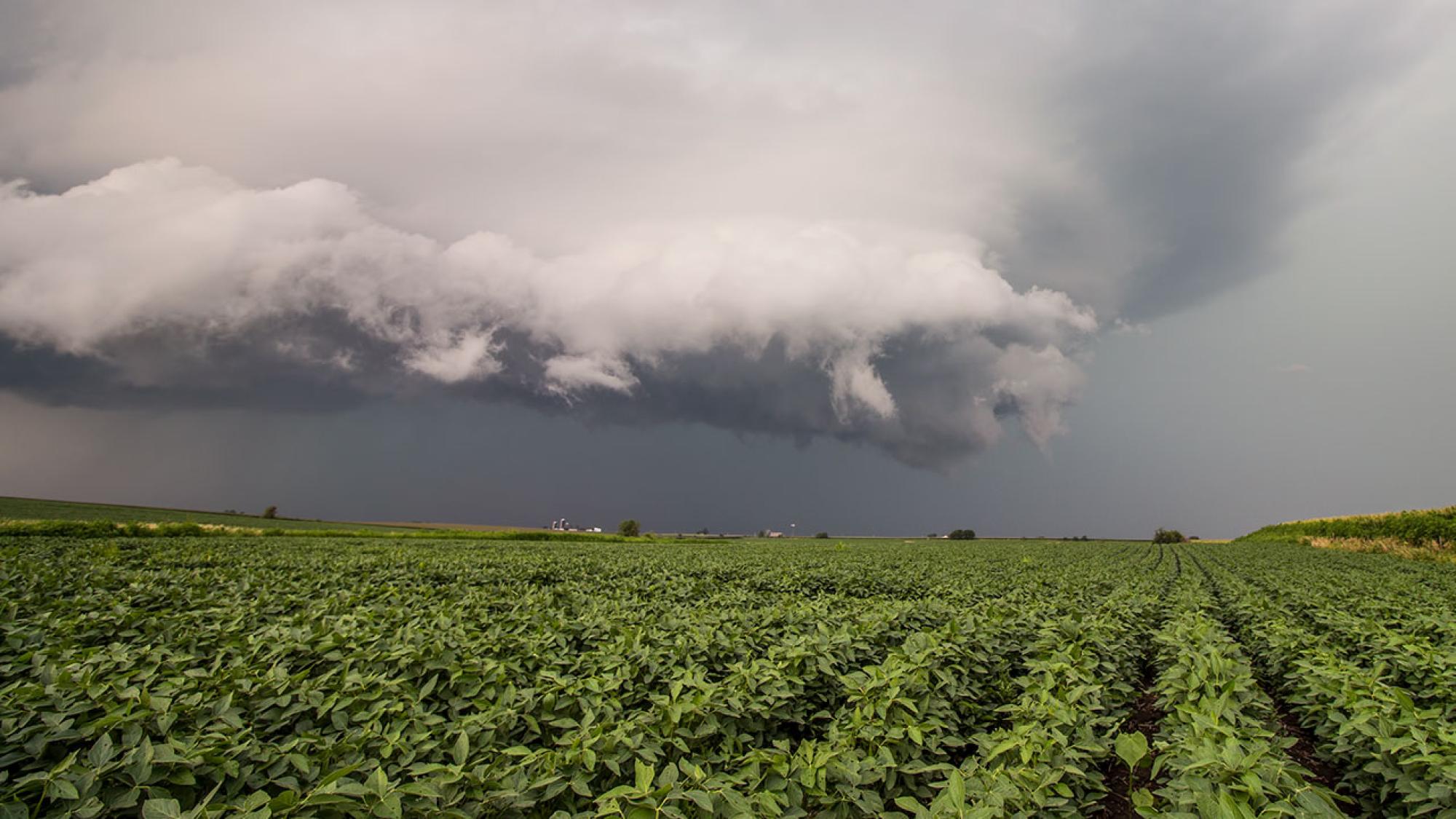
Pesticides banned years ago in the European Union are drifting through the skies and turning up in clouds above France, raising concerns about how long these toxins persist and how far they can travel, with potentially harmful global health impacts, according to a pathbreaking new study. The research ... is the first to detect dozens of agricultural chemicals"including insecticides, herbicides, fungicides, and other substances"suspended in cloud water droplets. That means pesticides not only linger in the environment but also move through the atmosphere and fall back to Earth in rain or snow, sometimes at levels exceeding European safe drinking water limits. The study found that clouds can carry current-use pesticides, long-banned compounds, and "emerging contaminants""industrial chemicals that either build up in the environment or form when older pesticides break down. Some even transform into new compounds in the atmosphere itself, beyond what regulators have known to consider. Researchers estimate that French skies alone may contain anywhere from a few tons to more than 100 tons of pesticides at any given time"most carried in from distant sources. Out of 446 possible chemicals screened"including pesticides, biocides (compounds that kill harmful organisms), additives, and transformation products (breakdown products of pesticides)"researchers found 32 different compounds in cloud water.
Latest
Latest News
Each news summary is created according to strict standards. Here's how we do it.
Each summary is created using a consistent editorial procedure. The target length is approximately 16 lines of 11-point Arial text in a 650-pixel-wide column. Up to 25% of a summary may be set in bold to emphasize the most important ideas. Summaries are composed of verbatim excerpts presented in the same sequence as they appear in the original news source, with very minor editorial additions. Where material has been omitted between excerpts, the omission is indicated with ellipses (...). Any words added by an editor for clarity or context appear in [brackets]. Our original news editor was Fred Burks. Tod Fletcher edited most summaries from 2007 through 2014, and Mark Bailey has served as news editor since 2014.