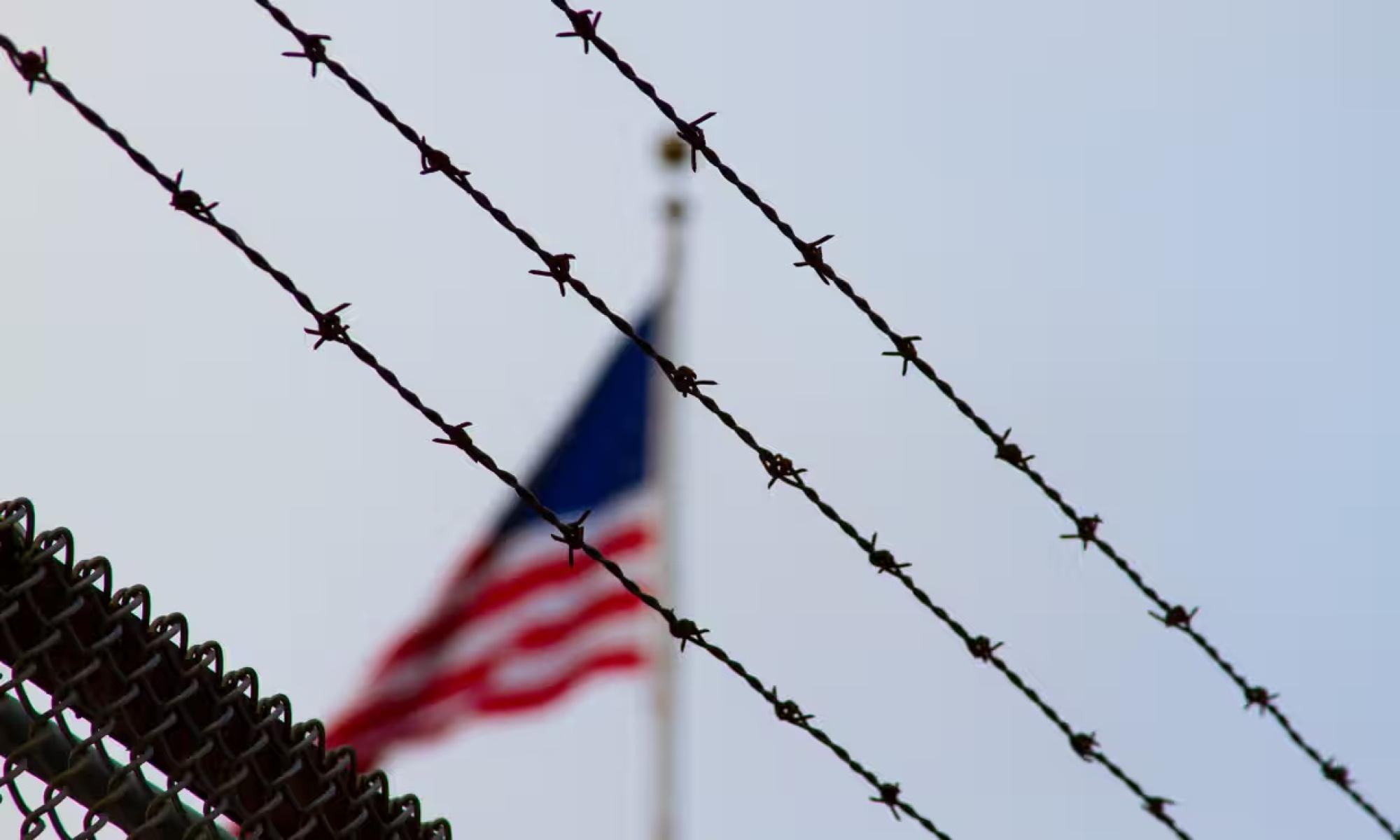
At a time when the US has narrowly skirted a recession, and people around the country are still struggling with the cost of living, a curious number of states have found billions of dollars for one thing: building prisons and jails. In September, Alabama announced that a new prison, currently under construction, would have a final cost of $1.082bn. The same month Indiana broke ground on a $1.2bn prison. Nebraska is spending $350m on a new prison, while some in Georgia are lobbying for $1.69bn for construction of a jail in Fulton county. The willingness to spend vast amounts of money on locking people up, particularly in states like Alabama, which has one of the highest poverty rates in the country, is staggering. It's also wrong-headed, experts say. "Any money spent on caging human beings is not money well spent, period," said Carmen Gutierrez ... at the University of North Carolina at Chapel Hill. "We have decades of research showing that incarceration does not improve public safety, and that it in fact harms individuals who themselves are incarcerated. It also harms their families and it harms the communities that they come from. So the damage outweighs any potential benefit." The US has an incarceration rate of 664 people in every 100,000 ... far higher than other founding Nato countries. In Alabama, Georgia and other southern states about one in every 100 people is incarcerated in prisons, jails, immigration detention and juvenile justice facilities.
Latest
Latest News
Each news summary is created according to strict standards. Here's how we do it.
Each summary is created using a consistent editorial procedure. The target length is approximately 16 lines of 11-point Arial text in a 650-pixel-wide column. Up to 25% of a summary may be set in bold to emphasize the most important ideas. Summaries are composed of verbatim excerpts presented in the same sequence as they appear in the original news source, with very minor editorial additions. Where material has been omitted between excerpts, the omission is indicated with ellipses (...). Any words added by an editor for clarity or context appear in [brackets]. Our original news editor was Fred Burks. Tod Fletcher edited most summaries from 2007 through 2014, and Mark Bailey has served as news editor since 2014.