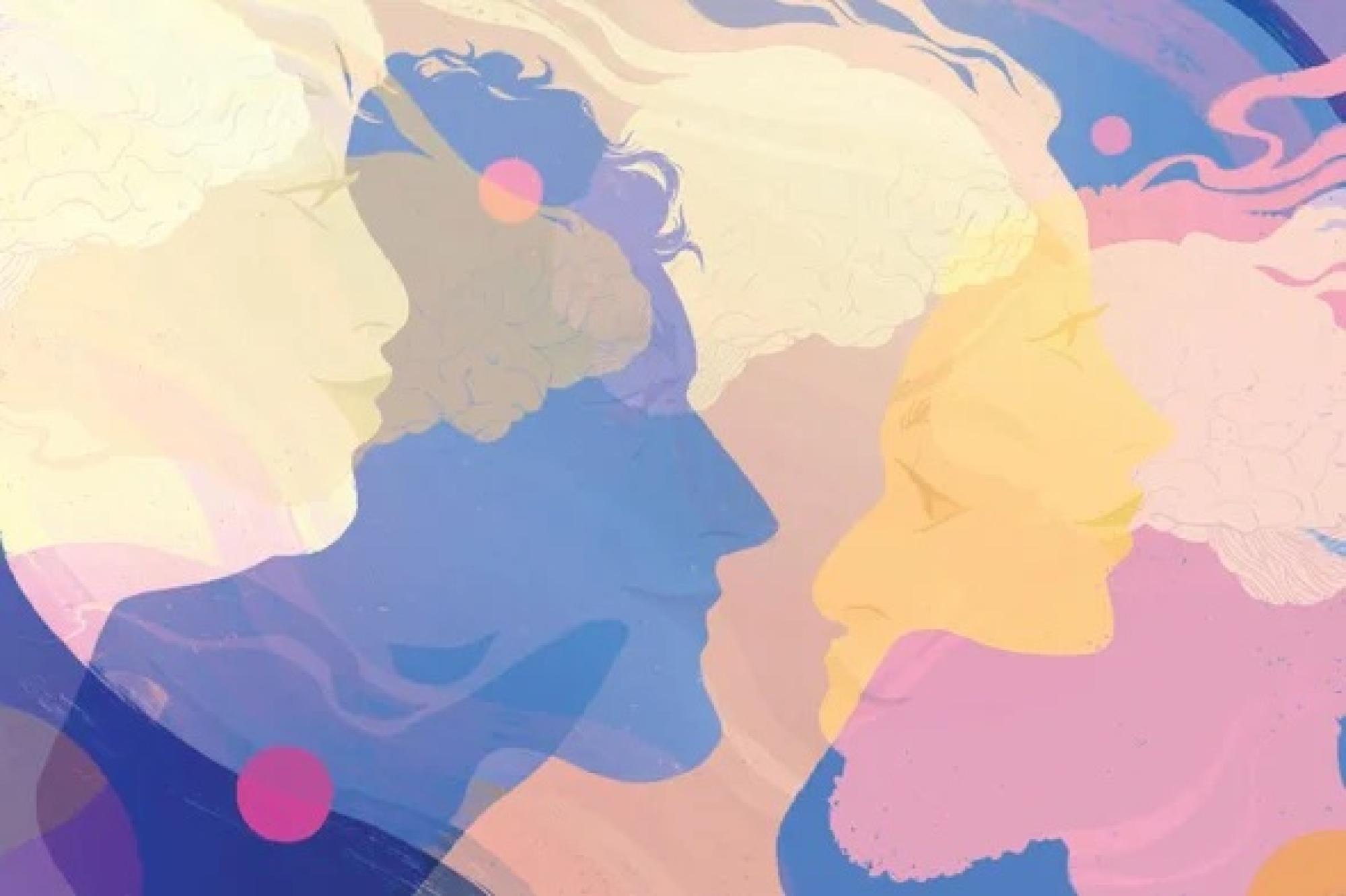
Collective neuroscience, as some practitioners call it, is a rapidly growing field of research. An early, consistent finding is that when people converse or share an experience, their brain waves synchronize. Neurons in corresponding locations of the different brains fire at the same time, creating matching patterns, like dancers moving together. Auditory and visual areas respond to shape, sound and movement in similar ways, whereas higher-order brain areas seem to behave similarly during more challenging tasks such as making meaning out of something seen or heard. The experience of being on the same wavelength" as another person is real, and it is visible in the activity of the brain. Interbrain synchrony prepares people for interaction and beginning to understand it as a marker of relationships. Given that synchronized experiences are often enjoyable, researchers suspect this phenomenon is beneficial: it helps us interact and may have facilitated the evolution of sociality. This new kind of brain research might also illuminate why we don't always "click" with someone or why social isolation is so harmful to physical and mental health. Preliminary evidence ... shows synchrony between interacting brains and, more intriguingly, that correlations in some brain regions are greater between people while they are telling a joint story than during the independent stories, particularly in the parietal cortex. "That area is active for memory and narrative construction," [neuroscientist Thalia] Wheatley says. "It seems to fit."
Latest
Latest News
Each news summary is created according to strict standards. Here's how we do it.
Each summary is created using a consistent editorial procedure. The target length is approximately 16 lines of 11-point Arial text in a 650-pixel-wide column. Up to 25% of a summary may be set in bold to emphasize the most important ideas. Summaries are composed of verbatim excerpts presented in the same sequence as they appear in the original news source, with very minor editorial additions. Where material has been omitted between excerpts, the omission is indicated with ellipses (...). Any words added by an editor for clarity or context appear in [brackets]. Our original news editor was Fred Burks. Tod Fletcher edited most summaries from 2007 through 2014, and Mark Bailey has served as news editor since 2014.