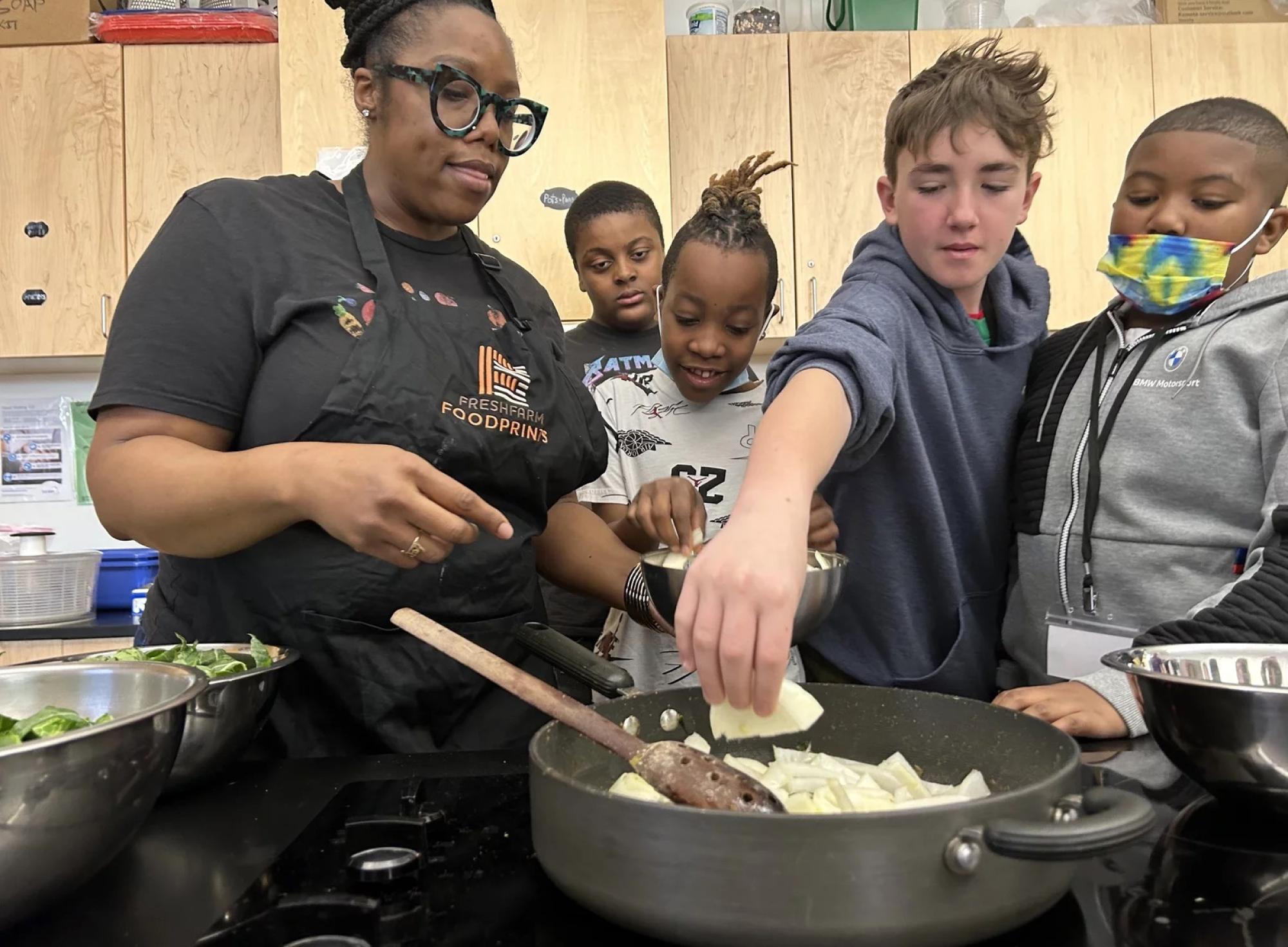
After a decline in nutrition education in U.S. schools in recent decades, there's new momentum to weave food and cooking into the curriculum again. Remember the hands-on cooking in home economics class, which was a staple in U.S. schools for decades? "I'd love to see it brought back and have the science around healthy eating integrated," says Stacy Dean, deputy under secretary for food, nutrition and consumer services at the U.S. Department of Agriculture. Dean told me she was inspired by a visit to Watkins Elementary, in Washington, D.C., where this idea is germinating. Students grow vegetables in their school garden. They also roll up their sleeves in the school's kitchen to participate in a FRESHFARM FoodPrints class, which integrates cooking and nutrition education. Evaluations show participation in FRESHFARM programs is associated with increased preference for fruits and vegetables. And, the CDC points to evidence that nutrition education may help students maintain a healthy weight and can also help students recognize the connection between food and emotional wellbeing. Given the key role diet plays in preventing chronic disease, the agency says it would be ideal to offer more nutrition education. Programs like FRESHFARM can help kids expand their palettes by introducing them to new tastes. At first, many kids are turned off by the bitter taste of greens. But through the alchemy of cooking, caramelizing the onions, and blending in fresh ginger, kids can be inspired.
Latest
Latest News
Each news summary is created according to strict standards. Here's how we do it.
Each summary is created using a consistent editorial procedure. The target length is approximately 16 lines of 11-point Arial text in a 650-pixel-wide column. Up to 25% of a summary may be set in bold to emphasize the most important ideas. Summaries are composed of verbatim excerpts presented in the same sequence as they appear in the original news source, with very minor editorial additions. Where material has been omitted between excerpts, the omission is indicated with ellipses (...). Any words added by an editor for clarity or context appear in [brackets]. Our original news editor was Fred Burks. Tod Fletcher edited most summaries from 2007 through 2014, and Mark Bailey has served as news editor since 2014.