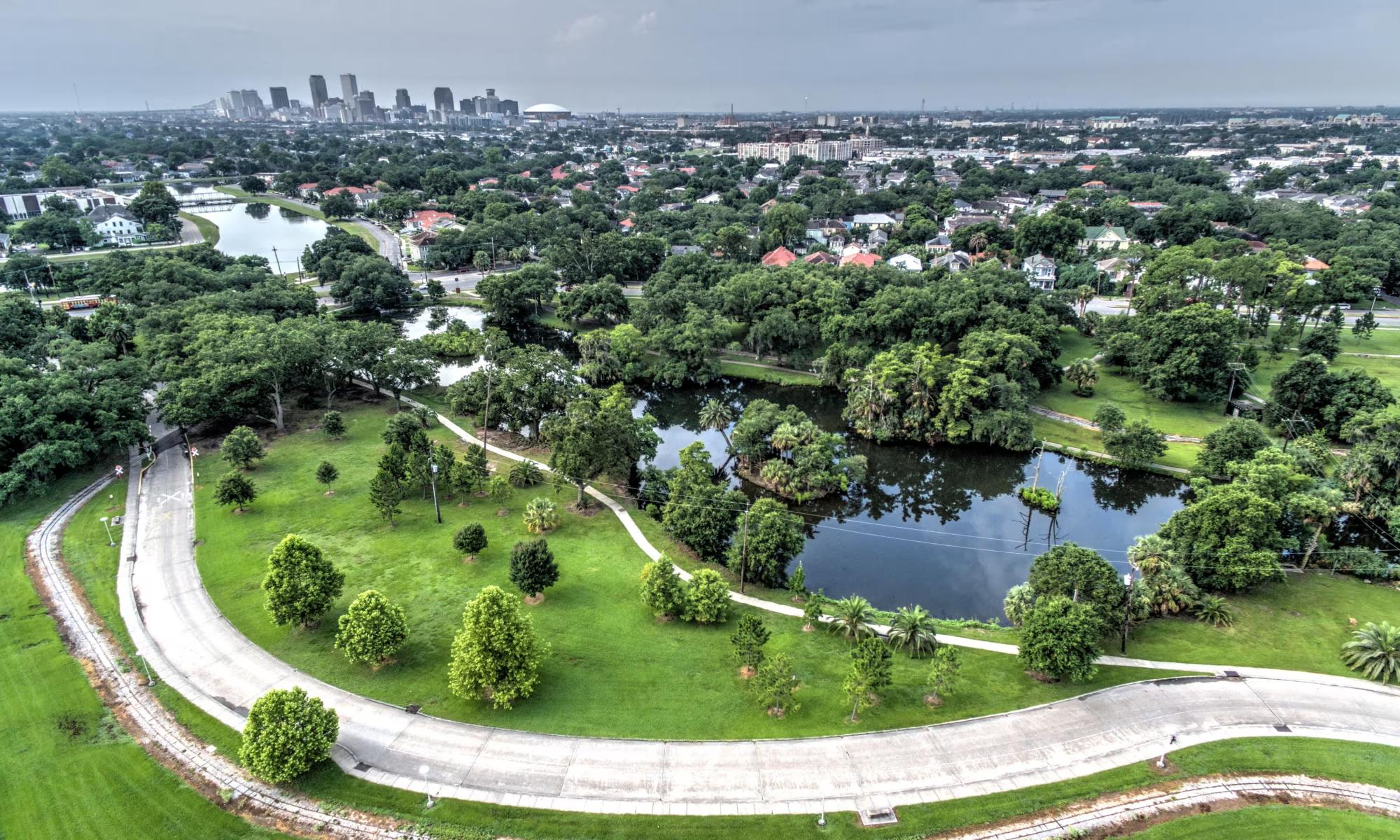
Many studies have shown that people living in greener neighborhoods have several health benefits, including lower levels of stress and cardiovascular disease. But new research indicates that exposure to parks, trees and other green spaces can slow the rates at which our cells age. The study, published in Science of the Total Environment, found that people who lived in neighborhoods with more green space had longer telomeres, which are associated with longer lives and slower ageing. Telomeres are structures that sit on the ends of each cell's 46 chromosomes, like the plastic caps on shoelaces, and keep DNA from unraveling. The longer a cell's telomeres, the more times it can replicate. When telomeres become so short that cells can't divide, the cells die. [Study co-author Aaron] Hipp and his colleagues looked at the medical records (that included measures of telomere lengths from biological samples) and survey responses from more than 7,800 people who participated in a national Centers for Disease Control and Prevention survey conducted between 1999 and 2002. The researchers connected that information with census data to estimate the amount of green space in each person's neighborhood. They found that a 5% increase in a neighborhood's green space was associated with a 1% reduction in the ageing of cells. "The more green the area, the slower the cell ageing," said Hipp.
Latest
Latest News
Each news summary is created according to strict standards. Here's how we do it.
Each summary is created using a consistent editorial procedure. The target length is approximately 16 lines of 11-point Arial text in a 650-pixel-wide column. Up to 25% of a summary may be set in bold to emphasize the most important ideas. Summaries are composed of verbatim excerpts presented in the same sequence as they appear in the original news source, with very minor editorial additions. Where material has been omitted between excerpts, the omission is indicated with ellipses (...). Any words added by an editor for clarity or context appear in [brackets]. Our original news editor was Fred Burks. Tod Fletcher edited most summaries from 2007 through 2014, and Mark Bailey has served as news editor since 2014.