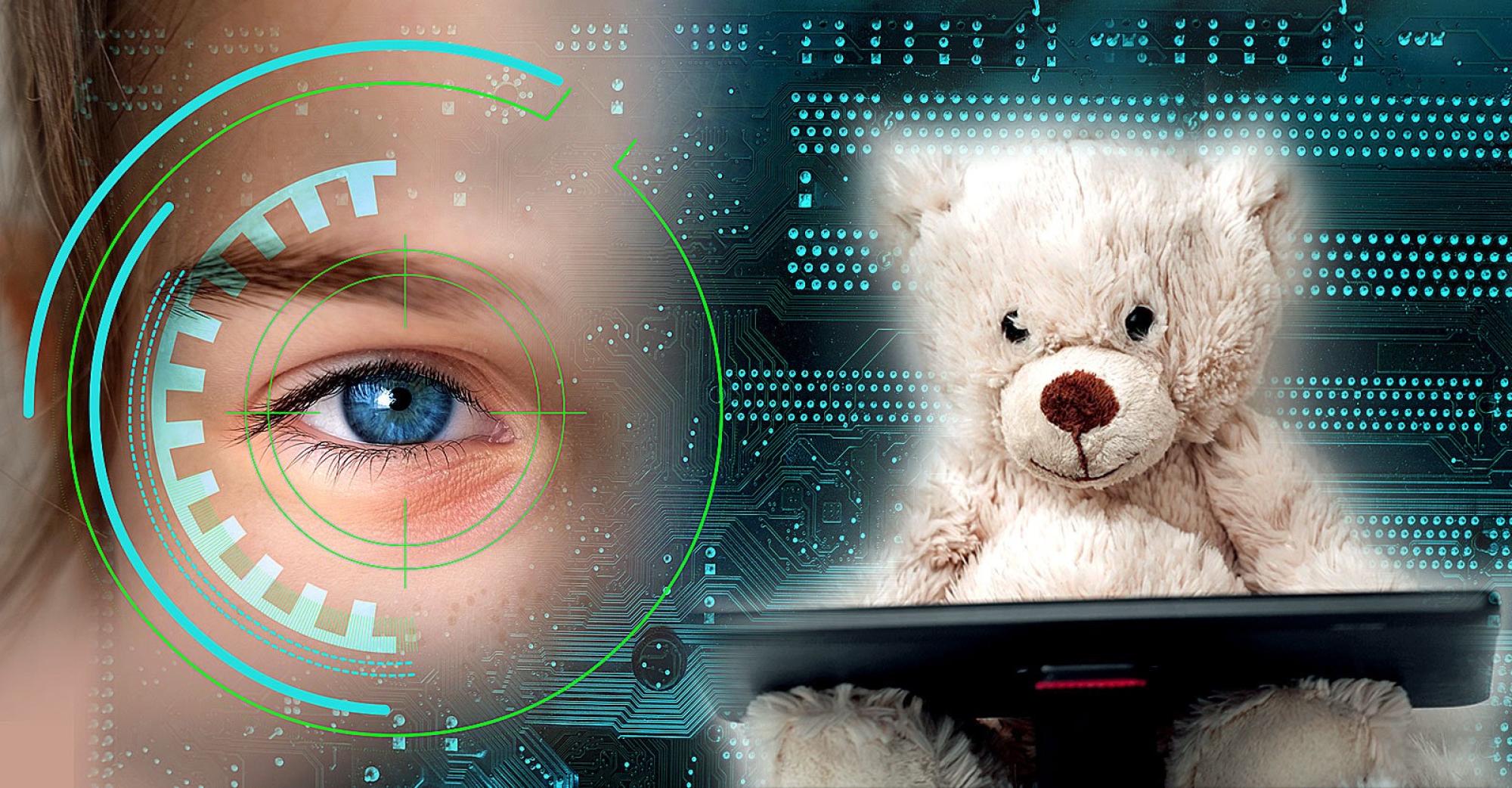
The annual "Trouble in Toyland" report, produced by the U.S. Public Interest Research Group (PIRG) and released before the holiday season, historically has focused on safety hazards found in traditional children's toys. According to the 38th annual "Trouble in Toyland" report, released in mid-November, "Toys that spy on children are a growing threat." The threats "stem from toys with microphones, cameras and trackers, as well as recalled toys, water beads, counterfeits and Meta Quest VR headsets." "The riskiest features of smart toys are those that can collect information, especially without our knowledge or used in a way that parents didn't agree to," said Teresa Murray, Consumer Watchdog at the U.S. PIRG Education Fund and author of the report. "It's chilling to learn what some of these toys can do," Murray said. Smart toys include "stuffed animals that listen and talk, devices that learn their habits, games with online accounts, and smart speakers, watches, play kitchens and remote cars that connect to apps or other technology," according to PIRG. Smart toys can pose the risk of data breaches, hacking, potential violations of children's privacy laws such as the Children's Online Privacy Protection Act of 1998 (COPPA), and exposure to "inappropriate or harmful material without proper filtering and parental controls." According to PIRG, "We don't know with certainty when our child plays with a connected toy that the company isn't recording us or collecting our data."
Latest
Latest News
Each news summary is created according to strict standards. Here's how we do it.
Each summary is created using a consistent editorial procedure. The target length is approximately 16 lines of 11-point Arial text in a 650-pixel-wide column. Up to 25% of a summary may be set in bold to emphasize the most important ideas. Summaries are composed of verbatim excerpts presented in the same sequence as they appear in the original news source, with very minor editorial additions. Where material has been omitted between excerpts, the omission is indicated with ellipses (...). Any words added by an editor for clarity or context appear in [brackets]. Our original news editor was Fred Burks. Tod Fletcher edited most summaries from 2007 through 2014, and Mark Bailey has served as news editor since 2014.