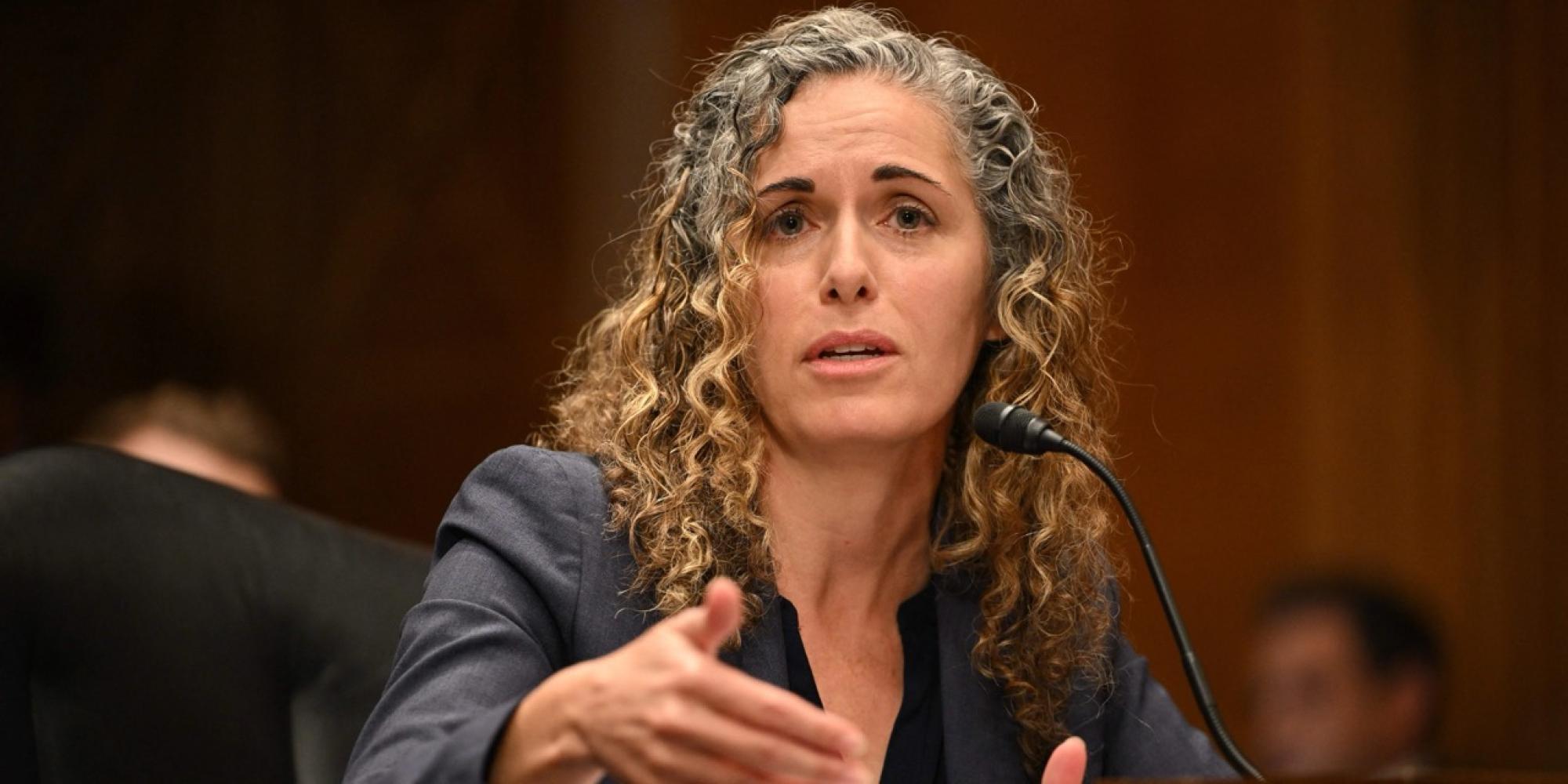
During a Senate briefing last week, a federal counterterrorism official cited the October 7 Hamas attack while urging Congress to reauthorize a sprawling and controversial surveillance program repeatedly used to spy on U.S. citizens on U.S. soil. "As evidenced by the events of the past month, the terrorist threat landscape is highly dynamic and our country must preserve [counterterrorism] fundamentals to ensure constant vigilance," said Director of the National Counterterrorism Center Christine Abizaid. She pointed to Section 702 of the Foreign Intelligence Surveillance Act, which enables the U.S. government to gather vast amounts of intelligence including about U.S. citizens ... without first seeking a warrant. Section 702 "provides key indications and warning on terrorist plans and ... gives us strategic insight into foreign terrorists and their networks overseas," Abizaid said. "I respectfully urge Congress to reauthorize this vital authority." The controversial program is set to expire at the end of the year, and lawmakers sympathetic to the intelligence community are scrambling to protect it. Sean Vitka ... at the civil liberties group Demand Progress [said] that now is the time to enact lasting and dramatic oversight of the 702 authority. "The government has completely failed to demonstrate that any of the privacy protections reformers have called for would impair national security ... so now we're seeing people grasping at straws trying to turn everything into an excuse for reauthorization," Vitka said.
Latest
Latest News
Each news summary is created according to strict standards. Here's how we do it.
Each summary is created using a consistent editorial procedure. The target length is approximately 16 lines of 11-point Arial text in a 650-pixel-wide column. Up to 25% of a summary may be set in bold to emphasize the most important ideas. Summaries are composed of verbatim excerpts presented in the same sequence as they appear in the original news source, with very minor editorial additions. Where material has been omitted between excerpts, the omission is indicated with ellipses (...). Any words added by an editor for clarity or context appear in [brackets]. Our original news editor was Fred Burks. Tod Fletcher edited most summaries from 2007 through 2014, and Mark Bailey has served as news editor since 2014.