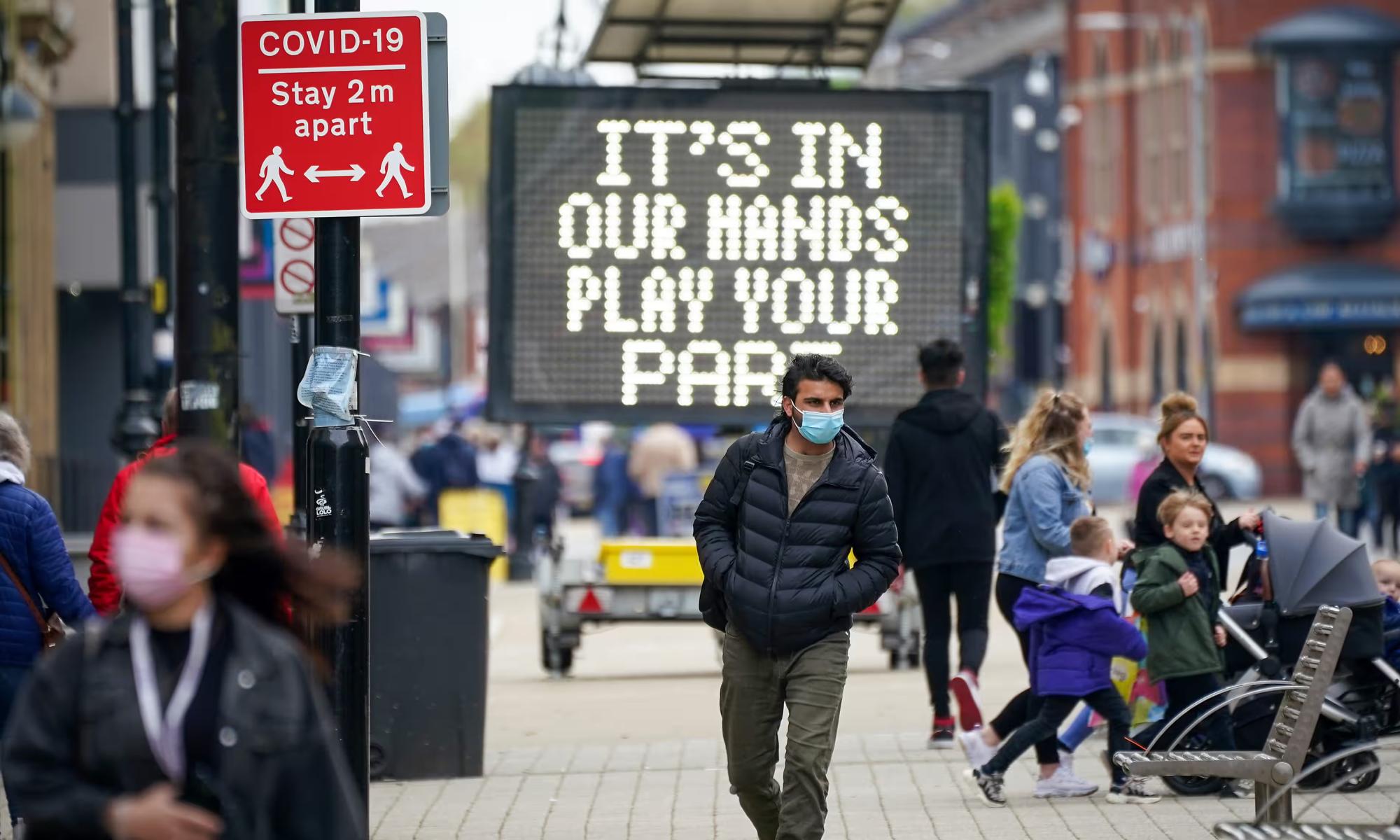
In the U.S. and the U.K. especially, lockdowns went from being regarded as something that only an authoritarian government would attempt to an example of "following the science." But there was never any science behind lockdowns not a single study had ever been undertaken to measure their efficacy in stopping a pandemic. One New York emergency-room doctor recalls that after the steady stream of COVID patients during March and April of 2020, "our ER was basically empty." During the first two years of the pandemic " 2020 and 2021 " the U.S. had 19 percent more deaths than it normally saw in two years' time. For Sweden " one of the few countries that had refused to lock down its society " it was just 4 percent. An analysis by Bloomberg found broadly similar results. In other words, for all the criticism Sweden shouldered from the world's public health officials for refusing to institute lockdowns, it wound up seeing a lower overall death rate during the pandemic than most peer nations that shut down schools and public gatherings. The downsides of lockdowns and school closings were not being openly discussed in the mainstream media. Emily Oster, a Brown University economist … set up what she called the National COVID-19 School Response Dashboard, which eventually tracked 12 million kids in both public and private schools and continued to collect infection-rate data over the next nine months. Not once did the student rate hit one percent during any two-week span. Three CDC scientists acknowledged in the Journal of the American Medical Association: "As many schools have reopened for in-person instruction in some parts of the U.S. … there has been little evidence that schools have contributed meaningfully to increased community transmission."
Latest
Latest News
Each news summary is created according to strict standards. Here's how we do it.
Each summary is created using a consistent editorial procedure. The target length is approximately 16 lines of 11-point Arial text in a 650-pixel-wide column. Up to 25% of a summary may be set in bold to emphasize the most important ideas. Summaries are composed of verbatim excerpts presented in the same sequence as they appear in the original news source, with very minor editorial additions. Where material has been omitted between excerpts, the omission is indicated with ellipses (...). Any words added by an editor for clarity or context appear in [brackets]. Our original news editor was Fred Burks. Tod Fletcher edited most summaries from 2007 through 2014, and Mark Bailey has served as news editor since 2014.