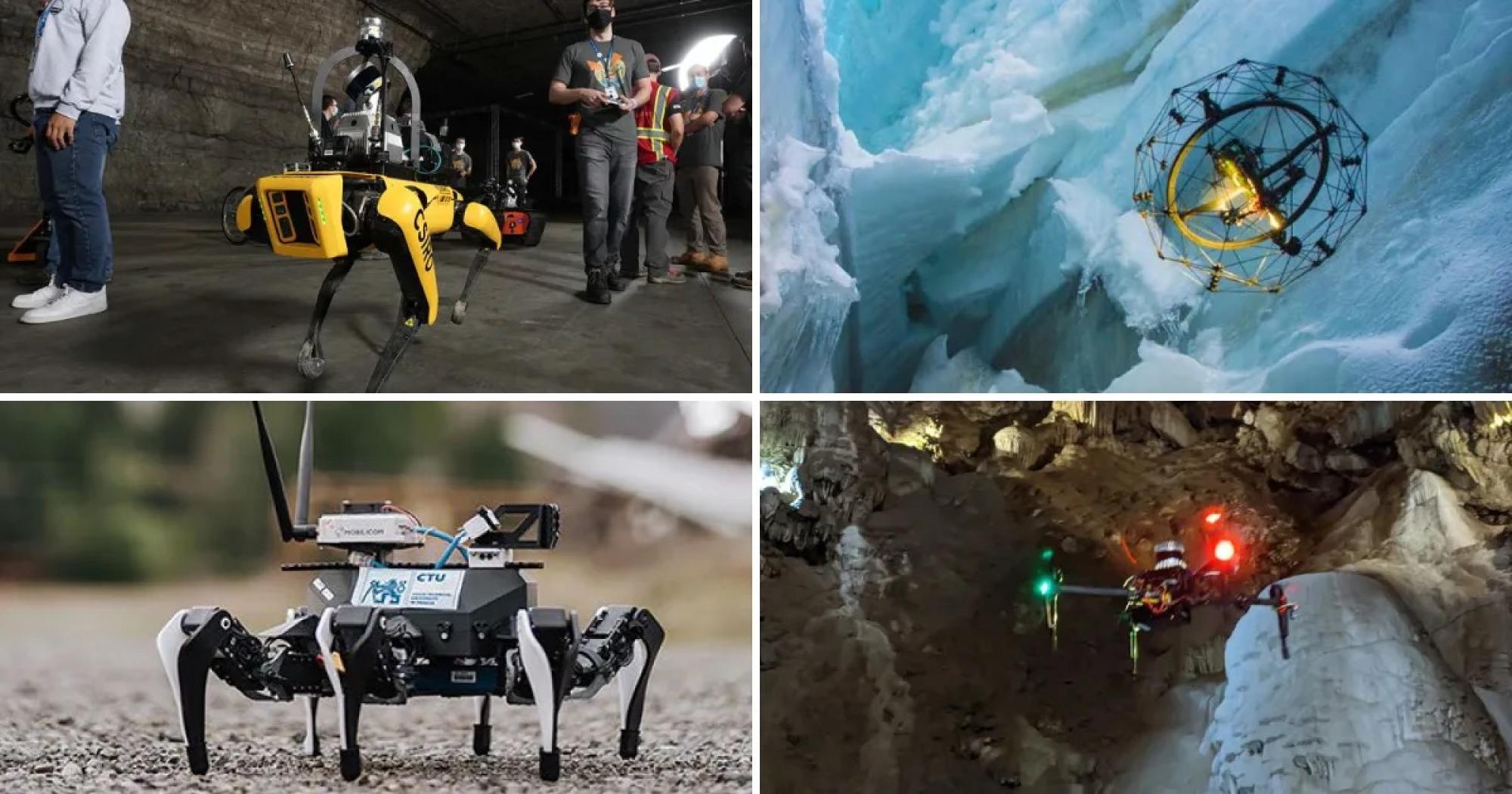
When a Manhattan parking garage collapsed in April this year, rescuers were reluctant to stay in the damaged building, fearing further danger. So they used a combination of flying drones and a doglike walking robot to inspect the damage, look for survivors and make sure the site was safe for human rescuers to return. Soon, rescuers may be able to call on a much more sophisticated robotic search-and-rescue response. Researchers are developing teams of flying, walking and rolling robots that can cooperate to explore areas that no one robot could navigate on its own. And they are giving robots the ability to communicate with one another and make many of their own decisions independent of their human controller. Such teams of robots could be useful in other challenging environments like caves or mines where it can be difficult for rescuers to find and reach survivors. In cities, collapsed buildings and underground sites such as subways or utility tunnels often have hazardous areas where human rescuers can't be sure of the dangers. As robots become better, teams of them may one day be able to go into a hazardous disaster site, locate survivors and report back to their human operators with a minimum of supervision. "More work ... needs to be done," [roboticist Viktor] Orekhov says. "But at the same time, we've seen the ability of the teams advanced so rapidly that even now, with their current capabilities, they're able to make a significant difference in real-life environments."
Latest
Latest News
Each news summary is created according to strict standards. Here's how we do it.
Each summary is created using a consistent editorial procedure. The target length is approximately 16 lines of 11-point Arial text in a 650-pixel-wide column. Up to 25% of a summary may be set in bold to emphasize the most important ideas. Summaries are composed of verbatim excerpts presented in the same sequence as they appear in the original news source, with very minor editorial additions. Where material has been omitted between excerpts, the omission is indicated with ellipses (...). Any words added by an editor for clarity or context appear in [brackets]. Our original news editor was Fred Burks. Tod Fletcher edited most summaries from 2007 through 2014, and Mark Bailey has served as news editor since 2014.