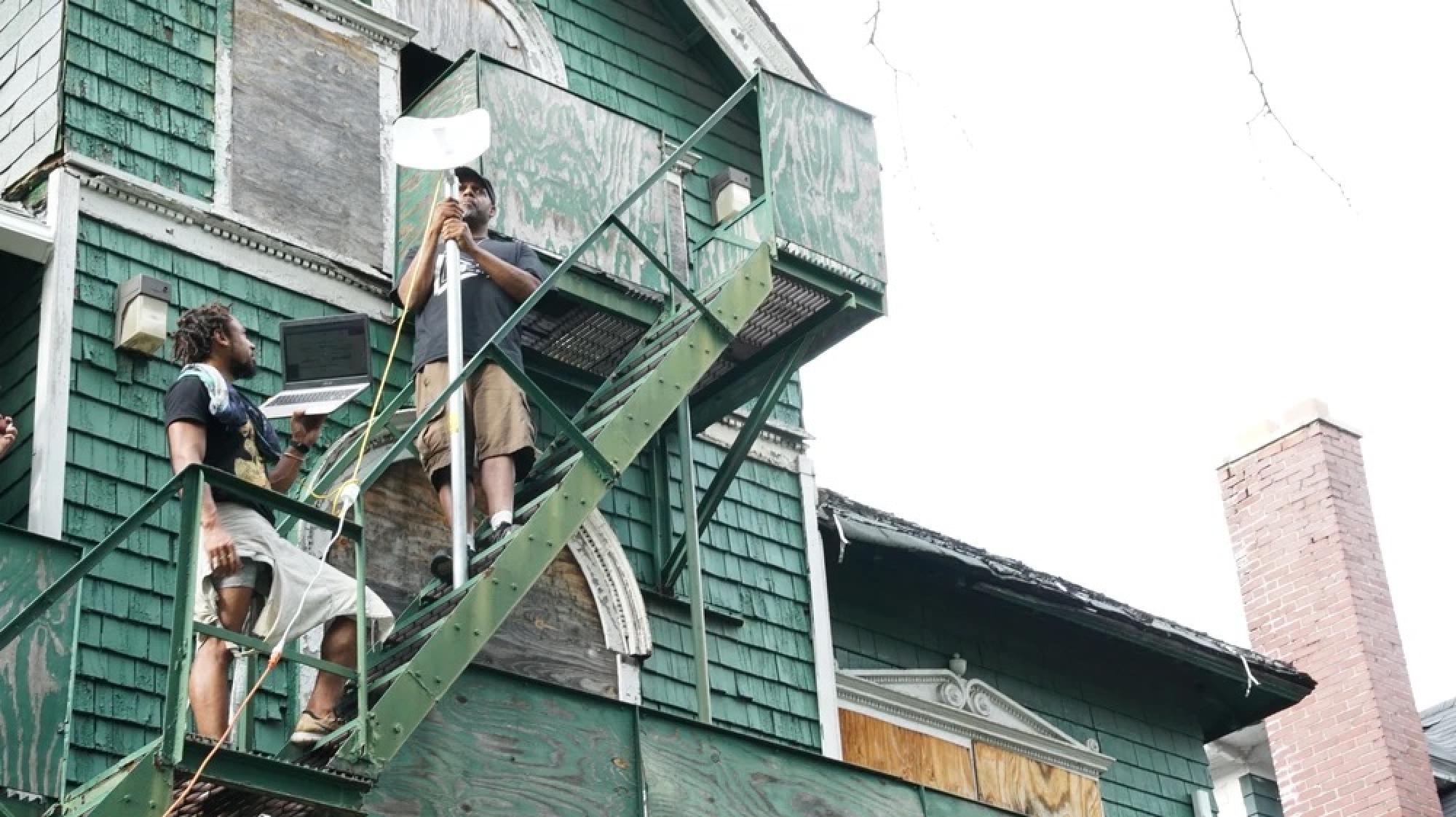
More than 300 electric cooperatives across the United States are building their own Internet with high-speed fiber networks. These locally-owned networks are poised to do what federal and state governments and the marketplace have not accomplished. First, they are protecting open Internet access from the Internet service providers (ISPs) that stand to pocket the profits from the rollbacks of net neutrality the Trump administration announced. Second, they are making affordable and fast Internet accessible to anyone. In Detroit, for example, 40 percent of the population has no access of any kind to the Internet. Detroit residents started a grassroots movement called the Equitable Internet Initiative, through which locals have begun to build their own high-speed Internet. The initiative started by enlisting digital stewardslocals who were interested in working for the nonprofit coalition. They aim to build shared tools, like a forum and a secured emergency communication network"and to educate their communities on digital literacy. Just 30 of the more than 300 tribal reservations in the United States have Internet access. Seventeen tribal reservation communities in San Diego County have secured wireless Internet access under the Tribal Digital Village initiative. Another local effort, Co-Mo Electric Cooperative ... has organized to crowdfund the necessary resources to establish its own network. The biggest dilemma for cities is the erosion of the capacity for communities to solve their own problems. As a result, local Internet service providers are bringing the power back to their people.
Latest
Latest News
Each news summary is created according to strict standards. Here's how we do it.
Each summary is created using a consistent editorial procedure. The target length is approximately 16 lines of 11-point Arial text in a 650-pixel-wide column. Up to 25% of a summary may be set in bold to emphasize the most important ideas. Summaries are composed of verbatim excerpts presented in the same sequence as they appear in the original news source, with very minor editorial additions. Where material has been omitted between excerpts, the omission is indicated with ellipses (...). Any words added by an editor for clarity or context appear in [brackets]. Our original news editor was Fred Burks. Tod Fletcher edited most summaries from 2007 through 2014, and Mark Bailey has served as news editor since 2014.