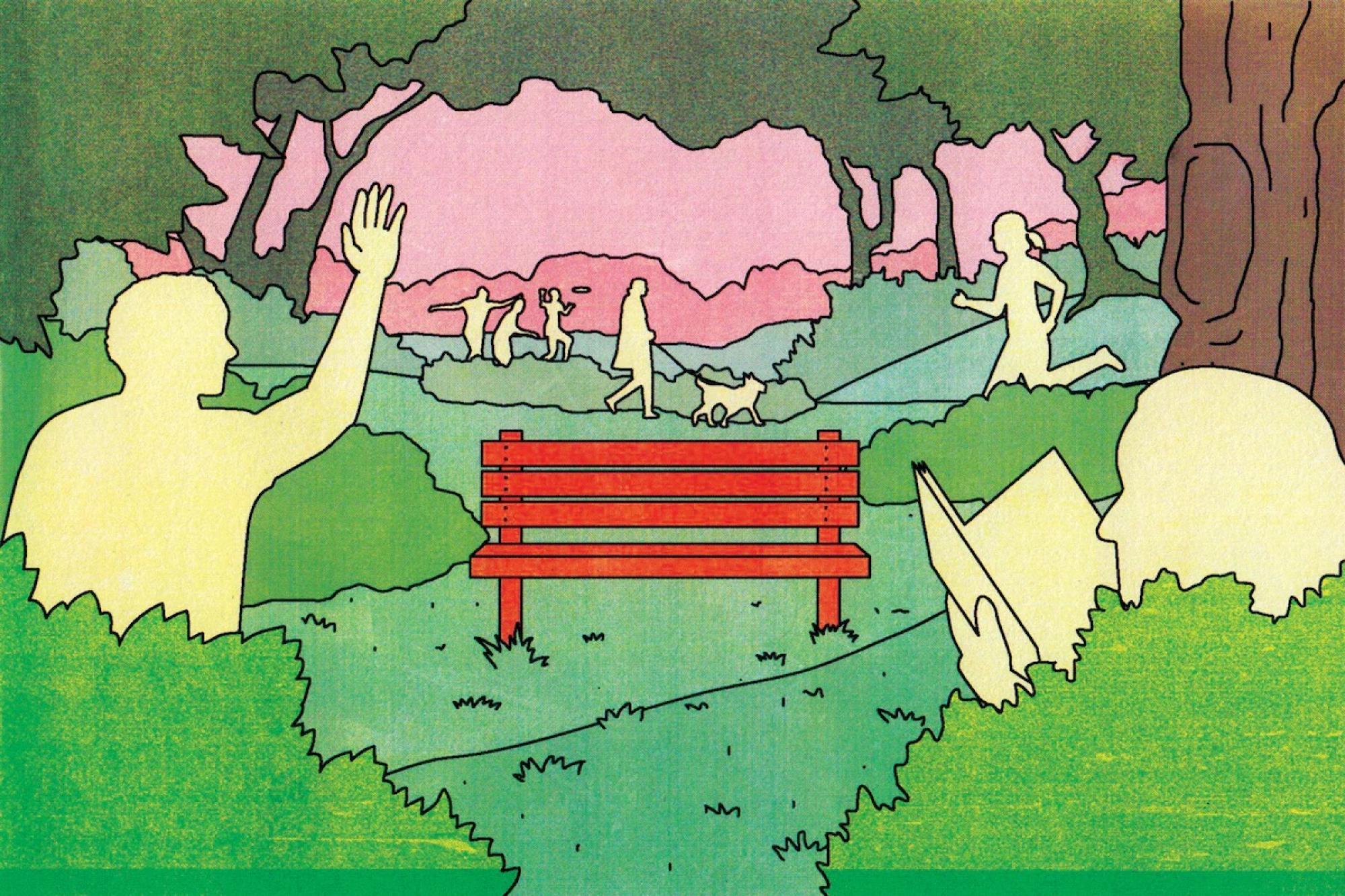
Loneliness has become a global public health concern. Countries including Britain and Japan have appointed "ministers of loneliness" to help tackle the problem. In the United States, then-Surgeon General Vivek H. Murthy issued a public health advisory on loneliness, stating that the risk for premature death from loneliness is akin to smoking up to 15 cigarettes a day. What if, instead of trying to "fix" the individual, strategies focused on shaping the environment in a way that facilitates social connection? Recently, researchers have been trying to leverage nature as a way to bring people together and reduce negative feelings about social isolation. They say living in what is known as a "lonelygenic environment" " one dominated by cars and concrete instead of grass and trees " can cause or aggravate loneliness. Even if you live in a lonelygenic environment, experts say, spending just an hour or two in nature per week ... may help people feel less isolated. One proposed approach for tackling loneliness as a public health issue is through social prescribing, where physicians connect their patients with non-medical services in the community similar to how they prescribe medication. Nature comes in many forms. An ongoing study by [Matthew] Browning and his colleagues investigates the amount of time a representative sample of Americans spends outdoors in nature. "What we find is that nature is, for most people ... watching their kids play soccer outside or grilling in the backyard."
Latest
Latest News
Each news summary is created according to strict standards. Here's how we do it.
Each summary is created using a consistent editorial procedure. The target length is approximately 16 lines of 11-point Arial text in a 650-pixel-wide column. Up to 25% of a summary may be set in bold to emphasize the most important ideas. Summaries are composed of verbatim excerpts presented in the same sequence as they appear in the original news source, with very minor editorial additions. Where material has been omitted between excerpts, the omission is indicated with ellipses (...). Any words added by an editor for clarity or context appear in [brackets]. Our original news editor was Fred Burks. Tod Fletcher edited most summaries from 2007 through 2014, and Mark Bailey has served as news editor since 2014.