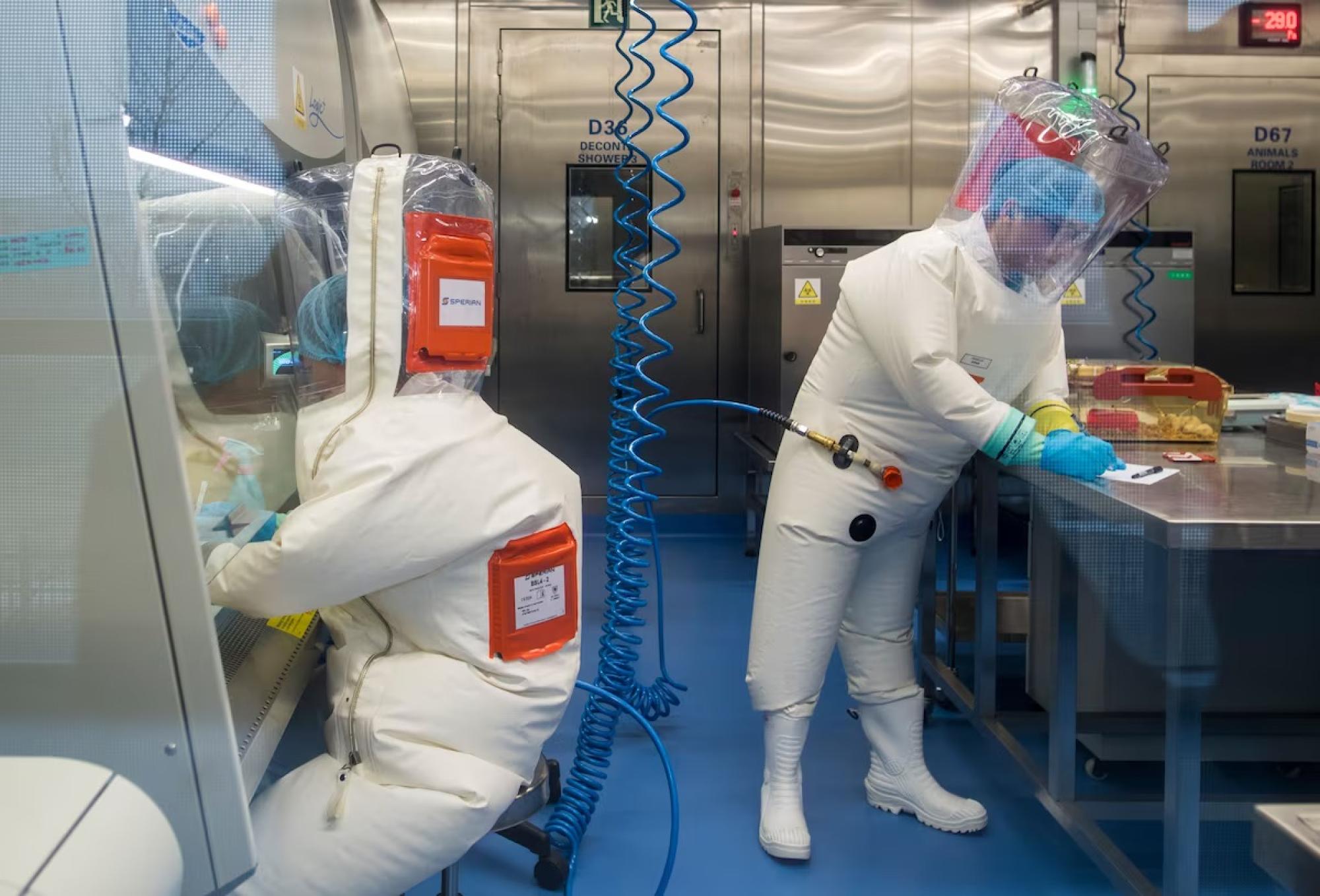
A Chinese researcher who first submitted the genetic sequence for the SARS-CoV-2 virus in late December 2019, around two weeks before China disclosed the deadly virus to outside scientists, was on the payroll of Anthony Fauci's institute at the time, according to a grant awarded to EcoHealth Alliance, a nonprofit operated by Peter Daszak. The disclosures call into further question what officials at the National Institutes of Health (NIH) knew about research they were funding in China where the pandemic began. "The grant doesn't work on SARS-CoV-2," Daszak [said], when the NIH was forced to review the grant in the summer of 2020. "Our organization has not actually published any data on SARS-CoV-2. We work on bat coronaviruses that are out there in the wild and trying to predict what the next one is." NIH officials refused to respond to multiple requests to explain how much salary they provided to Dr. Lili Ren, a scientist at the Beijing-based Institute of Pathogen Biology, who wrote a letter in support of Daszak's grant application to Fauci's NIH institute. Ren first uploaded the COVID virus sequence to the NIH's GenBank on December 28, 2019"two weeks before scientists celebrated China's release of the genetic sequence on January 11, 2020. Fauci's NIH grant also paid for Ren's expenses, including travel to the United States to meet with Daszak as well as her collaborator Ralph Baric at the University of North Carolina.
Latest
Latest News
Each news summary is created according to strict standards. Here's how we do it.
Each summary is created using a consistent editorial procedure. The target length is approximately 16 lines of 11-point Arial text in a 650-pixel-wide column. Up to 25% of a summary may be set in bold to emphasize the most important ideas. Summaries are composed of verbatim excerpts presented in the same sequence as they appear in the original news source, with very minor editorial additions. Where material has been omitted between excerpts, the omission is indicated with ellipses (...). Any words added by an editor for clarity or context appear in [brackets]. Our original news editor was Fred Burks. Tod Fletcher edited most summaries from 2007 through 2014, and Mark Bailey has served as news editor since 2014.