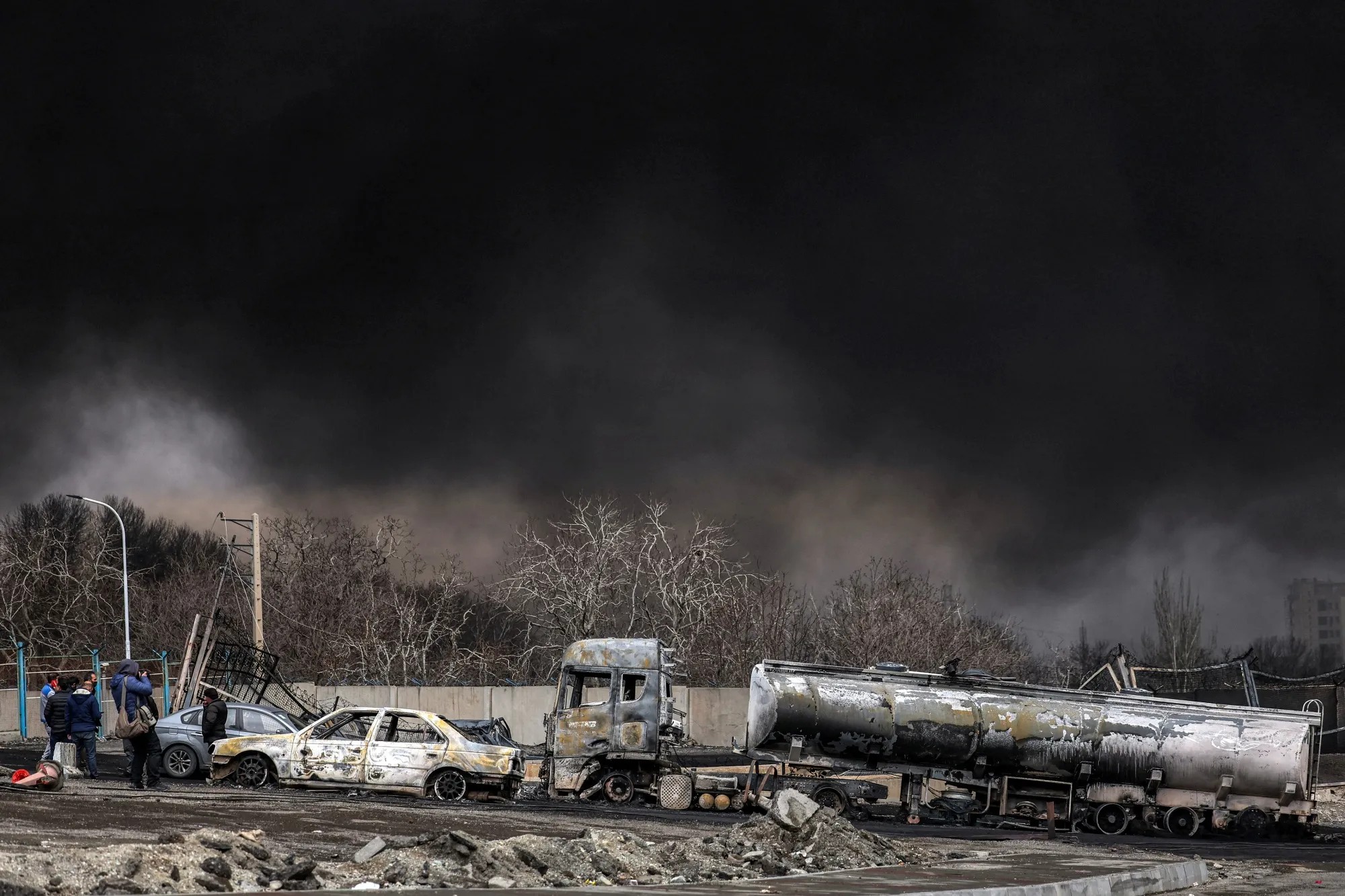
Esmaeil Baqaei, the spokesperson for Iran’s Foreign Ministry, recently warned of the increasing environmental damage caused by the U.S. war, drawing attention to oil contamination in the Persian Gulf that has begun washing up on Iranian shores. By March, attacks had already resulted in more than 300 incidents of potential environmental harm, documented across 12 countries in the region, according to a report by the Conflict and Environment Observatory. These toxic exposures threaten not only today’s war victims, but also future generations who will grapple with the knock-on effects. Fallujah offers a glimpse of the environmental fallout that the people of neighboring Iran may face in the years to come. More than half of Fallujah was leveled in a U.S. Marine-led siege of the city in 2004. Hospitals, water systems and electrical grids were destroyed. Post-war surges in birth defects, respiratory diseases, and cancers in Fallujah have now been directly linked with exposure to the weapons of war. The U.S–Israeli war on Iran has only exacerbated ongoing environmental crises in the Middle East. Though it is still too soon to calculate the full extent of the environmental harm imposed by the ongoing conflict, the toxic airborne pollutants, land contaminated with heavy metals, and oil-soaked waterways will pose a threat to life for decades to come. As [anthropologist Kali] Rubaii’s study concludes, “the most effective way to limit heavy metal toxicity from war is by not bombing cities.”
Latest
Latest News
Each news summary is created according to strict standards. Here's how we do it.
Each summary is created using a consistent editorial procedure. The target length is approximately 16 lines of 11-point Arial text in a 650-pixel-wide column. Up to 25% of a summary may be set in bold to emphasize the most important ideas. Summaries are composed of verbatim excerpts presented in the same sequence as they appear in the original news source, with very minor editorial additions. Where material has been omitted between excerpts, the omission is indicated with ellipses (...). Any words added by an editor for clarity or context appear in [brackets]. Our original news editor was Fred Burks. Tod Fletcher edited most summaries from 2007 through 2014, and Mark Bailey has served as news editor since 2014.