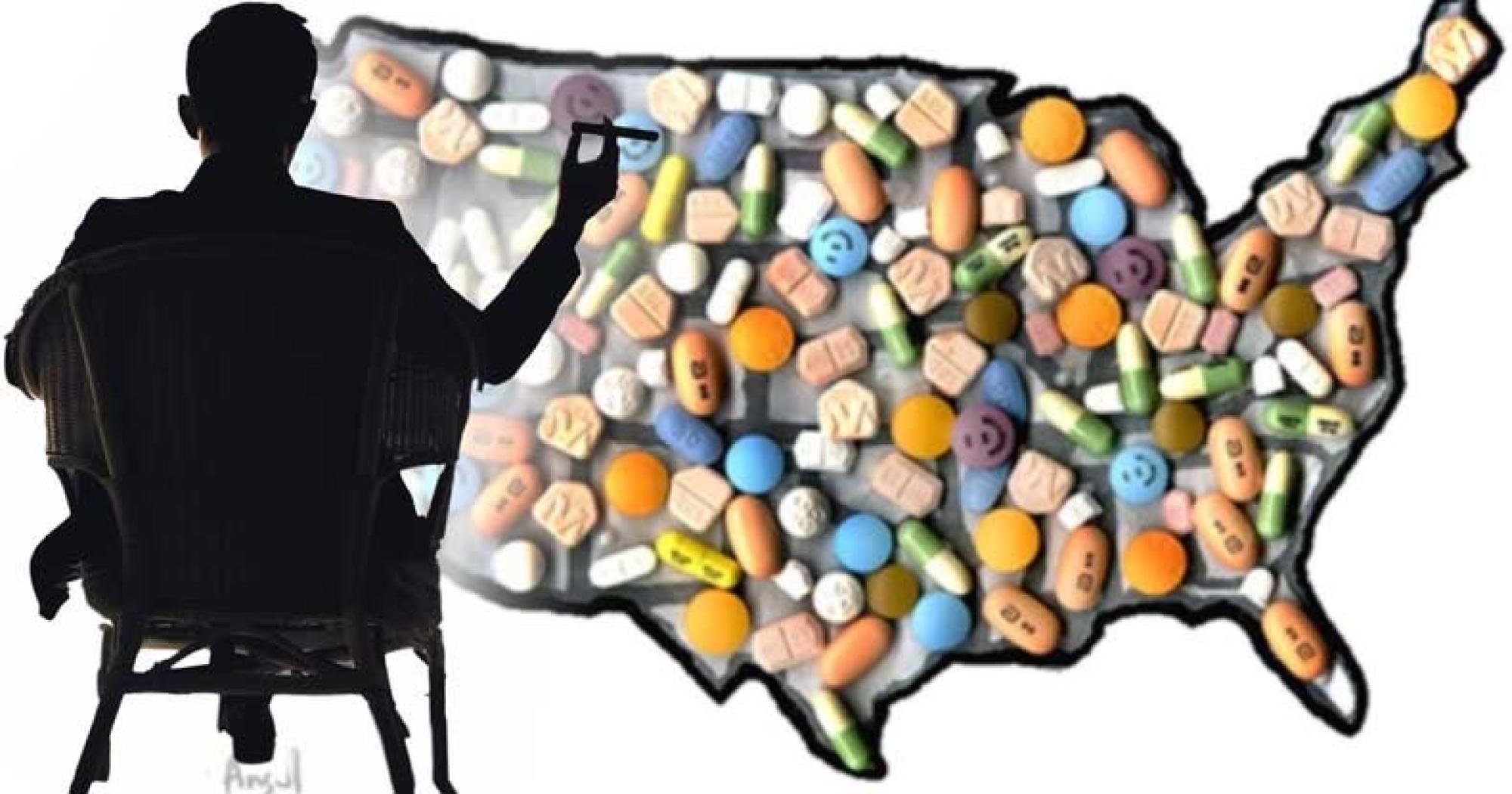
A new study published in JAMA Psychiatry finds that almost everyone will be treated for mental illness at some point in their lives and that their lives are worse in many ways after receiving diagnosis and treatment. About 80% of the population will be hospitalized or receive psychiatric drugs. After treatment, they are more likely to end up poor, unemployed, and receiving disability benefits, and they have worsening social connections. According to the researchers, the likelihood of getting prescribed psychiatric drugs during your lifetime was 82.6% (87.5% for women and 76.7% for men). The likelihood of being hospitalized for mental illness was 29.0% (31.8% for women and 26.1% for men). On average, the 80% who were treated for mental illness were already struggling before treatment. But after treatment, things only got worse. After treatment, "individuals with any mental health disorder were more likely to experience new socioeconomic difficulties, compared with control individuals from the general population," the researchers write. "During follow-up, they were more likely to become unemployed or receive a disability benefit, to earn lower income, to be living alone, and to be unmarried." There is copious evidence that antidepressant use leads to worse outcomes in the long term, even after controlling for the severity of depression and other factors. The adverse effects of the drugs lead to worse health outcomes for those taking them, and withdrawal symptoms prevent people from being able to discontinue.
Latest
Latest News
Each news summary is created according to strict standards. Here's how we do it.
Each summary is created using a consistent editorial procedure. The target length is approximately 16 lines of 11-point Arial text in a 650-pixel-wide column. Up to 25% of a summary may be set in bold to emphasize the most important ideas. Summaries are composed of verbatim excerpts presented in the same sequence as they appear in the original news source, with very minor editorial additions. Where material has been omitted between excerpts, the omission is indicated with ellipses (...). Any words added by an editor for clarity or context appear in [brackets]. Our original news editor was Fred Burks. Tod Fletcher edited most summaries from 2007 through 2014, and Mark Bailey has served as news editor since 2014.