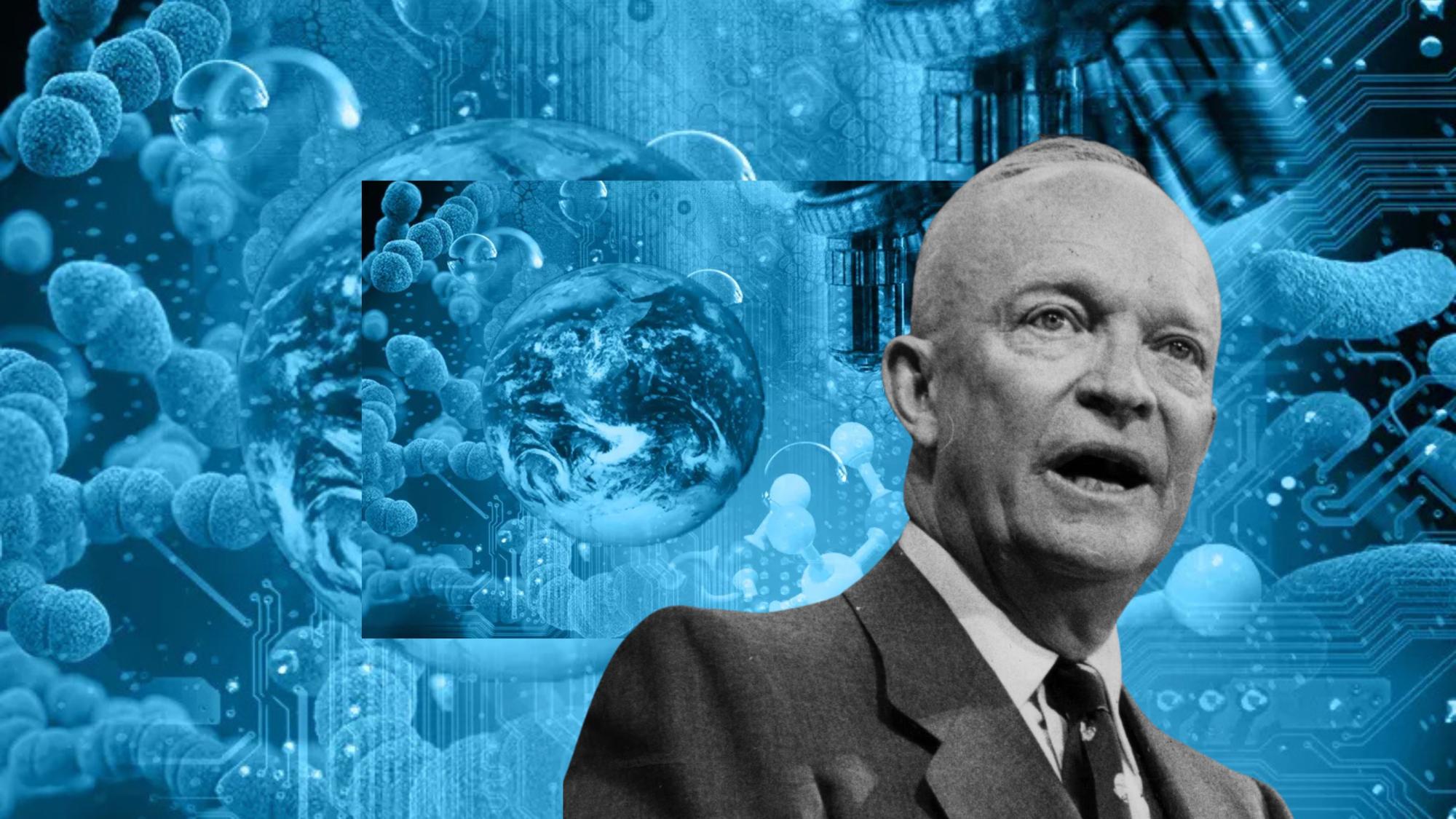
In President Dwight D. Eisenhower's famous 1961 speech about the dangers of the military-industrial complex, he also cautioned Americans about the growing power of a "scientific, technological elite." "The prospect of domination of the nation's scholars by federal employment project allocations and the power of money is ever present," warned Eisenhower. And he was right. Today, many of the people protesting the Trump administration's cuts to federal funding for scientific research are part of that scientific, technological elite. But there's a good chance that slashing federal spending will liberate science from the corrupting forces that Eisenhower warned us about. Thomas Edison's industrial lab produced huge breakthroughs in telecommunications and electrification. Alexander Graham Bell's lab produced modern telephony and sound recording, all without government money. The Wright Brothers"who ran a bicycle shop before revolutionizing aviation"launched the first successfully manned airplane flight in December 1903, beating out more experienced competitors like Samuel Langley, secretary of the Smithsonian Institution, who had received a grant from the War Department for his research. Of course, government funding has led to major breakthroughs both during and after World War II. In an influential 2005 paper, Stanford University professor John Ioannidis flatly concluded that "most published research findings are false." He argued that the current peer review model encourages groupthink. "You end up with a monolithic view, and so you crush what's so important in science, which is different ideas competing in a marketplace of ideas."
Latest
Latest News
Each news summary is created according to strict standards. Here's how we do it.
Each summary is created using a consistent editorial procedure. The target length is approximately 16 lines of 11-point Arial text in a 650-pixel-wide column. Up to 25% of a summary may be set in bold to emphasize the most important ideas. Summaries are composed of verbatim excerpts presented in the same sequence as they appear in the original news source, with very minor editorial additions. Where material has been omitted between excerpts, the omission is indicated with ellipses (...). Any words added by an editor for clarity or context appear in [brackets]. Our original news editor was Fred Burks. Tod Fletcher edited most summaries from 2007 through 2014, and Mark Bailey has served as news editor since 2014.