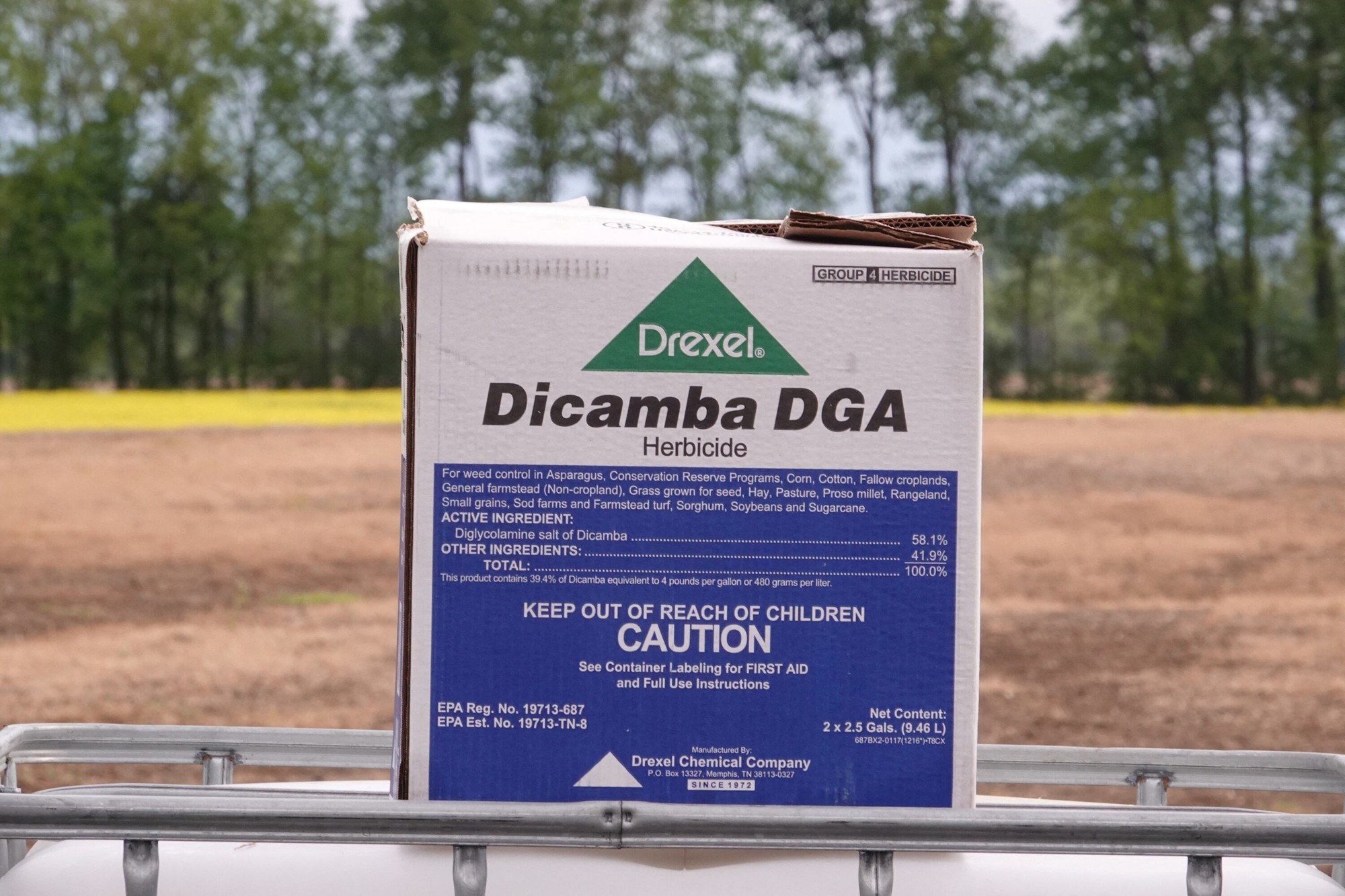
The US Environmental Protection Agency (EPA) worked directly with pesticide maker Bayer in approving the controversial herbicide dicamba earlier this year, presenting the company with different options for how to reduce drift and runoff and then aligning on those options in the final decision, according to internal agency records. The records show that the EPA gave a presentation to Bayer in May 2025 — two months before the agency proposed to reapprove the herbicide — and put forth two options for how to mitigate dicamba drift when it’s applied at higher temperatures. Dicamba is notorious for its ability to drift far from where it is sprayed and to thus damage other crops and landscapes. The records do show a federal agency giving deference and working hand-in-hand with the companies that it is supposed to be regulating, and further call into question the reapproval of dicamba — which in addition to drift concerns, has been linked to certain cancers. In June 2025, officials at EPA and top Bayer executives met to discuss “litigation” issues – including “Supreme Court Action” over its glyphosate weed killer – just months before the Trump administration took a series of steps to boost Bayer’s case at the high court. "The EPA is basically allowing industry to pick the ways that those problems are mitigated moving forward. EPA is offering ‘choose your own regulation’, where pesticide companies get to tell the EPA how to regulate their products," said Nathan Donley, environmental health science director at the Center for Biological Diversity].
Latest
Latest News
Each news summary is created according to strict standards. Here's how we do it.
Each summary is created using a consistent editorial procedure. The target length is approximately 16 lines of 11-point Arial text in a 650-pixel-wide column. Up to 25% of a summary may be set in bold to emphasize the most important ideas. Summaries are composed of verbatim excerpts presented in the same sequence as they appear in the original news source, with very minor editorial additions. Where material has been omitted between excerpts, the omission is indicated with ellipses (...). Any words added by an editor for clarity or context appear in [brackets]. Our original news editor was Fred Burks. Tod Fletcher edited most summaries from 2007 through 2014, and Mark Bailey has served as news editor since 2014.