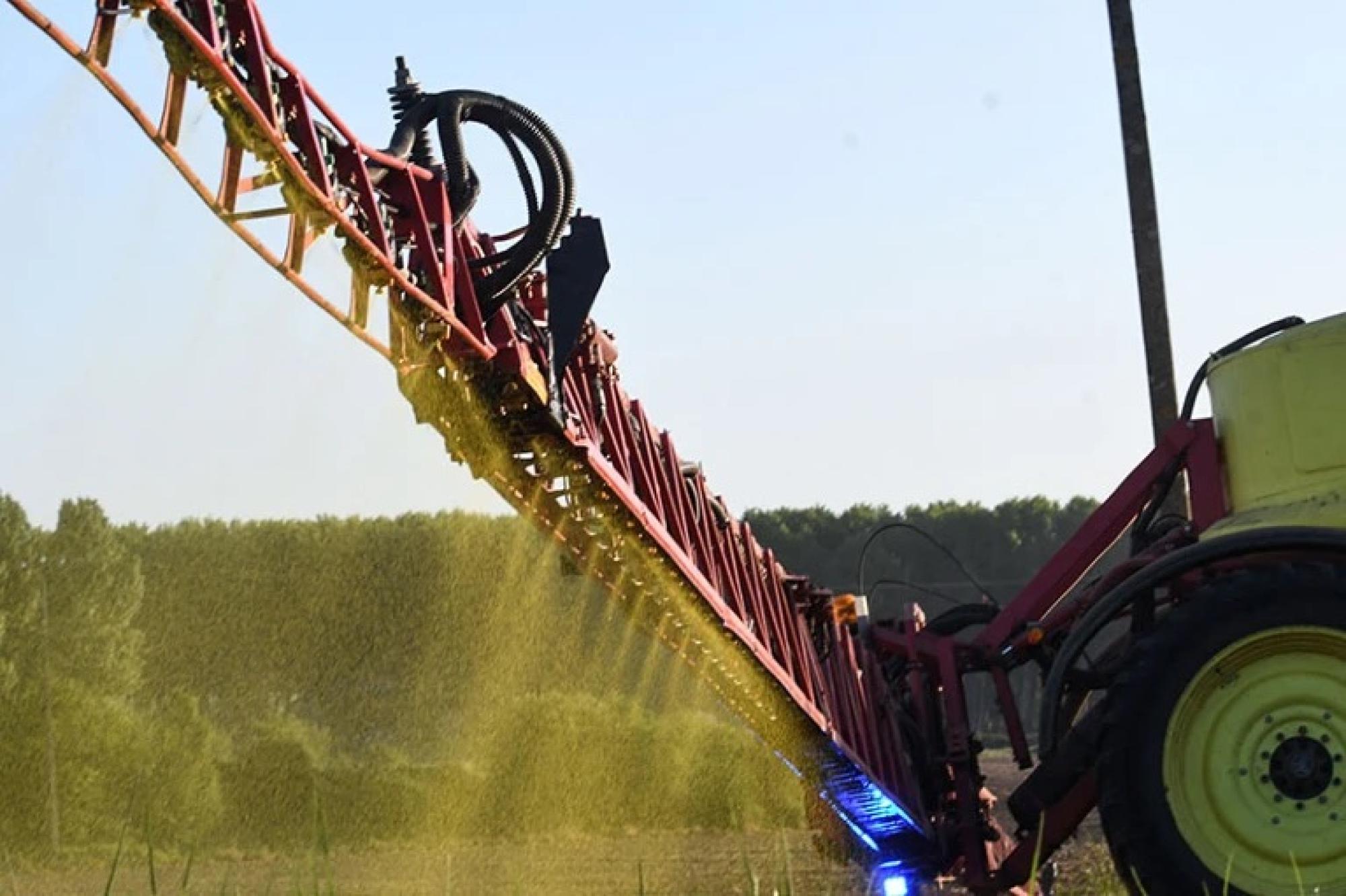
The European Commission says it has decided to renew the license for the weedkiller compound glyphosate, approving its use in European Union countries for ten more years. Following the decision yesterday, the Commission released a statement saying that, on the basis of comprehensive safety assessments carried out by the European Food Safety Authority (EFSA) and the European Chemicals Agency (ECHA), it would renew the licence, "subject to certain new conditions and restrictions". These include a ban on the use of the chemical to dry crops before harvest, and "the need for certain measures to protect non-target organisms". Governments can still restrict the use of glyphosate in their own countries if they consider the risks too high. Glyphosate is the active ingredient in Roundup, the world's most widely used herbicide. Some studies point to a link between glyphosate and certain cancers. Robin Mesnage, a toxicologist at King's College London, welcomes the Commission's decision to continue to allow the use of glyphosate. Others have expressed disappointment. "It is unacceptable that the Commission still plans to go ahead with its proposal, considering the amount of scientific evidence of the substance's health impacts," says Natacha Cingotti, a campaigner at the Health and Environment Alliance. "While we can't undo the decades of exposure, the Commission can still seize the opportunity to turn the tide towards more sustainable agricultural practices."
Latest
Latest News
Each news summary is created according to strict standards. Here's how we do it.
Each summary is created using a consistent editorial procedure. The target length is approximately 16 lines of 11-point Arial text in a 650-pixel-wide column. Up to 25% of a summary may be set in bold to emphasize the most important ideas. Summaries are composed of verbatim excerpts presented in the same sequence as they appear in the original news source, with very minor editorial additions. Where material has been omitted between excerpts, the omission is indicated with ellipses (...). Any words added by an editor for clarity or context appear in [brackets]. Our original news editor was Fred Burks. Tod Fletcher edited most summaries from 2007 through 2014, and Mark Bailey has served as news editor since 2014.