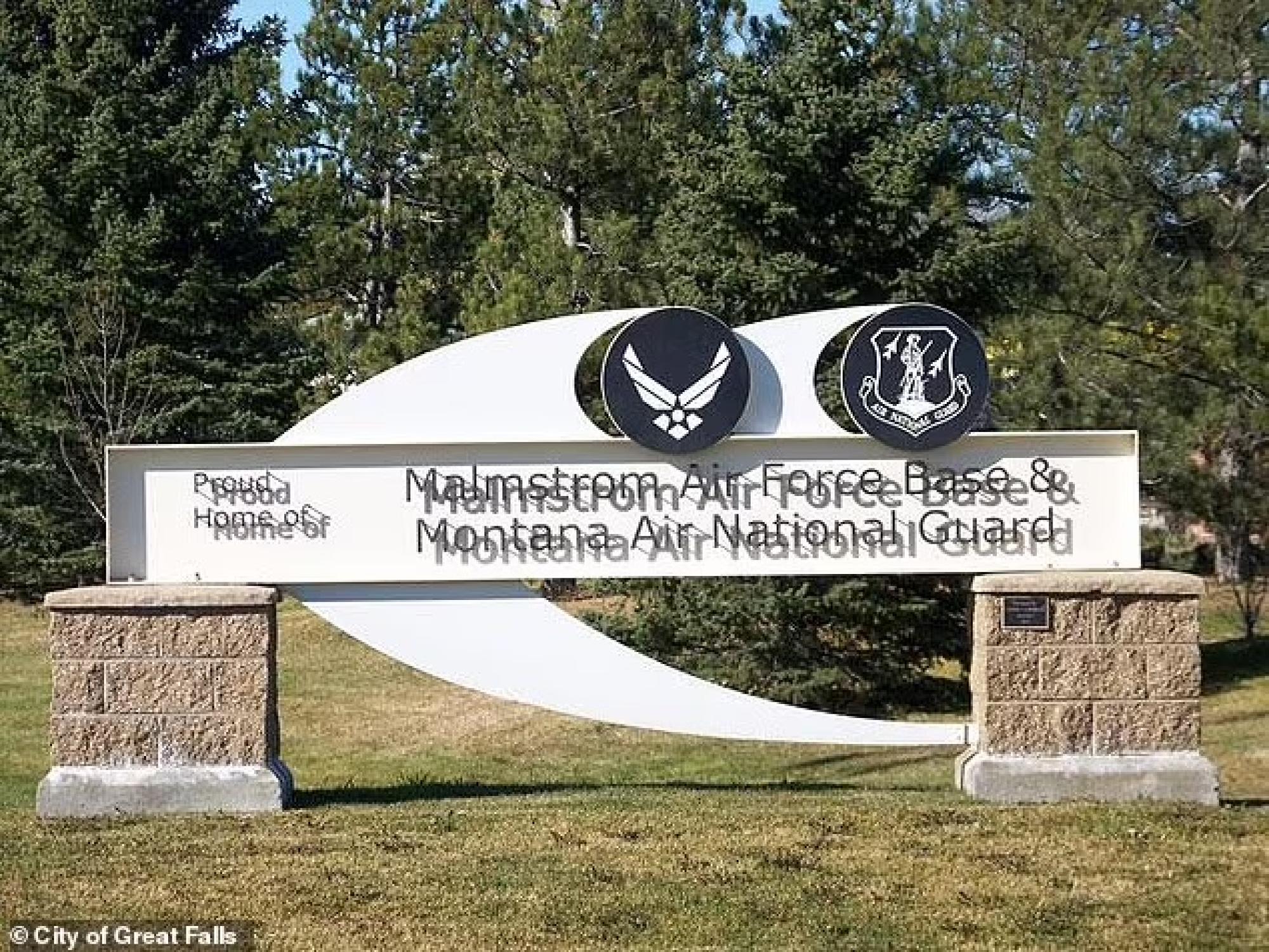
Whatever the mysterious lights in the sky were, they seemed to have an interest in our nukes. One of the more out-of-the-ordinary press conferences held in Washington this week consisted of former Air Force personnel testifying to the existence of UFOs and their ability to neutralize American and Russian nuclear missiles. UFO researcher Robert Hastings of Albuquerque, N.M., who organized the National Press Club briefing, said more than 120 former service members had told him they'd seen unidentified flying objects near nuclear weapon storage and testing grounds. Robert Jamison, a retired USAF nuclear missile targeting officer, told of several occasions having to go out and re-start" missiles that had been deactivated, after UFOs were sighted nearby. [In a] December 1980 incident near two Royal Air Force Bases in Suffolk, England ... several U.S. Air Force personnel reported seeing a strange metallic object hovering. Retired USAF Col. Charles Halt said that in December 1980, when he was deputy base commander at RAF Bentwaters, strange lights in the forest were investigated by three patrolmen. They reported approaching a triangular craft, "approximately three meters on a side, dark metallic in appearance with strange markings." Halt found indentations in the ground, broken branches, and low-level background radiation. He and his team also witnessed various lights moving silently in the sky, of one which was "shedding something like molten metal." Several of the ex-servicemembers speaking Monday said when they'd brought their concern of such appearances to superiors, they'd been told it was "top secret" or that it "didn't happen." Hastings suggested the presence of such phenomena meant that aliens were monitoring our weapons, and perhaps warning us - "a sign to Washington and Moscow that we are playing with fire."
Latest
Latest News
Each news summary is created according to strict standards. Here's how we do it.
Each summary is created using a consistent editorial procedure. The target length is approximately 16 lines of 11-point Arial text in a 650-pixel-wide column. Up to 25% of a summary may be set in bold to emphasize the most important ideas. Summaries are composed of verbatim excerpts presented in the same sequence as they appear in the original news source, with very minor editorial additions. Where material has been omitted between excerpts, the omission is indicated with ellipses (...). Any words added by an editor for clarity or context appear in [brackets]. Our original news editor was Fred Burks. Tod Fletcher edited most summaries from 2007 through 2014, and Mark Bailey has served as news editor since 2014.