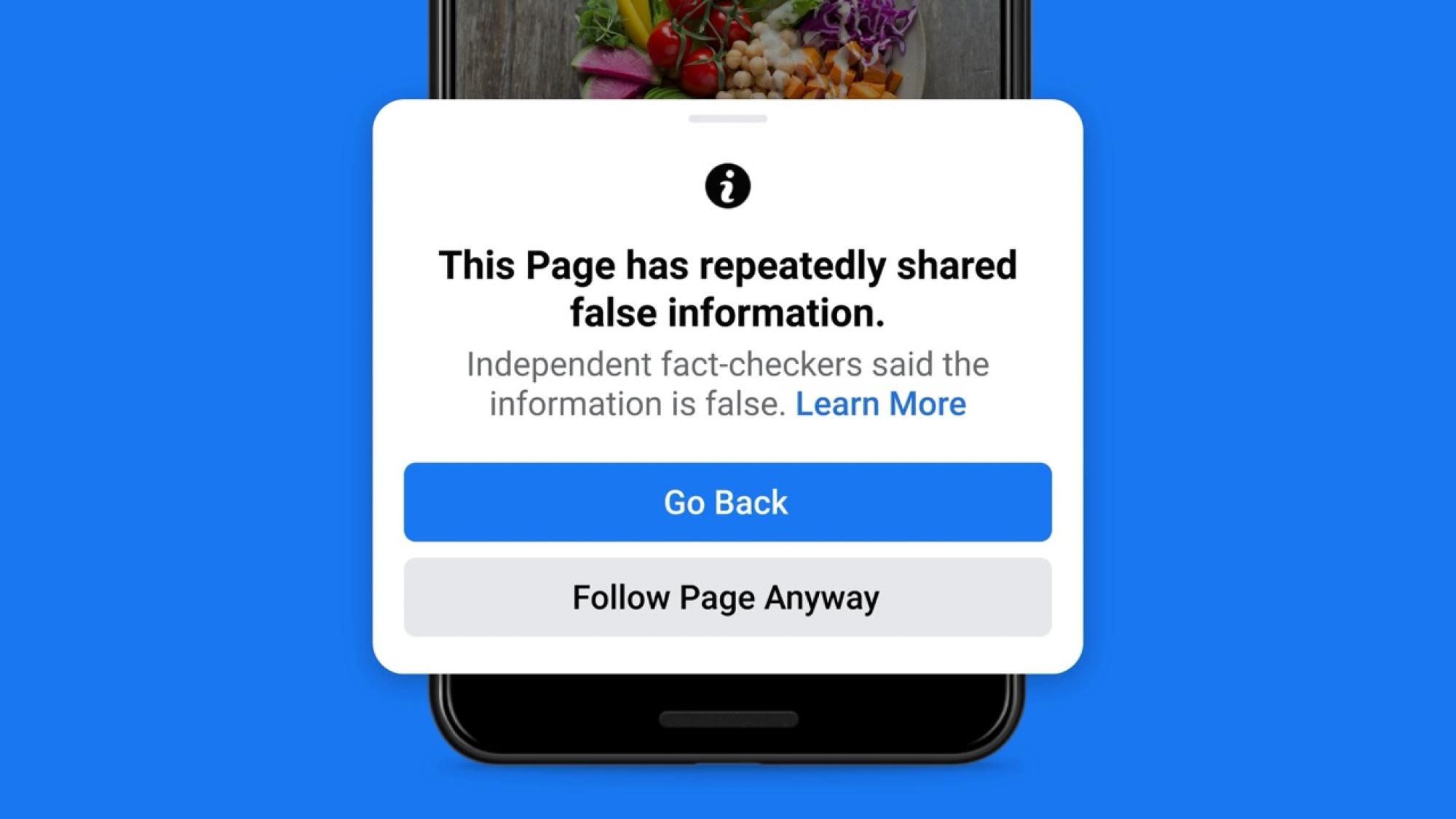
We published the piece on February 22, [2020], under the headline "Don't Buy China's Story: The Coronavirus May Have Leaked from a Lab." It immediately went viral, its audience swelling for a few hours as readers liked and shared it over and over again. I had a data tracker on my screen that showed our web traffic, and I could see the green line for my story surging up and up. Then suddenly, for no reason, the green line dropped like a stone. No one was reading or sharing the piece. It was as though it had never existed at all. Seeing the story's traffic plunge, I was stunned. How does a story that thousands of people are reading and sharing suddenly just disappear? Later, the [New York Post's] digital editor gave me the answer: Facebook's fact-checking team had flagged the piece as "false information." I was seeing Big Tech censorship of the American media in real time, and it chilled me to my bones. What happened next was even more chilling. I found out that an "expert" who advised Facebook to censor the piece had a major conflict of interest. Professor Danielle E. Anderson had regularly worked with researchers at the Wuhan Institute of Virology ... and she told Facebook's fact-checkers that the lab had "strict control and containment measures." Facebook's "fact-checkers" took her at her word. An "expert" had spoken, Wuhan's lab was deemed secure, and the Post's story was squashed in the interest of public safety. In 2021, in the wake of a lawsuit, Facebook admitted that its "fact checks" are just "opinion," used by social media companies to police what we watch and read.
Latest
Latest News
Each news summary is created according to strict standards. Here's how we do it.
Each summary is created using a consistent editorial procedure. The target length is approximately 16 lines of 11-point Arial text in a 650-pixel-wide column. Up to 25% of a summary may be set in bold to emphasize the most important ideas. Summaries are composed of verbatim excerpts presented in the same sequence as they appear in the original news source, with very minor editorial additions. Where material has been omitted between excerpts, the omission is indicated with ellipses (...). Any words added by an editor for clarity or context appear in [brackets]. Our original news editor was Fred Burks. Tod Fletcher edited most summaries from 2007 through 2014, and Mark Bailey has served as news editor since 2014.