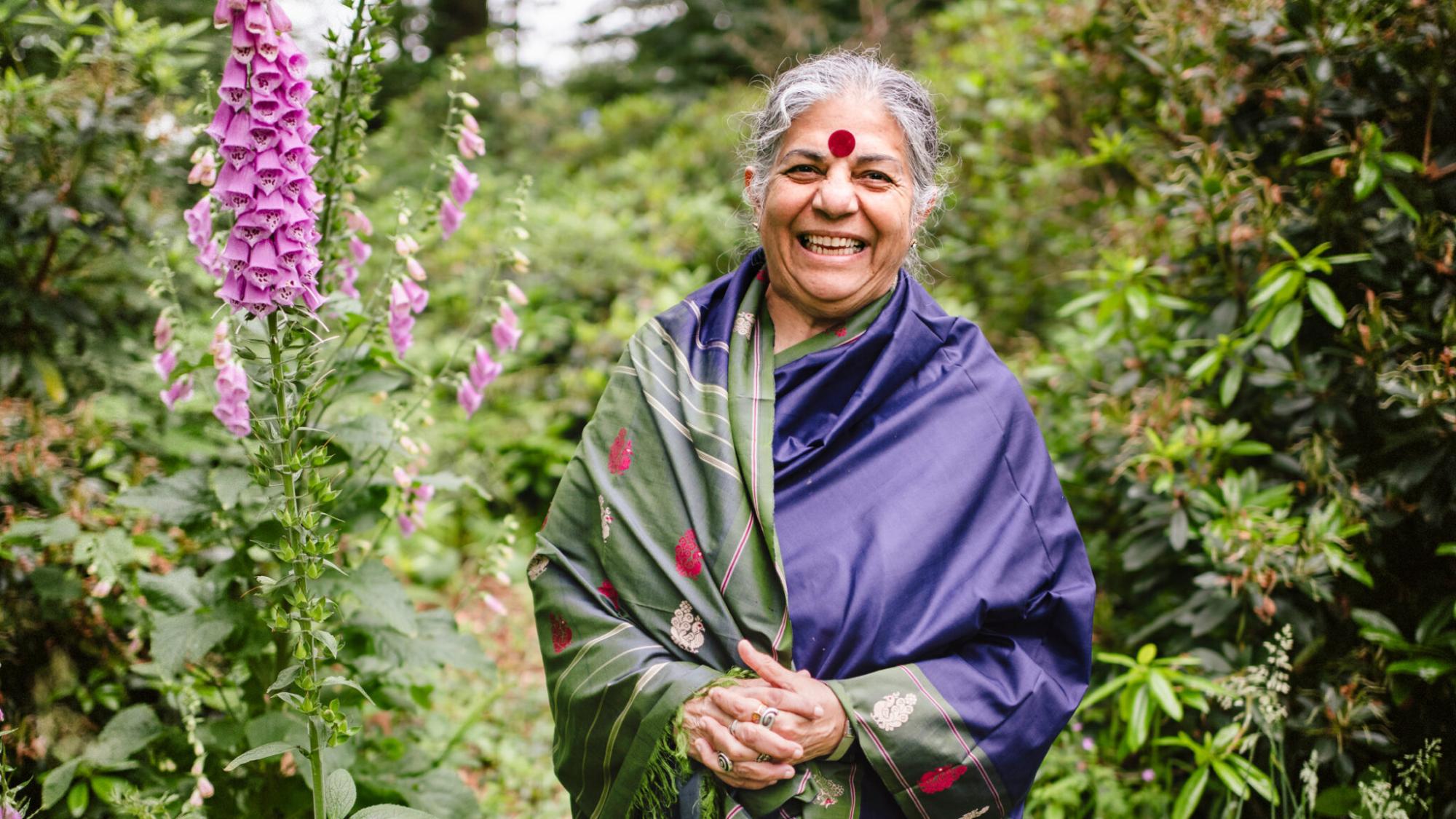
Regenerative agriculture offers a way to move beyond what I call the 'dead Earth assumption' this mechanistic belief that the Earth is made up of lifeless raw materials meant for extraction. Because that's the foundation of industrial agriculture: all it cares about is how many tons of food it produces, with no regard for soil health, biodiversity or the wellbeing of farmers. Regenerative agriculture, on the other hand, shows us the opposite. It means collaborating with nature and recognizing that we are all living organisms on a living Earth. That is what farming should be about: regenerating the potential of the living soil, the living seeds, the living water, the living insects, and the entire web of life. By embracing this potential, we can also transform the way we relate to nature. Because regeneration writes its own poetry " it brings the Earth back to life again in our minds and, in doing so, our relationship with the Earth is being regenerated as well. Some people say: 'You're naive, because companies will always win.' But I don't think that companies will win, and I will give you a reason why. The first corporation ever created was the East India Company in 1600, but after the revolt of the peasants in 1857, they shut down in 1858. So the first corporation that was created to rule the world, was shut down by peasants. In today's world, meaningful change can happen too, when we unite. It all comes down to nurturing the living soil and the living seed.
Latest
Latest News
Each news summary is created according to strict standards. Here's how we do it.
Each summary is created using a consistent editorial procedure. The target length is approximately 16 lines of 11-point Arial text in a 650-pixel-wide column. Up to 25% of a summary may be set in bold to emphasize the most important ideas. Summaries are composed of verbatim excerpts presented in the same sequence as they appear in the original news source, with very minor editorial additions. Where material has been omitted between excerpts, the omission is indicated with ellipses (...). Any words added by an editor for clarity or context appear in [brackets]. Our original news editor was Fred Burks. Tod Fletcher edited most summaries from 2007 through 2014, and Mark Bailey has served as news editor since 2014.