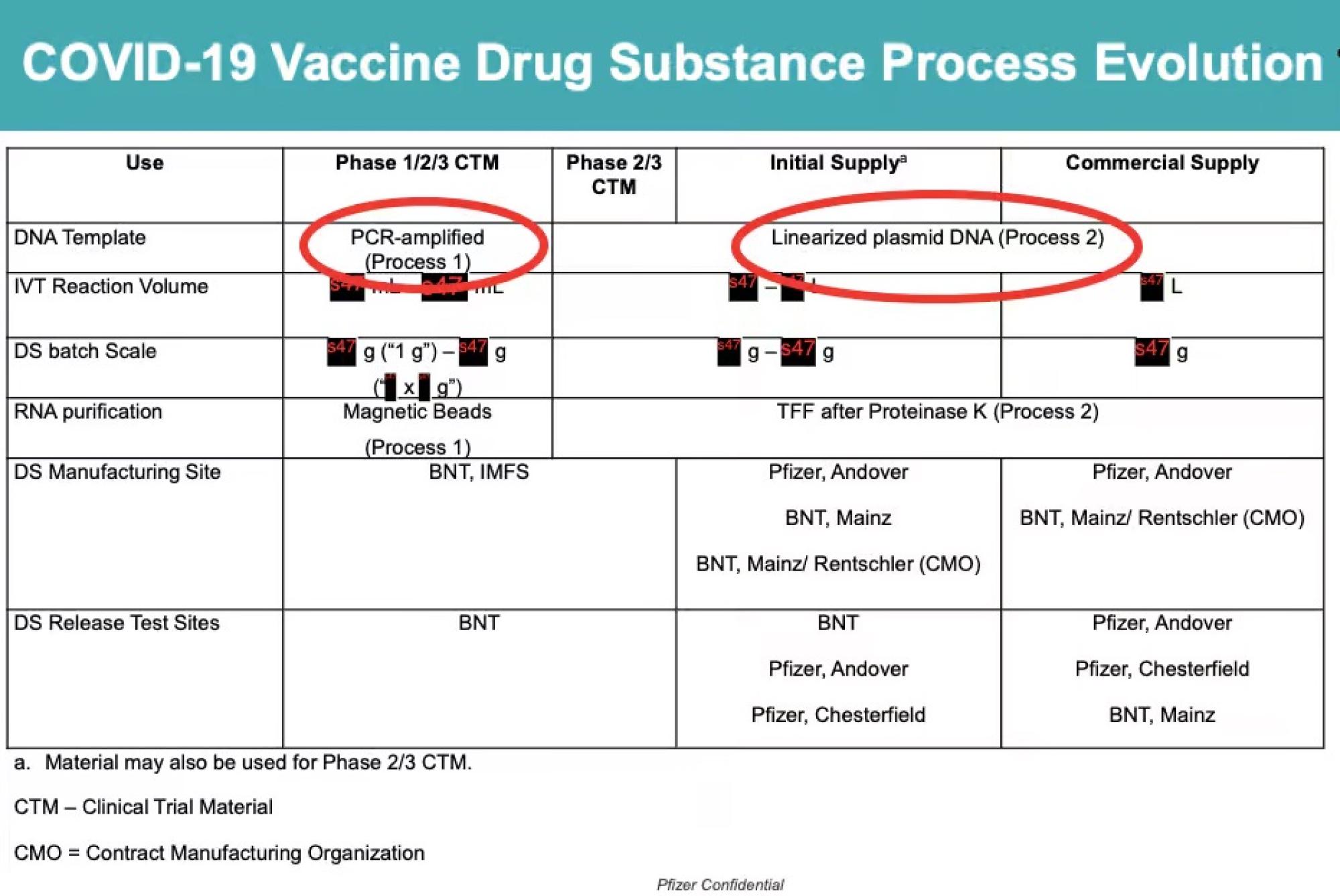
The recent findings of DNA fragments in the Pfizer and Moderna Covid-19 vaccines has led many to question why the FDA, which is responsible for monitoring the quality and safety of the vaccines, has failed to sound the alarm. For years, the FDA has known about the risk posed by residual DNA in vaccines. Its own guidance to industry states: "Residual DNA might be a risk to your final product because of oncogenic and/or infectivity potential. There are several potential mechanisms by which residual DNA could be oncogenic, including the integration and expression of encoded oncogenes or insertional mutagenesis following DNA integration." Put simply ... fragments of DNA left over by the manufacturing process can be incorporated into a patient's own DNA, to potentially cause cancer. A recent preprint paper ... analysed batches of the monovalent and bivalent mRNA vaccines. The authors found "the presence of billions to hundreds of billions of DNA molecules per dose in these vaccines. Using fluorometry all vaccines exceed the guidelines for residual DNA set by FDA and WHO." For the Pfizer product, the higher the level of DNA fragments found in the vaccine, the higher the rate of serious adverse events. Pfizer's vaccine used in the clinical trials (PROCESS 1) was manufactured differently to the vaccine that was injected into the wider population (PROCESS 2). This switch from PROCESS 1 to PROCESS 2 is what introduced the plasmid DNA impurities.
Latest
Latest News
Each news summary is created according to strict standards. Here's how we do it.
Each summary is created using a consistent editorial procedure. The target length is approximately 16 lines of 11-point Arial text in a 650-pixel-wide column. Up to 25% of a summary may be set in bold to emphasize the most important ideas. Summaries are composed of verbatim excerpts presented in the same sequence as they appear in the original news source, with very minor editorial additions. Where material has been omitted between excerpts, the omission is indicated with ellipses (...). Any words added by an editor for clarity or context appear in [brackets]. Our original news editor was Fred Burks. Tod Fletcher edited most summaries from 2007 through 2014, and Mark Bailey has served as news editor since 2014.