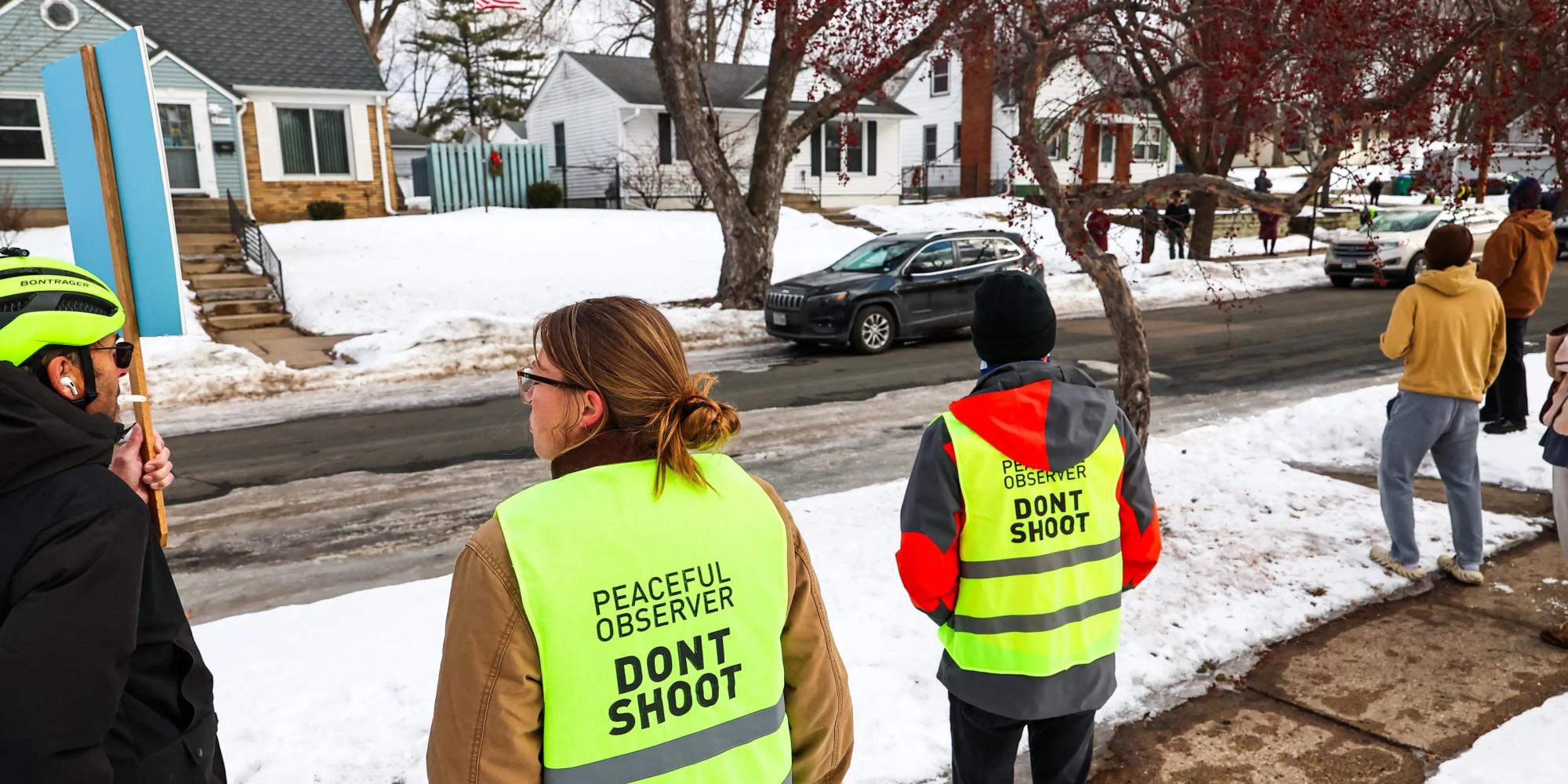
Across the Twin Cities, immigration agents have identified legal observers by name and address, and, in some cases, led them back to their homes after they engaged in lawful monitoring of immigration activity. Legal observers say this pattern of behavior sends a clear and chilling message: The federal government knows who they are and where they live. These encounters are unfolding amid a rapid expansion of federal surveillance capabilities. Immigration authorities have significantly expanded their use of mobile biometric and surveillance tools in recent years. Officers with Immigration and Customs Enforcement as well as Customs and Border Protection, for example, can use the smartphone app Mobile Fortify to photograph a person's face or capture fingerprints in the field and compare them against federal biometric databases. A 2022 report ... found ICE can access driver's license data covering roughly three-quarters of U.S. adults, including state photo databases that can be searched using face recognition technology. Civil liberties advocates say the growing web of identification tools has enabled federal agents to quickly identify anyone who monitors or protests their actions " chilling protected First Amendment activity and deterring the legal observation of law enforcement. While many encounters described by observers involve surveillance and intimidation, some have escalated into far more dangerous confrontations.
Latest
Latest News
Each news summary is created according to strict standards. Here's how we do it.
Each summary is created using a consistent editorial procedure. The target length is approximately 16 lines of 11-point Arial text in a 650-pixel-wide column. Up to 25% of a summary may be set in bold to emphasize the most important ideas. Summaries are composed of verbatim excerpts presented in the same sequence as they appear in the original news source, with very minor editorial additions. Where material has been omitted between excerpts, the omission is indicated with ellipses (...). Any words added by an editor for clarity or context appear in [brackets]. Our original news editor was Fred Burks. Tod Fletcher edited most summaries from 2007 through 2014, and Mark Bailey has served as news editor since 2014.