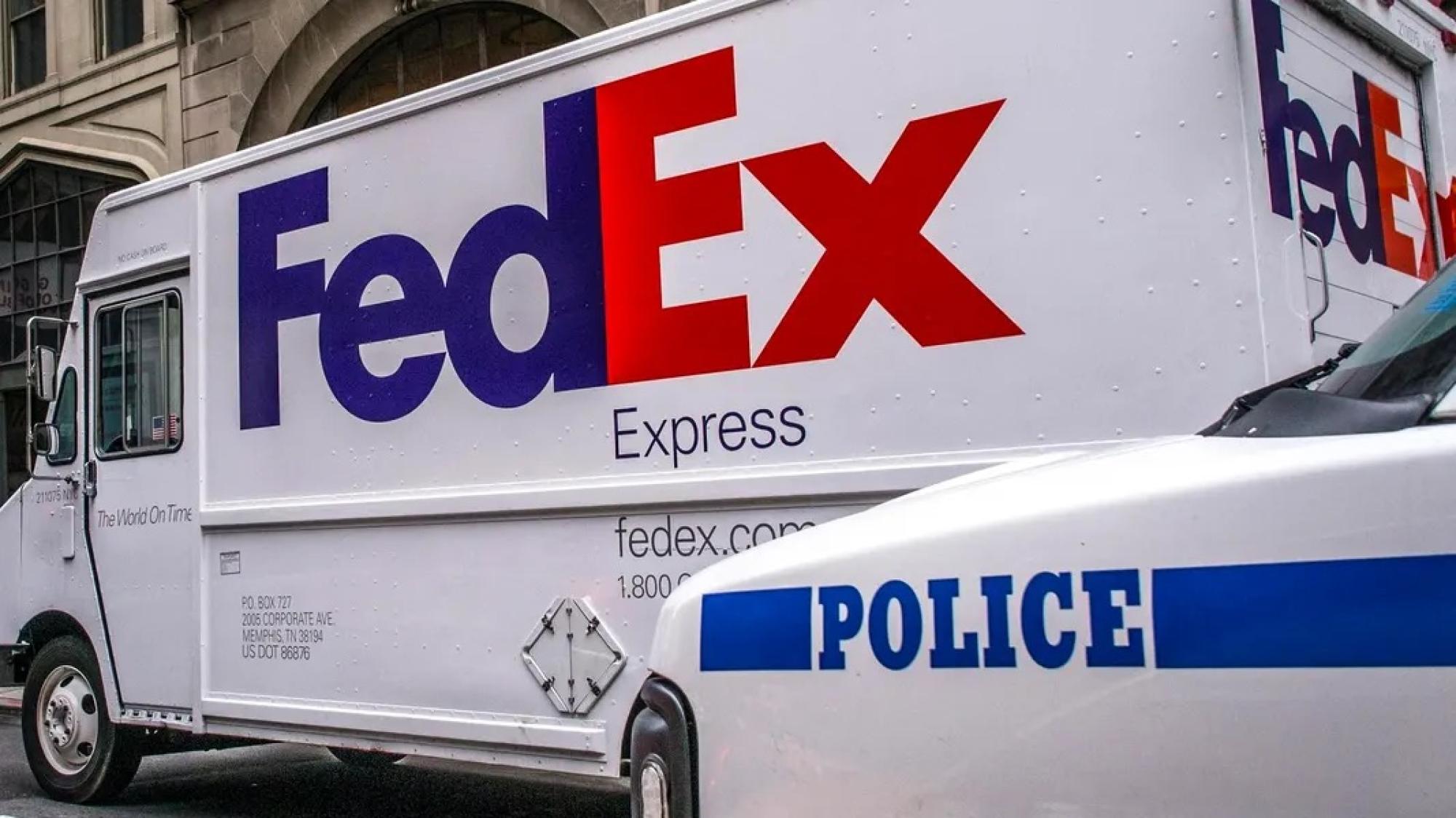
Twenty years ago, FedEx established its own police force. Now it's working with local police to build out an AI car surveillance network. The shipping and business services company is using AI tools made by Flock Safety, a $4 billion car surveillance startup, to monitor its distribution and cargo facilities across the United States. As part of the deal, FedEx is providing its Flock surveillance feeds to law enforcement, an arrangement that Flock has with at least four multi-billion dollar private companies. Some local police departments are also sharing their Flock feeds with FedEx a rare instance of a private company availing itself of a police surveillance apparatus. Such close collaboration has the potential to dramatically expand Flock's car surveillance network, which already spans 4,000 cities across over 40 states and some 40,000 cameras that track vehicles by license plate, make, model, color and other identifying characteristics, like dents or bumper stickers. Jay Stanley ... at the American Civil Liberties Union, said it was "profoundly disconcerting" that FedEx was exchanging data with law enforcement as part of Flock's "mass surveillance" system. "It raises questions about why a private company ... would have privileged access to data that normally is only available to law enforcement," he said. Forbes previously found that [Flock] had itself likely broken the law across various states by installing cameras without the right permits.
Latest
Latest News
Each news summary is created according to strict standards. Here's how we do it.
Each summary is created using a consistent editorial procedure. The target length is approximately 16 lines of 11-point Arial text in a 650-pixel-wide column. Up to 25% of a summary may be set in bold to emphasize the most important ideas. Summaries are composed of verbatim excerpts presented in the same sequence as they appear in the original news source, with very minor editorial additions. Where material has been omitted between excerpts, the omission is indicated with ellipses (...). Any words added by an editor for clarity or context appear in [brackets]. Our original news editor was Fred Burks. Tod Fletcher edited most summaries from 2007 through 2014, and Mark Bailey has served as news editor since 2014.