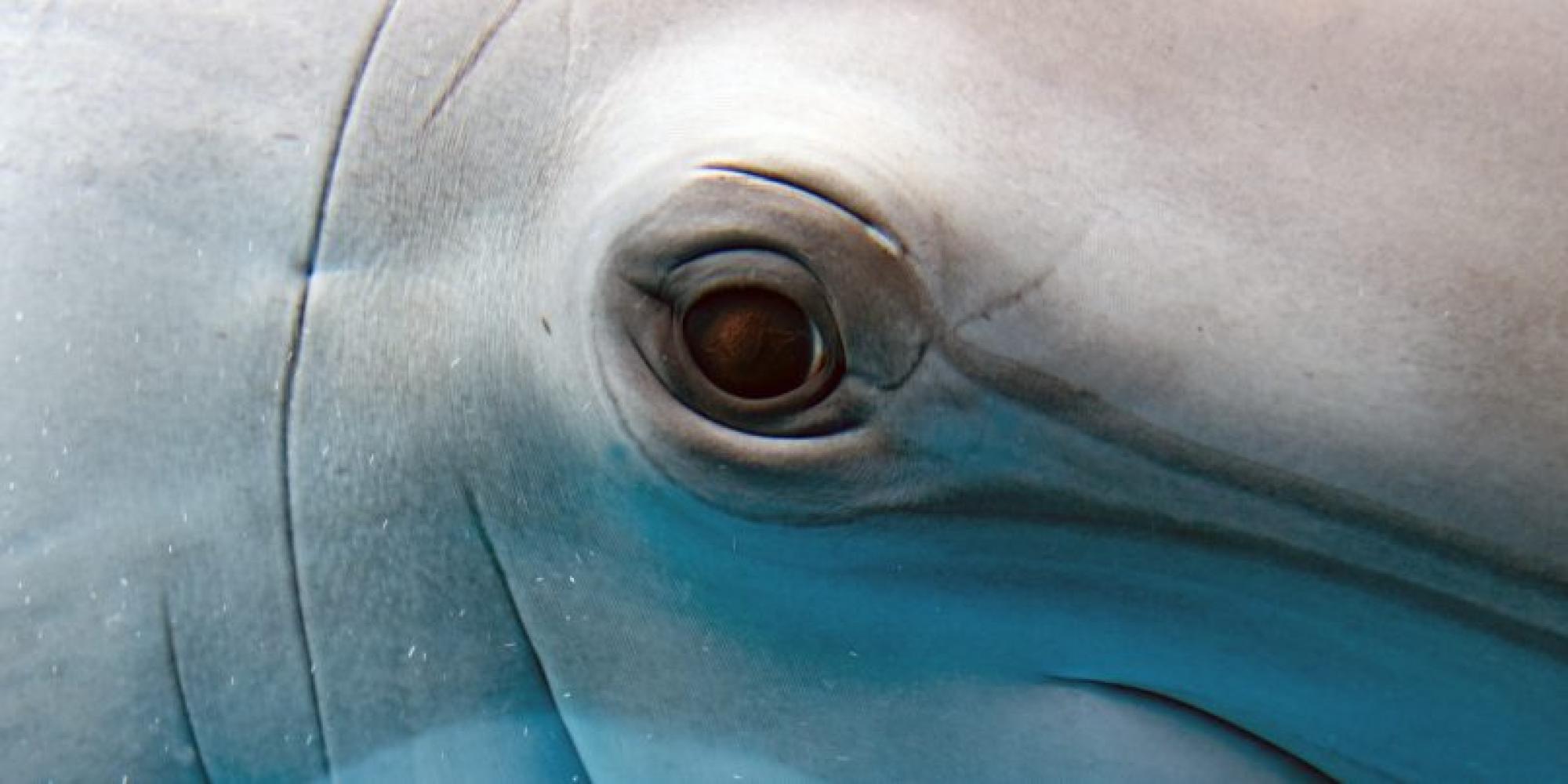
Following someone's gaze may seem like a simple act, but it has profound implications for the evolution of intelligence. And humans are far from the only animals that do it. A recent study of bottlenose dolphins in the journal Heliyon adds to previous research identifying the ability to follow the gazes of members of other species " a visual and cognitive trick that may relate to the development of empathy " across a wide range of mammals, not just humans and our fellow primates. What's even more interesting is to trace this ability through not just the mammal family but beyond, to reptiles and birds " and perhaps back as far as the Jurassic period. In general, by identifying important objects in their environment, an animal's ability to follow the gaze of another, including another species, may form a basis for advanced social cognition, paving the way for cooperation and empathy. One such high level type, "geometrical gaze following," occurs if you block the thing that the other is looking at so the subject can't see it, so that they will physically reposition themself to see what others are seeing. Geometrical gaze following isn't even seen in human children before eighteen months of age " and yet wolves, apes and monkeys, and birds of the crow (corvid) and starling genuses have all been found to engage in it. Looking at which living species show evidence of advanced gaze following and which don't suggests that even the more advanced type ... evolved back in the time of dinosaurs.
Latest
Latest News
Each news summary is created according to strict standards. Here's how we do it.
Each summary is created using a consistent editorial procedure. The target length is approximately 16 lines of 11-point Arial text in a 650-pixel-wide column. Up to 25% of a summary may be set in bold to emphasize the most important ideas. Summaries are composed of verbatim excerpts presented in the same sequence as they appear in the original news source, with very minor editorial additions. Where material has been omitted between excerpts, the omission is indicated with ellipses (...). Any words added by an editor for clarity or context appear in [brackets]. Our original news editor was Fred Burks. Tod Fletcher edited most summaries from 2007 through 2014, and Mark Bailey has served as news editor since 2014.