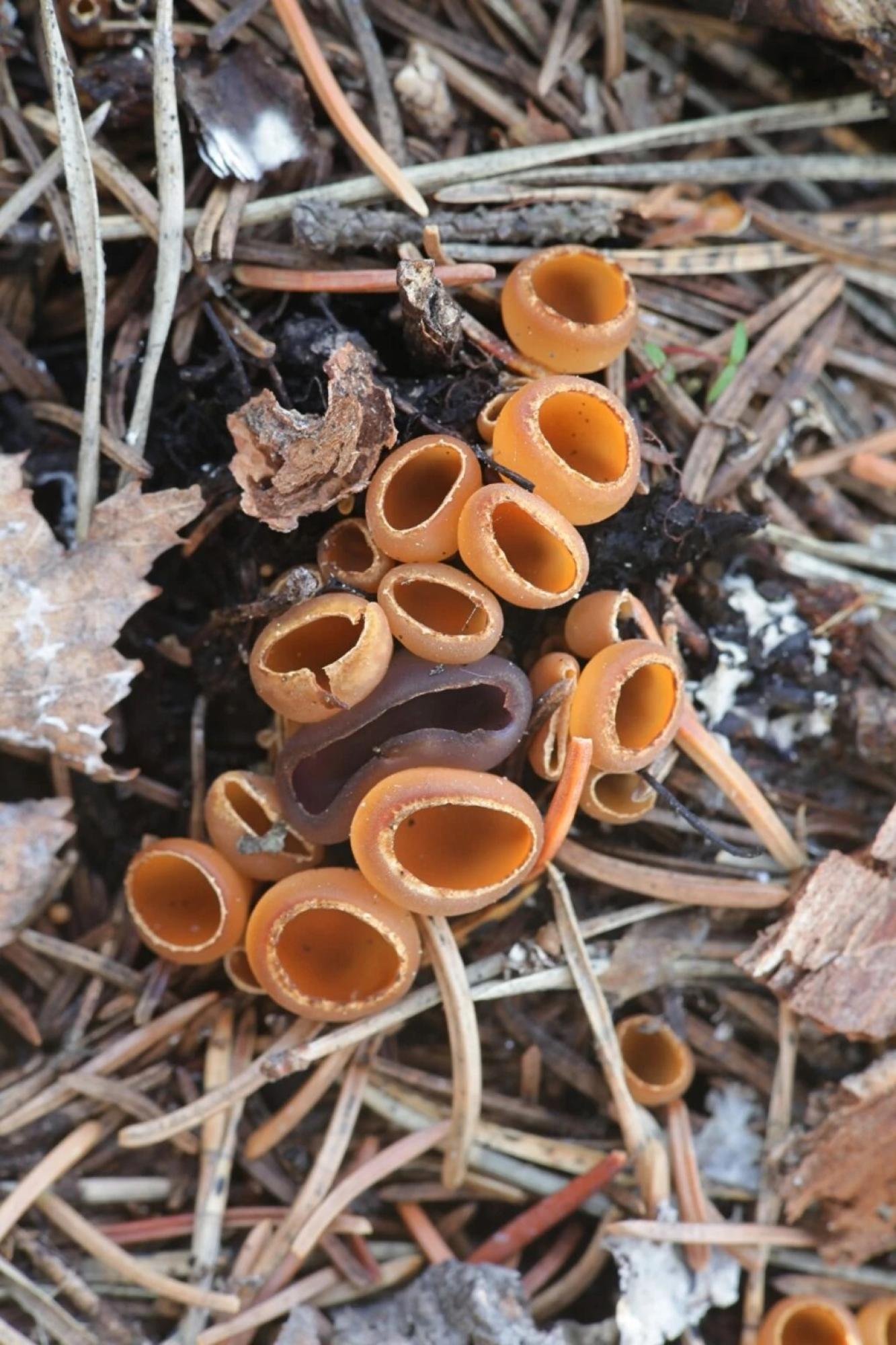
When Mount Saint Helens in southwestern Washington erupted on the morning of May 18, 1980, the stratovolcano spewed a plume of debris high into the earth's atmosphere and spread ash to at least eleven nearby states. But despite the appearance of a mountain-side extinction event, life was already regenerating. Just 10 days after the eruption, the geomorphologist Fredrick Swanson surveyed one of the lahars with colleagues and noticed something intriguing. In the rubble, fine, filament-like threads had attached themselves to some of the smaller pebbles and stones cast out of the volcano's center. What Swanson was witnessing was the phenomenon of "phoenicoid fungi," aptly named in a nod to the mythical phoenix rising from the ashes. Fungal organisms such as these are often the first responders to blast zones and wildfire burn areas where the decomposing landscape serves as a smorgasbord for their biological needs. The fungi used for environmental clean-up come in a variety of shapes and sizes. Oyster mushrooms ... can break down petroleum and hydrocarbons, putting them top of the list when it comes to cleaning up deadly oil spills. A 2023 study conducted in Massachusetts, commissioned by MassDOT, found that there could be benefits to integrating mycelium into the state's pre-existing stormwater management infrastructure to serve as a filtration system to improve water quality.
Latest
Latest News
Each news summary is created according to strict standards. Here's how we do it.
Each summary is created using a consistent editorial procedure. The target length is approximately 16 lines of 11-point Arial text in a 650-pixel-wide column. Up to 25% of a summary may be set in bold to emphasize the most important ideas. Summaries are composed of verbatim excerpts presented in the same sequence as they appear in the original news source, with very minor editorial additions. Where material has been omitted between excerpts, the omission is indicated with ellipses (...). Any words added by an editor for clarity or context appear in [brackets]. Our original news editor was Fred Burks. Tod Fletcher edited most summaries from 2007 through 2014, and Mark Bailey has served as news editor since 2014.