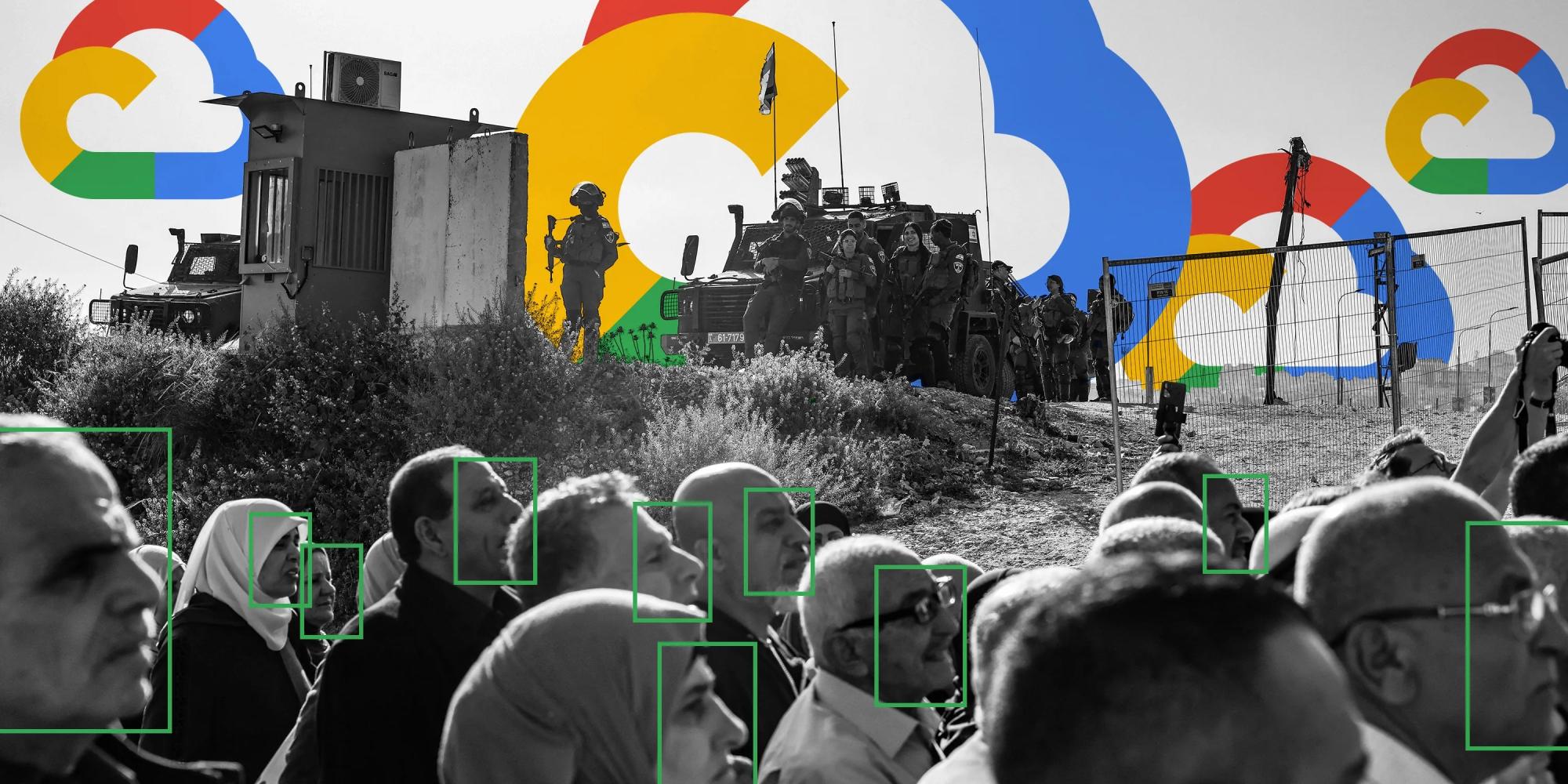
Before signing its lucrative and controversial Project Nimbus deal with Israel, Google knew it couldn't control what the nation and its military would do with the powerful cloud-computing technology, a confidential internal report obtained by The Intercept reveals. The report makes explicit the extent to which the tech giant understood the risk of providing state-of-the-art cloud and machine learning tools to a nation long accused of systemic human rights violations. Not only would Google be unable to fully monitor or prevent Israel from using its software to harm Palestinians, but the report also notes that the contract could obligate Google to stonewall criminal investigations by other nations into Israel's use of its technology. And it would require close collaboration with the Israeli security establishment including joint drills and intelligence sharing " that was unprecedented in Google's deals with other nations. The rarely discussed question of legal culpability has grown in significance as Israel enters the third year of what has widely been acknowledged as a genocide in Gaza " with shareholders pressing the company to conduct due diligence on whether its technology contributes to human rights abuses. Google doesn't furnish weapons to the military, but it provides computing services that allow the military to function " its ultimate function being, of course, the lethal use of those weapons. Under international law, only countries, not corporations, have binding human rights obligations.
Latest
Latest News
Each news summary is created according to strict standards. Here's how we do it.
Each summary is created using a consistent editorial procedure. The target length is approximately 16 lines of 11-point Arial text in a 650-pixel-wide column. Up to 25% of a summary may be set in bold to emphasize the most important ideas. Summaries are composed of verbatim excerpts presented in the same sequence as they appear in the original news source, with very minor editorial additions. Where material has been omitted between excerpts, the omission is indicated with ellipses (...). Any words added by an editor for clarity or context appear in [brackets]. Our original news editor was Fred Burks. Tod Fletcher edited most summaries from 2007 through 2014, and Mark Bailey has served as news editor since 2014.