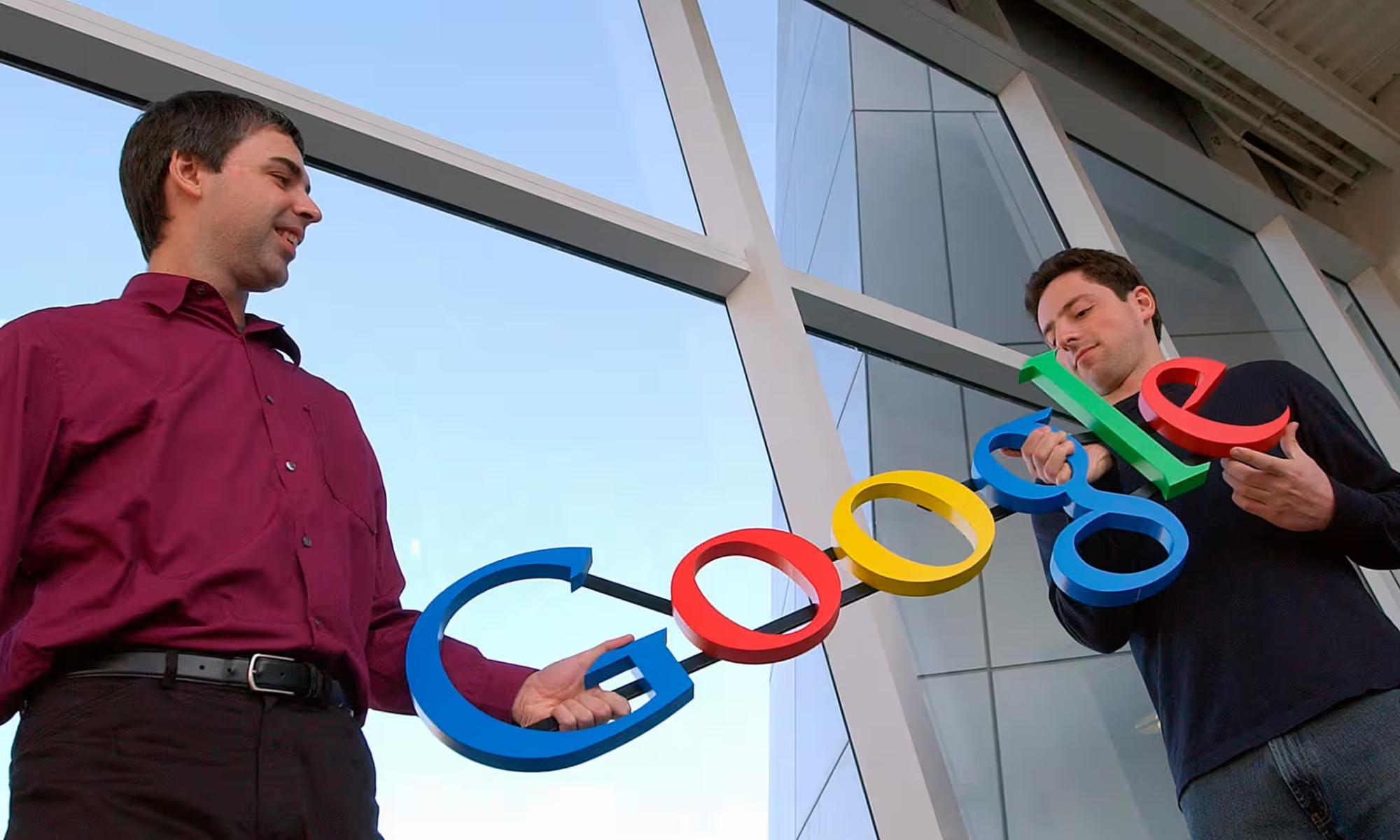
Once upon a time ... Google was truly great. A couple of lads at Stanford University in California had the idea to build a search engine that would crawl the world wide web, create an index of all the sites on it and rank them by the number of inbound links each had from other sites. The arrival of ChatGPT and its ilk ... disrupts search behaviour. Google's mission " "to organise the world's information and make it universally accessible" " looks like a much more formidable task in a world in which AI can generate infinite amounts of humanlike content. Vincent Schmalbach, a respected search engine optimisation (SEO) expert, thinks that Google has decided that it can no longer aspire to index all the world's information. That mission has been abandoned. "Google is no longer trying to index the entire web," writes Schmalbach. "In fact, it's become extremely selective, refusing to index most content. This isn't about content creators failing to meet some arbitrary standard of quality. Rather, it's a fundamental change in how Google approaches its role as a search engine." The default setting from now on will be not to index content unless it is genuinely unique, authoritative and has "brand recognition". "They might index content they perceive as truly unique," says Schmalbach. "But if you write about a topic that Google considers even remotely addressed elsewhere, they likely won't index it. This can happen even if you're a well-respected writer with a substantial readership."
Latest
Latest News
Each news summary is created according to strict standards. Here's how we do it.
Each summary is created using a consistent editorial procedure. The target length is approximately 16 lines of 11-point Arial text in a 650-pixel-wide column. Up to 25% of a summary may be set in bold to emphasize the most important ideas. Summaries are composed of verbatim excerpts presented in the same sequence as they appear in the original news source, with very minor editorial additions. Where material has been omitted between excerpts, the omission is indicated with ellipses (...). Any words added by an editor for clarity or context appear in [brackets]. Our original news editor was Fred Burks. Tod Fletcher edited most summaries from 2007 through 2014, and Mark Bailey has served as news editor since 2014.