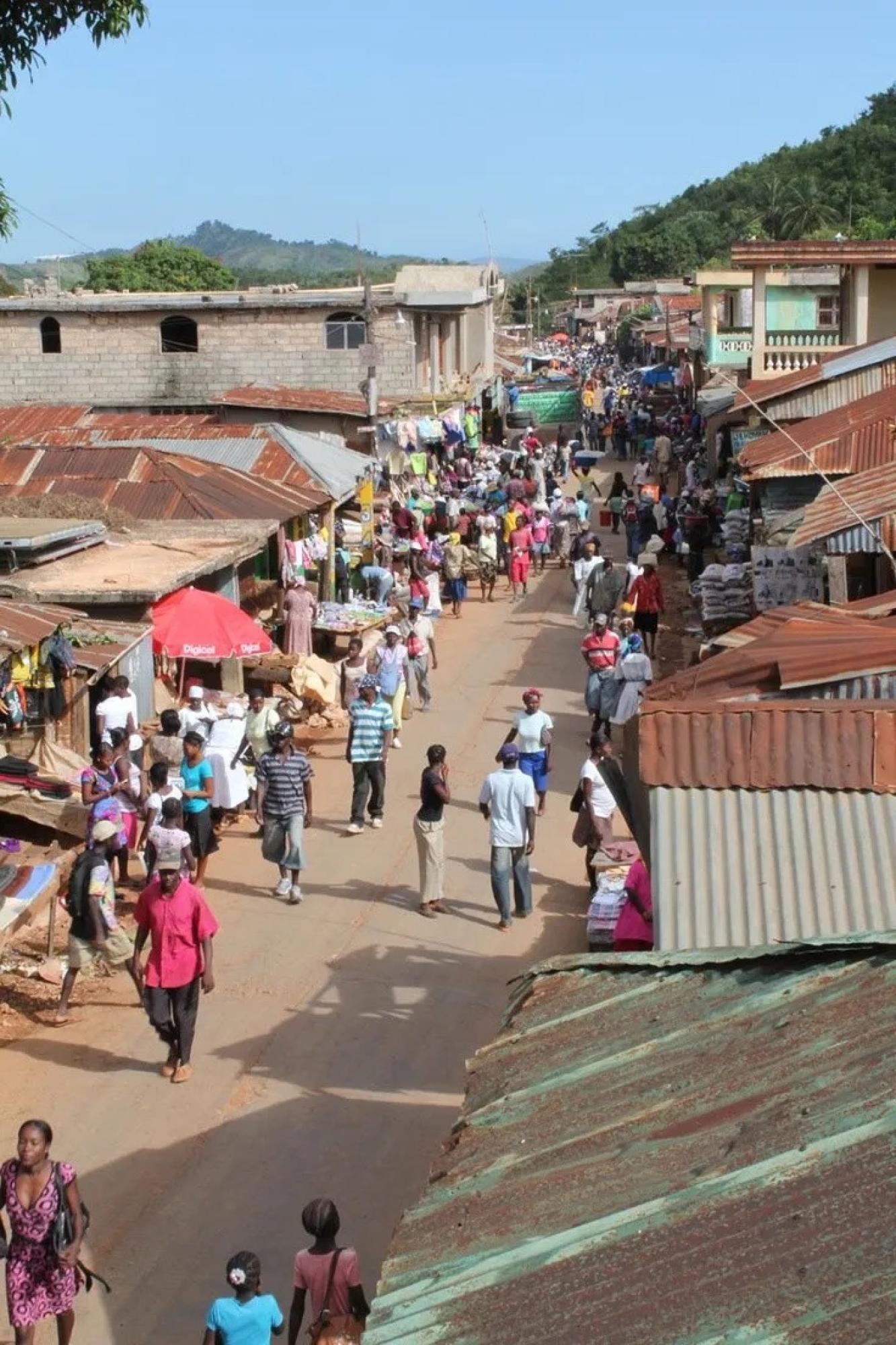
In the misty hills of southern Haiti, the town of Beaumont sits on a fault line of tension. Yet in this uncertain landscape, a quiet movement has been unfolding, one led not by international nongovernmental organisations (NGOs) or government officials, but by local mediators who believe that peace must begin with conversation. Their work, modest in scale but profound in effect, is helping rebuild what years of unrest have eroded: people's belief in one another. At the heart of this effort is Médiation Lakay, a grassroots initiative reflecting the work of local community leaders in Haiti who mediate disputes over land and resources. Elders, local officials, and church figures convene to discuss disputes before they escalate. Rather than waiting for formal judicial intervention, these mediators facilitate dialogue between families, helping them reach agreements and restore communication. "It's not about who wins," says Wilfrid, a local Haitian pastor. "It's about whether both sides can share a plate of rice after." The process blends traditional dispute resolution with restorative justice principles, an exchange of listening, acknowledgment, and reparative action. Disputes that might have lasted years are often resolved in weeks. The team keeps no written records, to preserve confidentiality and community trust. By focusing on rebuilding relationships rather than assigning blame, Médiation Lakay is gradually reweaving the social fabric that conflict had torn apart. "People came to understand that fear had made them cruel," [school teacher] Josette says. Beyond conflict resolution, the group's meetings have become spaces for collective healing, where villagers discuss shared trauma from past hurricanes or lost livelihoods. By focusing on rebuilding relationships rather than assigning blame, Médiation Lakay is gradually reweaving the social fabric that conflict had torn apart.
Latest
Latest News
Each news summary is created according to strict standards. Here's how we do it.
Each summary is created using a consistent editorial procedure. The target length is approximately 16 lines of 11-point Arial text in a 650-pixel-wide column. Up to 25% of a summary may be set in bold to emphasize the most important ideas. Summaries are composed of verbatim excerpts presented in the same sequence as they appear in the original news source, with very minor editorial additions. Where material has been omitted between excerpts, the omission is indicated with ellipses (...). Any words added by an editor for clarity or context appear in [brackets]. Our original news editor was Fred Burks. Tod Fletcher edited most summaries from 2007 through 2014, and Mark Bailey has served as news editor since 2014.